Not all sweaters are created equal. Some keep you warm for years, while others pill, stretch, or lose shape after a few wears. So how can you tell if a sweater is truly high quality?
A high-quality sweater is made from premium fibers (like merino wool or cashmere), has tight and even stitching, a soft but resilient hand feel, and holds its shape after wear.
I’ve inspected thousands of sweaters on production lines. From fiber content to knit tension, small details reveal everything. Let me walk you through it.
Table of Contents
- What fabric makes a sweater high quality?
- How should the knit feel and look?
- Does the sweater pill easily?
- What construction details show quality?
- Conclusion
What fabric makes a sweater high quality?
Fiber is the foundation. You can’t make a luxury sweater with low-grade yarn.
The best sweaters use natural fibers like merino wool, alpaca, or cashmere. Avoid acrylic-heavy blends if you want warmth and longevity.
For example, The Laundress offers insights on choosing the right wool fabric for different uses[^1].
Compare common sweater fabrics
| Material | Feel | Warmth | Durability | Price Level |
|---|---|---|---|---|
| Cashmere | Ultra soft | High | Moderate | $$$ |
| Merino wool | Soft & breathable | High | High | $$ |
| Alpaca | Silky & warm | Very High | High | $$–$$$ |
| Lambswool | Warm but coarser | High | Moderate | $–$$ |
| Cotton | Soft but cool | Low | Moderate | $ |
| Acrylic | Synthetic, itchy | Low | Low | $ |
Check the label. If the blend is 70%+ natural fibers, it’s a good start.
How should the knit feel and look?
The way a sweater is knitted says a lot about its quality.
High-quality sweaters have tight, even stitching with no loose threads, gaps, or misshapen panels. The knit pattern should look consistent and balanced.
You can reference Proper Cloth's guide to knit construction for how tension and structure play a role in garment longevity[^2].
What to inspect visually and by touch:
- Tight knit tension: Holds shape better, resists sagging
- Uniformity: No uneven bumps or holes in the knit
- Weight: Heavier often means denser yarn (more durable)
- Elasticity: Light stretch, but bounces back to shape
- Inside finish: Seams should be clean and neat
If it feels flimsy or too stretchy, it may wear out fast.
Does the sweater pill easily?
Yes, pilling is a key quality test—but it depends on fiber and yarn quality.
High-quality sweaters pill less because they use long-staple fibers that don’t break easily. Cheap blends pill fast, especially under the arms or sides.
For more on fiber quality and pilling, Good On You offers an ethical and technical breakdown[^3].
How to test:
Rub the fabric gently with your hand or a key area like your purse strap—if small balls appear immediately, that’s a red flag.
| Fiber Type | Pilling Tendency |
|---|---|
| Cashmere | Low (if high grade) |
| Merino wool | Low to moderate |
| Acrylic blends | High |
| Short-staple cotton | High |
Look for sweaters labeled "anti-pilling" or made with combed yarns.
What construction details show quality?
It’s all in the craftsmanship.
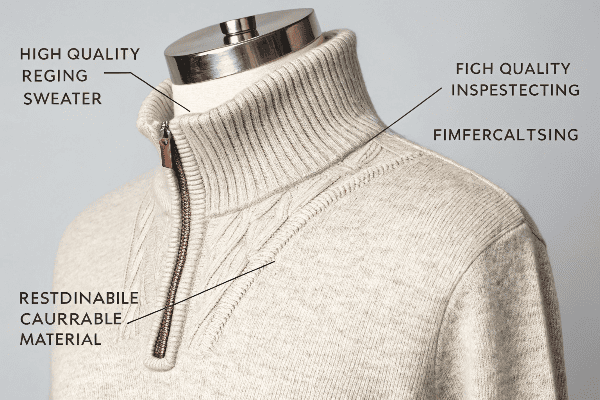
A high-quality sweater has strong seams, ribbed cuffs that bounce back, clean hems, and even pattern alignment across pieces.
Construction quality checklist
- Fully fashioned: Knit to shape rather than cut and sewn
- Seam alignment: Patterns (like cables) match at seams
- Cuffs and collars: Ribbed tightly, not loose or floppy
- Tag & labels: Properly sewn in—not glued or flimsy
- Brand reputation: Trusted brands often use better factories
Try tugging gently at the seams—if they shift or gape, it’s not built to last.
Conclusion
To tell if a sweater is high quality, check the fabric (natural fibers), the knit (tight and even), the finish (neat seams), and how it handles wear (resists pilling and sagging). Good sweaters aren’t just soft—they hold up beautifully over time.
[^1]: Sweater Fabric Guide – The Laundress
[^2]: Knit Fabric Construction – Proper Cloth
[^3]: Which Fabrics Pill the Most – Good On You