Finding a hoodie manufacturer in China feels easy — until the bulk order arrives and nothing matches the sample. Bad quality. Wrong weight. Missed deadline. I've seen it happen too many times. And I've learned that picking the right factory is not about price. It's about knowing what to look for before you commit.
A good hoodie manufacturer in China delivers consistent quality, respects your brand specifications, offers flexible MOQ, and communicates clearly at every stage. The best ones combine in-house production control with real customization capability — so what you approve in the sample is exactly what ships in bulk.
I've been in this business for over 20 years. In that time, I've worked with brands at every stage — from small startups ordering 50 pieces to large wholesale buyers placing tens of thousands of units. The gap between a great factory and a bad one is not always visible in the catalog. It shows up later. Let me break it down for you.
Table of Contents
- What Is MOQ and Why Does It Matter for Small Brands?
- How to Evaluate Sample Quality Before Bulk Order?
- OEM vs ODM: Which Model Suits Your Brand?
- What Certifications Should a Hoodie Factory Have?
- Why Lead Time Matters More Than Price?
- Conclusion
What Is MOQ and Why Does It Matter for Small Brands?
MOQ can make or break your ability to work with a factory. It's one of the first questions buyers ask me — and one of the most misunderstood. Here's why it deserves more attention than most people give it.
MOQ stands for Minimum Order Quantity. It is the smallest number of units a factory will accept per style. For small brands, a high MOQ is a serious problem — it locks up cash, fills warehouses, and kills the ability to test new designs. A factory with a low MOQ, starting from 50 pieces per style, gives small brands a real path forward.
[MOQ for small brands]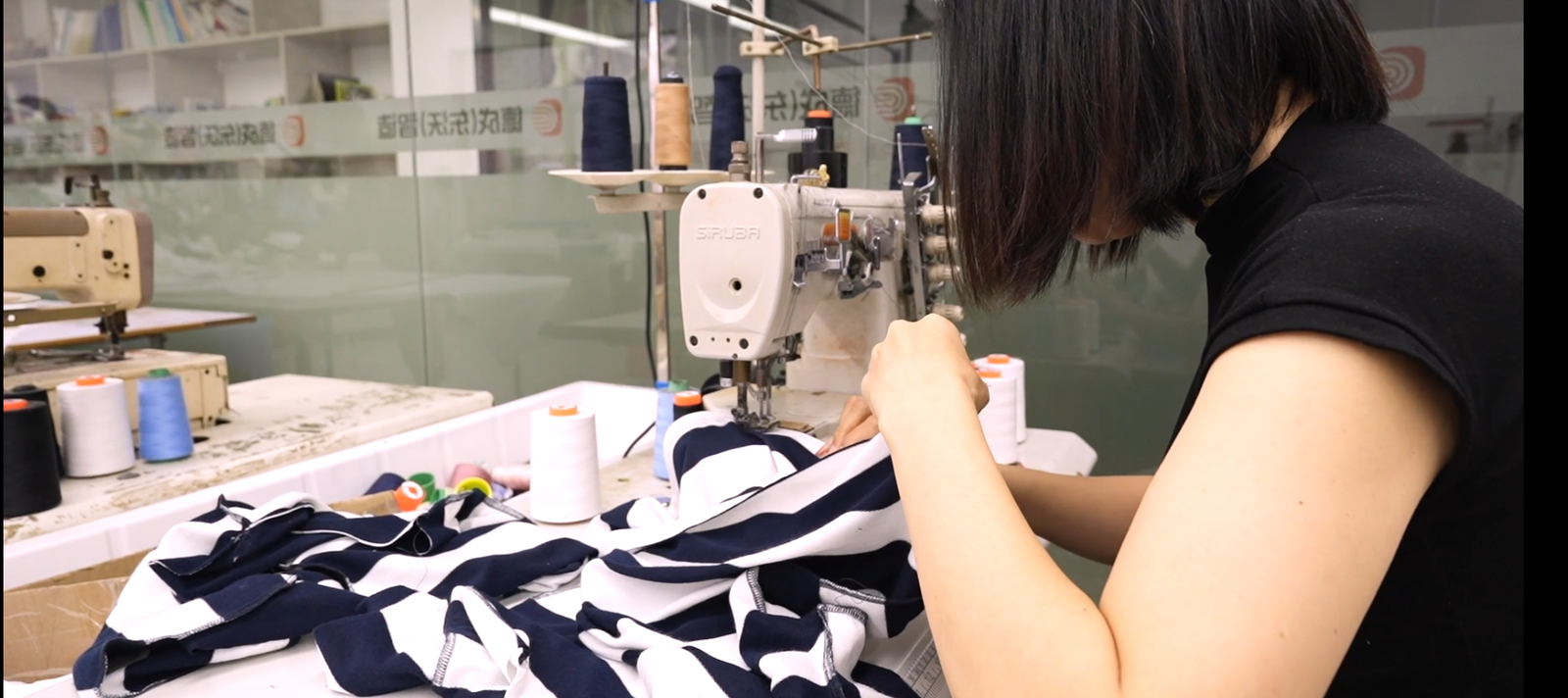
Most factories in China set MOQ at 300 to 500 pieces per style. That number exists because production lines are optimized for volume. The lower the order, the less efficient the run. But not all factories are set up the same way.
Why Most Factories Set High MOQs
Large factories operate on scale. Fabric is purchased in bulk. Cutting and sewing setups take time. When you run 50 pieces, you pay almost the same setup cost as 500 pieces. That's why many factories simply refuse small orders.
What a Low MOQ Actually Means for Your Brand
| Scenario | High MOQ (500 pcs) | Low MOQ (50 pcs) |
|---|---|---|
| Testing a new colorway | Risky, high upfront cost | Easy, low risk |
| Launching a capsule collection | Hard to execute | Very doable |
| Cash flow impact | High inventory tied up | Lean and flexible |
| Sample-to-bulk alignment | More pressure per style | Better control per style |
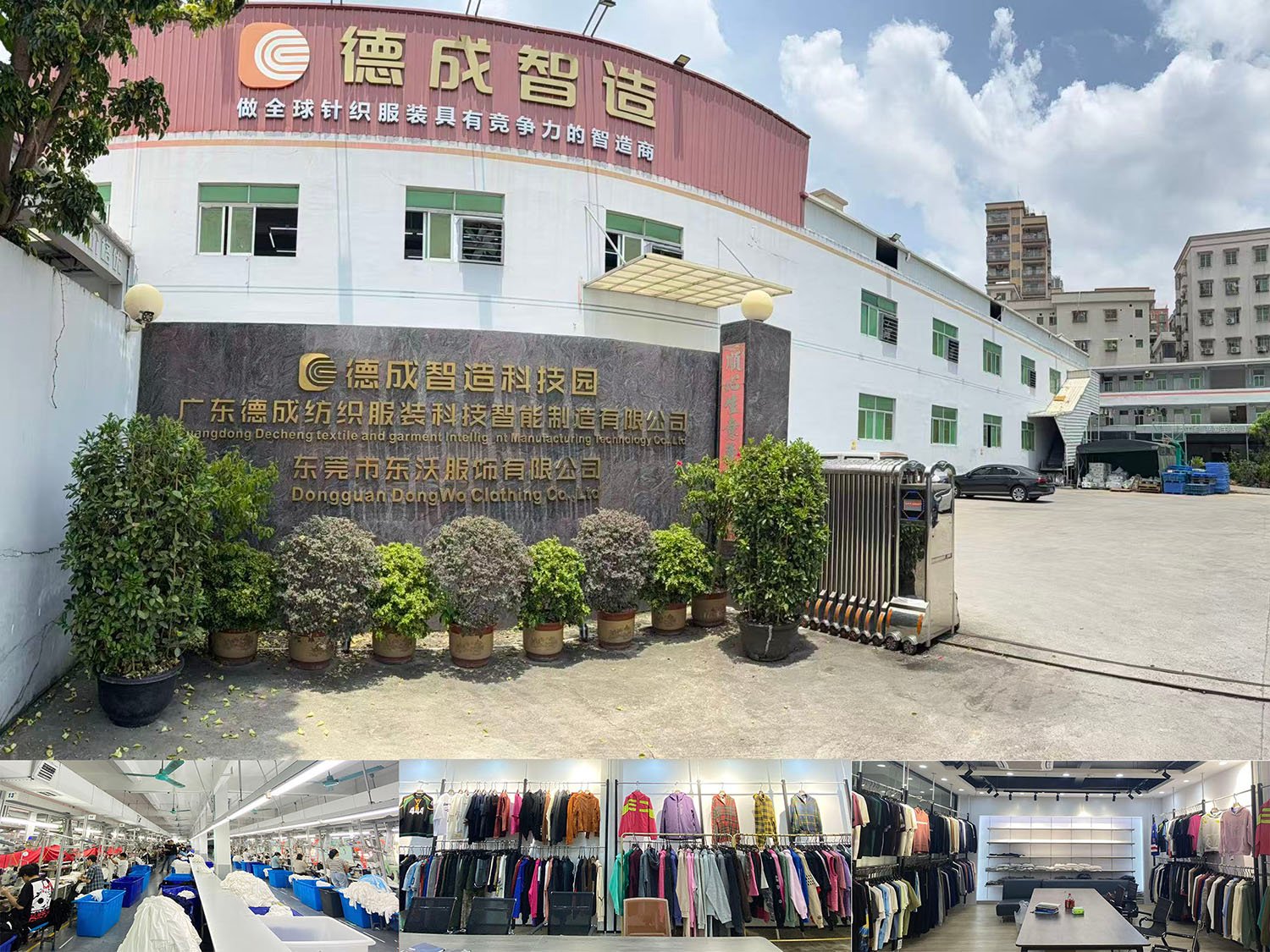
At DeCheng, we accept orders from 50 pieces per style. That number is not a marketing promise. It's a production reality built over 20 years of running 10 dedicated production lines. Small brands are not afterthoughts here — they are a core part of what we do.
The Hidden Cost of High MOQ
When a buyer is forced to order 500 pieces to meet a factory's MOQ, one of two things happens. They either order more than they need and sit on dead stock. Or they walk away and try to find another factory — wasting weeks of back-and-forth in the process.
Low MOQ gives you something more valuable than a cheaper unit price. It gives you speed to market and the ability to test without overcommitting.
Common MOQ Types You Should Clarify Upfront
Small brands should not only ask "What is your MOQ?" They should ask a more complete question: "Is your MOQ based on style, color, or design? If I order 50 pieces, can I mix sizes? Can I use custom labels or packaging?"
| MOQ Type | What It Means | Why It Matters |
|---|---|---|
| Per style | One hoodie design | Different patterns require different production setup |
| Per color | One fabric color | Fabric sourcing or dyeing is usually color-based |
| Per size set | Size breakdown | Too many sizes in low quantity can reduce efficiency |
| Per decoration | One logo or graphic | Decoration factories may charge setup costs |
How to Evaluate Sample Quality Before Bulk Order?
Most buyers know to request a sample before placing a bulk order. But very few know how to evaluate that sample properly. A sample that looks great in photos can hide serious problems — problems that only show up when you get 500 hoodies in a box.
To evaluate sample quality before bulk order, check the fabric weight against the stated GSM, test the print or embroidery under stress (wash it, stretch it), inspect stitching density at stress points, and compare the sample against your original tech pack. If any detail is off without explanation, treat it as a red flag.
[ sample quality check]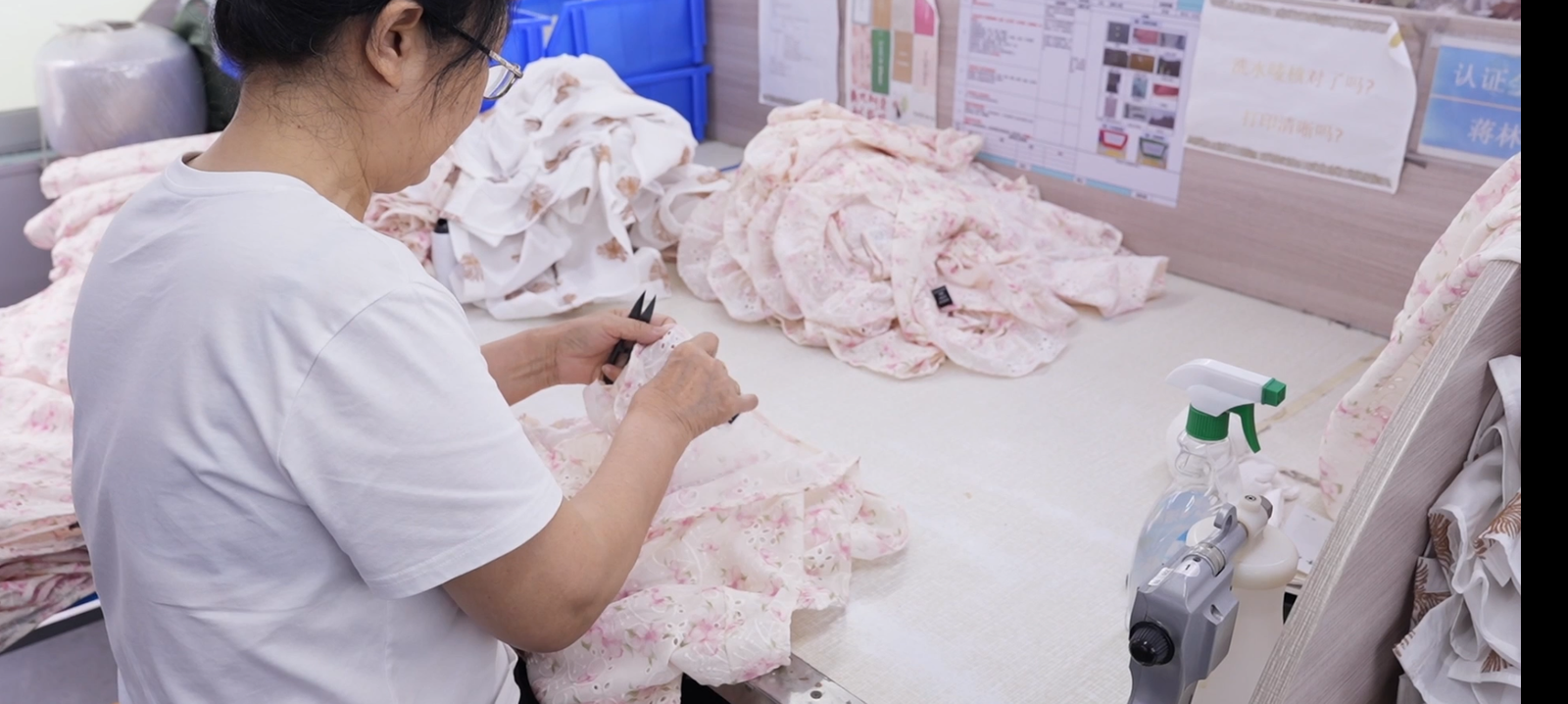
I've heard this story many times from buyers. The sample looks perfect. The bulk order arrives and the fleece is lighter, the print is faded, and the drawcords are the wrong color. That's not bad luck. That's a quality control process that was never in place.
The 5 Things to Check on Every Sample
1. Fabric Weight (GSM)
Ask for a fabric spec sheet alongside the sample. Then weigh a square meter yourself — or send it to a third-party lab. A factory that promises 320gsm but ships 280gsm is not making a mistake. They are substituting.
| Item | What to Check | Why It Matters |
|---|---|---|
| GSM | Fabric weight | Affects thickness, cost, and fit |
| Composition | Cotton, polyester, fleece, French terry | Affects comfort and shrinkage |
| Hand feel | Soft, dry, brushed, compact | Affects customer experience |
| Stretch | Rib and body stretch | Affects fit and recovery |
2. Construction at Stress Points
Pull the sleeve seam. Tug the pocket. Check the ribbing at the cuffs and hem. These are the areas that fail first in real use. If the stitching pulls loose on a sample, it will definitely fail in bulk.
3. Print and Embroidery Quality
| Test | What to Do | What to Look For |
|---|---|---|
| Wash test | Wash sample 3–5 times | Fading, cracking, peeling |
| Stretch test | Stretch printed area | Cracking at flex points |
| Embroidery back | Flip the garment inside out | Clean backing, no bunching |
| Color match | Compare against your Pantone spec | Deviation more than 5% is a problem |
4. Label and Finishing Details
Check the woven label, hangtag, and packaging. These are often produced separately and outsourced. A good factory controls this in-house. At DeCheng, labels, hangtags, and packaging are all part of our production process — not subcontracted out.
5. Timeline Verification
Ask how long the sample took. A factory that takes 4 weeks to make a sample will likely stretch your bulk lead time too. Our samples are ready in 7 to 14 days — that speed tells you something about how the factory is actually managed.
Wash Testing Is Non-Negotiable
A hoodie sample should always be washed before bulk confirmation. This is especially important for cotton hoodies, fleece hoodies, garment-dyed styles, and washed streetwear pieces. Check shrinkage, color fading, print durability, and fabric twist after washing. A good factory understands shrinkage and adjusts patterns accordingly.
OEM vs ODM: Which Model Suits Your Brand?
OEM and ODM are terms that get used a lot — and mixed up just as often. If you don't know which model fits your brand, you risk choosing a factory that can't actually do what you need. This matters more than most buyers realize.
OEM (Original Equipment Manufacturing) means you provide the design and the factory produces it. ODM (Original Design Manufacturing) means the factory provides existing designs that you can modify and brand as your own. OEM suits brands with their own design capability. ODM suits brands that want speed and simplicity without a dedicated design team.
[OEM vs ODM manufacturing]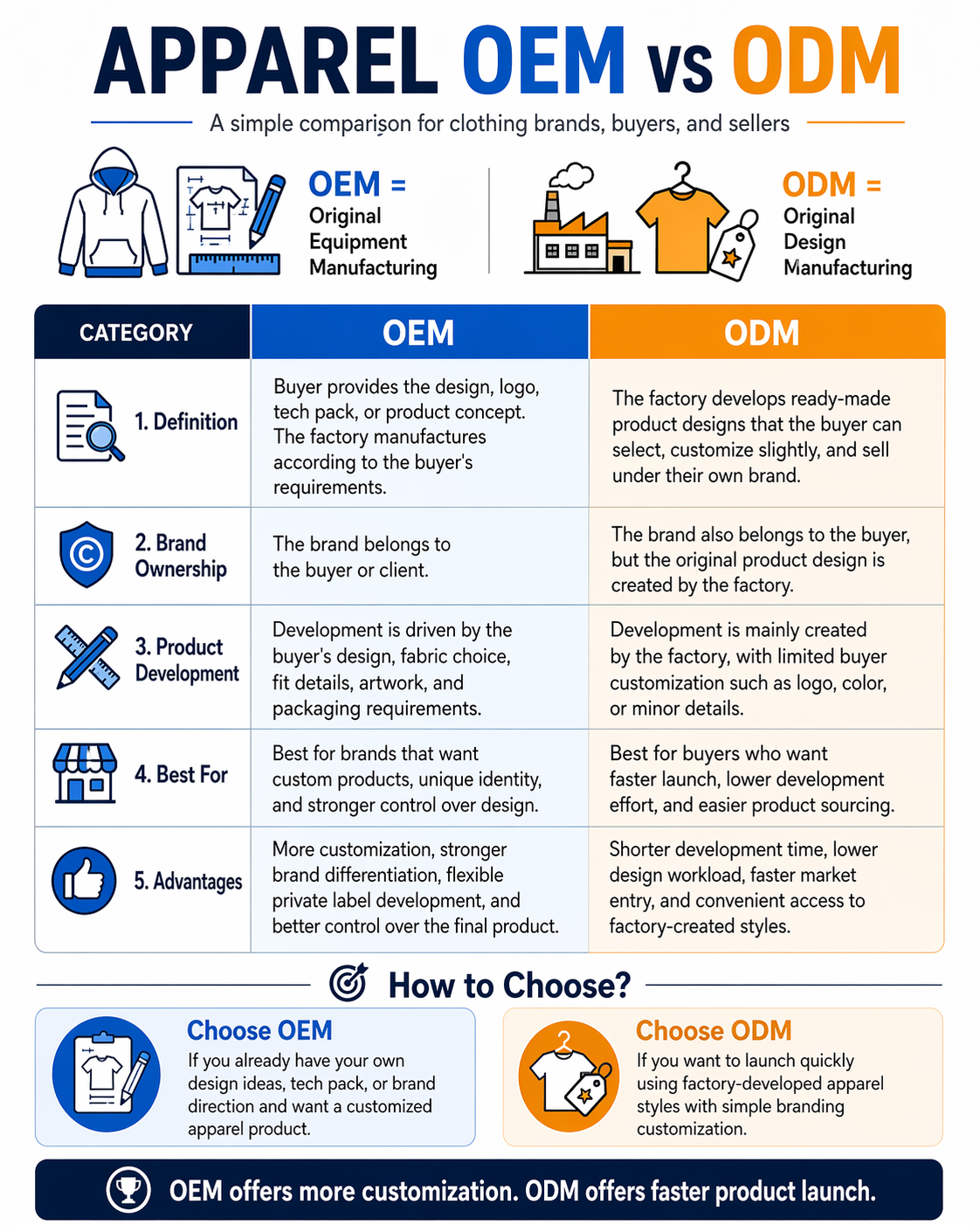
Both models have a place. The right choice depends on where your brand is right now.
OEM: Full Control, Full Responsibility
In OEM, you own the design. You send a tech pack — with measurements, fabric specs, print placements, and construction details — and the factory follows it. You get exactly what you designed, if the factory executes it well.
This model works best when:
- You have an in-house designer or a clear design identity
- You need unique styles not found in any factory catalog
- Your brand relies on proprietary fits or fabric compositions
ODM: Speed and Lower Design Cost
In ODM, the factory already has base patterns developed. You pick a style, choose a fabric, add your logo, and customize where the factory allows. The design work is already done.
This model works best when:
- You are launching quickly and don't have time to develop patterns from scratch
- Your brand is still finding its identity
- You want to test a category before investing in original design
Full Comparison
| Model | Best For | Buyer Provides | Factory Provides |
|---|---|---|---|
| OEM | Brands with clear designs | Tech pack, artwork, size chart | Production, sourcing, QC |
| ODM | New or growing brands | Reference ideas, brand direction | Fabric advice, pattern, sample development |
| Private Label | Faster launch | Logo, label, packaging | Existing base styles with custom branding |
| Full Custom | Streetwear or fashion brands | Design direction and approvals | Full development and bulk production |
A Good Factory Should Ask Questions
A strong OEM manufacturer will not just say "yes" to everything. It should ask about fabric weight, fit, printing method, size range, label type, packaging, target price, and delivery date. That is not slow communication. That is professional communication. The more details confirmed before sampling, the fewer mistakes happen later.
Many of our clients at DeCheng start with ODM to test the market, then move into OEM once their brand has a clear direction. We guide that transition — because most buyers are strong on sales but need support on the technical side.
What Certifications Should a Hoodie Factory Have?
Certifications are one of the most misunderstood parts of factory evaluation. Some buyers ignore them. Others demand a long list without knowing what those documents actually prove. A few factories fake them entirely — and that's a real problem.
A reliable hoodie factory should hold at least OEKO-TEX Standard 100 for fabric safety and ISO 9001 for quality management. For brands selling into the US or EU, GOTS certification matters for organic claims and WRAP or BSCI covers ethical production standards. Always verify documents directly with the certifying body — never accept a PDF alone.
I'll be honest: I've heard stories from buyers who received beautifully formatted certification documents that turned out to be fabricated. One quick check on the certifying body's website would have caught it. Don't skip that step.
Core Certifications and What They Actually Mean
OEKO-TEX Standard 100
This certifies that every component of the fabric — including threads, dyes, and trims — is tested for harmful substances. If you're selling to markets in the US, UK, or Europe, this is the baseline your buyers expect.[^1]
ISO 9001
This is a quality management certification. It tells you the factory has documented processes for consistent output. It doesn't guarantee perfect quality — but it means the factory has systems in place rather than just running on ad hoc decisions.
GOTS (Global Organic Textile Standard)
If your brand sells organic cotton products, GOTS is the standard that matters. It covers both the organic status of the raw material and the environmental and social conditions of production. Claiming "organic" without GOTS is marketing, not fact.[^2]
BSCI / Sedex / SMETA
These cover ethical manufacturing — labor practices, workplace safety, working hours, and wages. US and European retailers often require one of these from their suppliers. If your wholesale customers are big-box retailers or brand distributors, ask about this early.[^3]
GRS (Global Recycled Standard)
If your brand uses recycled polyester, recycled cotton, or blended recycled materials, GRS is the document that validates that claim. Without it, "recycled" is just a word on a label.[^4]
Quick Verification Checklist
| Certification | Where to Verify |
|---|---|
| OEKO-TEX 100 | oeko-tex.com/certificate-check |
| GOTS | global-standard.org |
| ISO 9001 | Check the issuing body's public registry |
| BSCI | amfori.org |
| Sedex / SMETA | sedex.com |
| GRS | textileexchange.org |
Certifications Should Match Real Production
A good factory should not overpromise. If a buyer needs organic cotton, bamboo fiber, or recycled materials, the factory should confirm fabric availability and document support before quoting. This protects both sides.
Why Lead Time Matters More Than Price?
Price gets all the attention in sourcing conversations. Lead time sits quietly in the background — until it's too late. Missing a launch window or a seasonal peak because your factory shipped late costs far more than the few cents you saved per unit.
Lead time is the total time from order confirmation to goods shipped. For hoodies, a reliable factory should deliver samples in 7 to 14 days and complete bulk production in 3 to 4 weeks. A factory that can't commit to a clear timeline — or one that consistently misses it — is a risk to your entire business calendar.
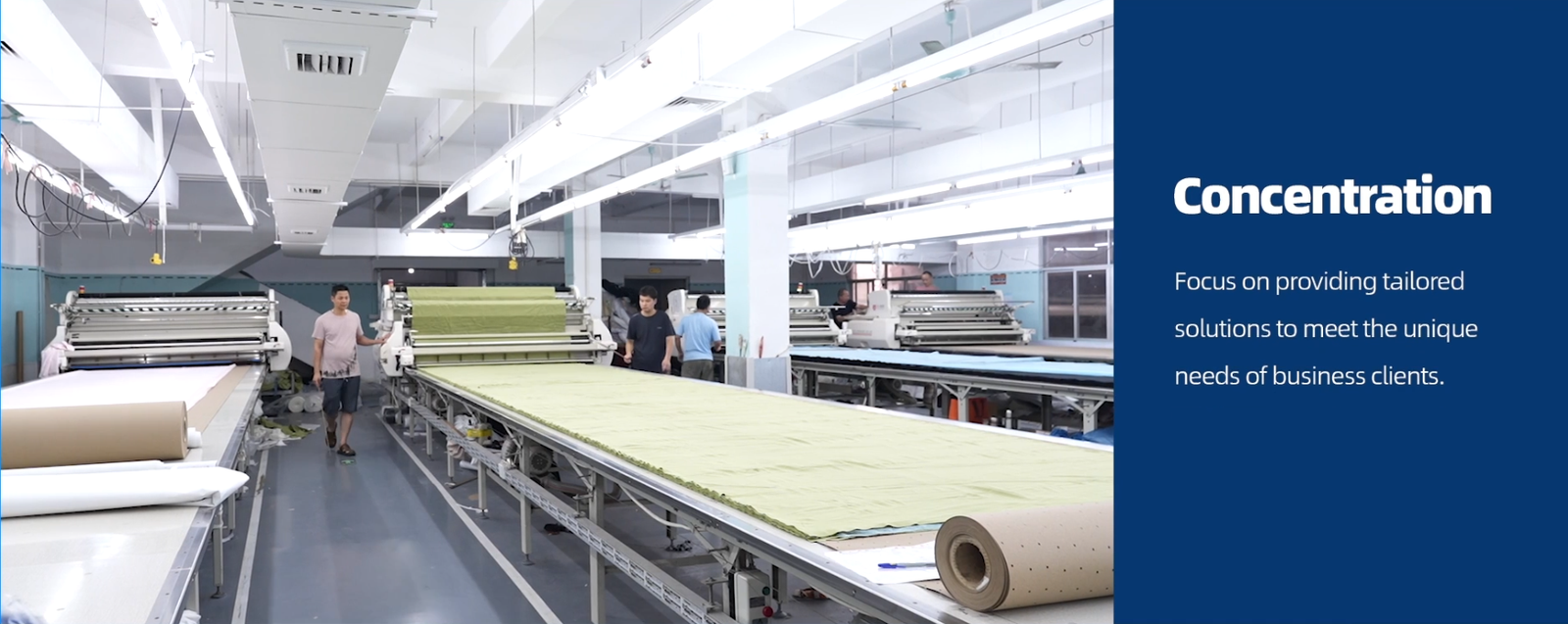
I'll tell you what I tell every buyer who pushes hard on unit price: the cheapest hoodie in the world is worthless if it arrives after your sales window closes. Price is a fixed number. A missed deadline has a cost you can't calculate until it's already too late.
The Real Cost of a Delayed Shipment
Think about what actually happens when a bulk order is 3 weeks late:
- Your pre-launch marketing has already run
- Your inventory is not in the warehouse
- Your wholesale customers may cancel or charge back
- You may miss a key seasonal window entirely — Black Friday, back-to-school, holiday gifting
None of these losses show up in the unit price comparison you did at the start.
What a Realistic Lead Time Looks Like
| Stage | Realistic Timeframe | Red Flag |
|---|---|---|
| Sample production | 7–14 days | More than 3 weeks |
| Sample revision | 5–7 days | No revision window offered |
| Bulk production | 3–4 weeks | "Depends on our schedule" |
| QC and final check | 2–3 days | Skipped entirely |
| Shipping arrangement | 1–3 days | Factory handles nothing |
Communication Speed Is Part of Lead Time
Lead time is not only about production speed. It also depends on how fast both sides confirm details. If the buyer sends clear artwork, size chart, logo file, and color reference, the factory can move faster. If the factory replies slowly, even a simple sample takes too long.
A factory that communicates fast and delivers on small promises will do the same on big ones.
How to Test a Factory Before You Order
Don't just ask. Test it. Send a detailed inquiry and measure how long they take to respond. Ask for a sample and track whether it arrives when they said it would. Speed and accuracy at the inquiry stage is a reliable signal of how they run production.
At DeCheng, our full supply chain — fabric sourcing, cutting, sewing, printing, QC — runs in-house. There are no third-party delays breaking the timeline. That's how we keep samples at 7 to 14 days and bulk at 3 to 4 weeks as a standard, not a best case.
Conclusion
Picking a hoodie manufacturer in China comes down to five things: MOQ flexibility, sample integrity, the right production model, verified certifications, and a lead time you can count on. Get all five right and you have a factory worth building a long-term relationship with. If you're looking for a manufacturing partner that checks all of these boxes — with low MOQ starting from 50 pieces and samples ready in 7 to 14 days — visit www.dechoreal.com or email joe@dc-garment.cn.
References
[^1]: OEKO-TEX Standard 100 — fabric safety testing for textiles: https://www.oeko-tex.com/en/our-standards/oeko-tex-standard-100
[^2]: Global Organic Textile Standard (GOTS) — the leading standard for organic fiber processing: https://global-standard.org
[^3]: Sedex and SMETA — ethical trade auditing framework used by global buyers: https://www.sedex.com
[^4]: Global Recycled Standard (GRS) — certification for recycled material content in textiles: https://textileexchange.org/standards/global-recycled-standard/