

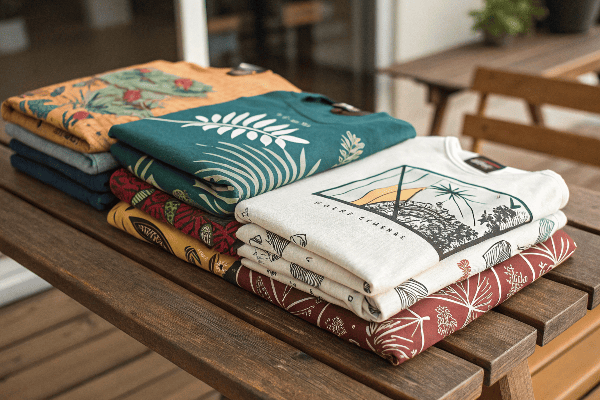
A simple T-shirt can do more than cover the body. For a startup brand, it can work like a moving advertisement. When done well, a T-shirt becomes a “traffic-generating artifact.”
T-shirts can attract traffic for a startup by acting as wearable marketing. Creative designs, bold messages, limited editions, and social media sharing help a brand gain visibility and bring people to its online store.
I have seen many small brands turn a single T-shirt design into a trend. Here’s how that process works step by step.
Table of Contents
- Why can a T-shirt generate traffic for a startup?
- How can design turn a T-shirt into a marketing tool?
- How does storytelling make a T-shirt special?
- How can limited editions create hype?
- How can startup brands use social media with T-shirts?
- Can collaborations turn T-shirts into traffic?
- How do T-shirts keep generating traffic over time?
- Conclusion
Why can a T-shirt generate traffic for a startup?
People love wearing clothes that say something about who they are. A startup can use this to gain attention.
A good T-shirt design spreads brand identity every time someone wears it. It becomes a conversation starter that attracts eyes online and offline.
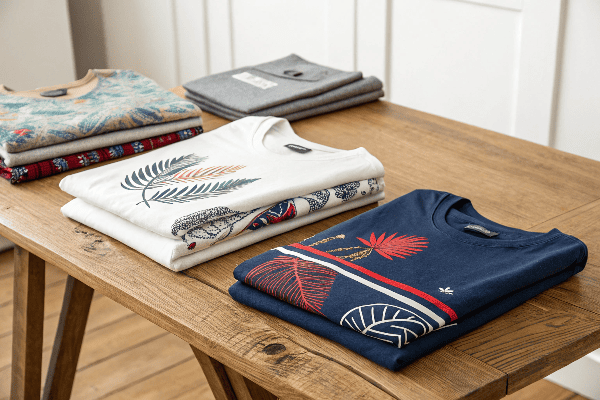
- Visibility: Every wearer is a walking billboard.
- Word of mouth: Friends ask where the T-shirt came from.
- Social sharing: Eye-catching designs are posted on social media.
More insights on fashion as a marketing tool can be found on Shopify Blog.
How can design turn a T-shirt into a marketing tool?
Design is the first step to making a T-shirt worth talking about.
A T-shirt with unique artwork, strong typography, or a cultural reference gets noticed faster than a plain shirt.
- Use clear brand identity but keep it wearable.
- Combine trendy themes with your logo.
- Choose limited edition drops to create demand.
For design inspiration, explore Dribbble for creative graphics.
How does storytelling make a T-shirt special?
A story makes a T-shirt more than just fabric.
When I tell the story behind a T-shirt—why I made it and what it stands for—it connects with people. That connection makes them want to share it.
- Link the design to your brand’s mission.
- Share behind-the-scenes content on how it was made.
- Use packaging and tags to include the story.
Brand storytelling techniques are covered on HubSpot Blog.
How can limited editions create hype?
Scarcity attracts attention.
Limited drops make a T-shirt feel exclusive. People rush to get it before it sells out. This drives traffic to your store.
- Use small batch runs for early collections.
- Announce release dates on social media.
- Encourage customers to post unboxing photos.
How can startup brands use social media with T-shirts?
Social media is a free and effective way to make a T-shirt design go viral.
Posting styled photos, videos, and behind-the-scenes clips of a T-shirt design creates buzz and pushes traffic to the brand website.
- Offer giveaways where people must share posts.
- Ask customers to tag your brand in their photos.
- Use hashtags that align with your niche.
Learn practical social strategies on Later Blog.
Can collaborations turn T-shirts into traffic?
Collaboration helps a small brand reach a bigger audience.
Partnering with an influencer, an artist, or another brand creates new interest and brings new followers to the store.
- Influencers wear your T-shirt on social media.
- Artists provide designs that bring in their fans.
- Other small brands co-release T-shirts to share traffic.
How do T-shirts keep generating traffic over time?
A good T-shirt keeps working even after the first sale.
Every time someone wears your T-shirt in public or posts it online, it generates new views for your brand without extra cost.
- Encourage customers to style the T-shirt in different ways.
- Collect user-generated content for future campaigns.
- Keep creating designs that are timeless.
Conclusion
A well-designed T-shirt can be a traffic-generating artifact for a startup brand. With unique design, a strong story, limited editions, and smart social sharing, a simple garment can bring attention, customers, and growth.
- Marketing with fashion: Shopify Blog
- Creative graphic inspiration: Dribbble
- Storytelling techniques: HubSpot Blog
- Social strategies: Later Blog