
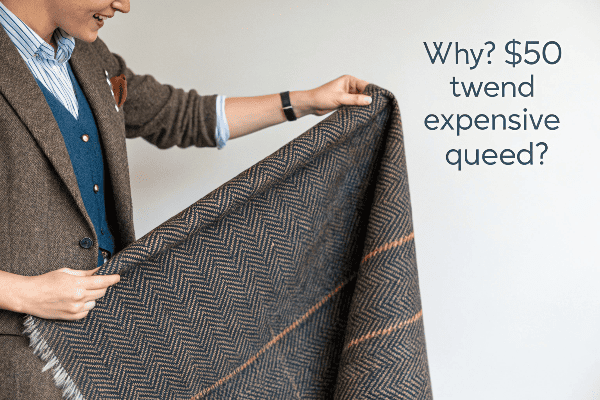
Tweed looks rugged, classic, and sometimes even understated—but when you check the price tag, it often surprises you. Why would a fabric associated with countryside charm cost so much?
Tweed is expensive due to its complex weaving process, use of high-quality wool, traditional craftsmanship, and low-speed production. Many tweeds are still handwoven, especially in Scotland and Ireland.
I remember holding my first Harris Tweed jacket—it wasn’t flashy, but the texture and weight told me it was something special. You can’t fake that kind of authenticity.
Table of Contents
- What is tweed made from, and why does it matter?
- Why does the weaving method increase the cost?
- Does certification play a role in tweed pricing?
- Is tweed a seasonal or slow fashion material?
- Conclusion
What is tweed made from, and why does it matter?
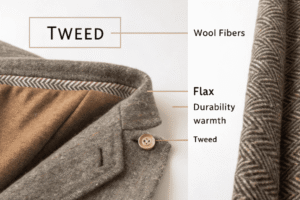
Tweed starts with wool—but not just any wool.
Most premium tweeds are made from virgin wool, often sourced from hardy sheep breeds raised in cold climates. The yarns are thick, durable, and hold dye well.
Wool quality and sourcing
| Factor | Impact on Price |
|---|---|
| Virgin wool | Costs more than recycled or blended fibers |
| Local sourcing | Higher costs in UK/Europe than Asia |
| Dyeing techniques | Tweed uses pre-dyed fibers (not yarn), adding complexity |
This raw material alone puts tweed into a higher cost tier than many synthetic fabrics[^1].
Why does the weaving method increase the cost?
Tweed is woven slowly and carefully.
Unlike basic fabrics, tweed often uses multi-color weft yarns in intricate patterns like herringbone, windowpane, and houndstooth—requiring more time and skill per meter.
Weaving complexity
- Traditional looms: Used in places like the Outer Hebrides[^2]
- Manual operation: Especially for Harris Tweed
- Heavy texture: More yarn and tighter weaving = higher cost
- Low output: Small batches, low scalability
Every meter of tweed takes more labor and effort than mass-produced fabrics.
Does certification play a role in tweed pricing?
Absolutely. Especially for heritage tweeds like Harris Tweed.
Harris Tweed is protected by law and must be handwoven in the Outer Hebrides. Each piece is inspected and stamped, making it not just fabric—but a certified product.
The Harris Tweed Act
| Rule | Cost Impact |
|---|---|
| Must be handwoven at home | Limits automation, increases time |
| Must use local wool | Higher material cost |
| Every meter inspected | Adds labor, enforces quality |
You’re paying for the fabric—but also for its provenance and protection under the Harris Tweed Authority[^3].
Is tweed a seasonal or slow fashion material?
Tweed is the opposite of fast fashion.
It's a cold-weather, long-lasting, heirloom-quality fabric. That means it’s produced slowly, with timeless design and purpose, not trend-chasing.
The slow fashion effect
- Durability: One tweed blazer can last decades
- Timeless style: Never goes out of fashion, reducing volume
- Low waste: Made in limited runs, often on-demand[^4]
The price reflects not only production cost, but long-term value.
Conclusion
Tweed is expensive because it respects tradition, uses top-grade wool, and takes real skill to produce. Whether it's woven in a Scottish cottage or tailored into a blazer, tweed carries history and quality—and that’s something worth paying for.
[^1]: Woolmark. "Why Virgin Wool Is a Luxury Material"
[^2]: BBC. "The Hand Weavers of the Outer Hebrides"
[^3]: Harris Tweed Authority. "Legal Protection of Harris Tweed"
[^4]: The Good Trade. "Why Tweed Fits into the Slow Fashion Movement"