
The first time I saw the price tag on a hemp hoodie, I was shocked. It was almost double the price of a regular cotton hoodie. I couldn’t understand why until I started sourcing hemp fabrics for clients. The answer is not just about the fabric but the entire supply chain.
Hemp clothing is expensive because hemp farming, fiber processing, and fabric weaving are more complex and costly. Hemp requires specialized equipment, lower production volumes, and more manual work compared to cotton or polyester, which increases the final price.
I learned this firsthand when I quoted hemp T-shirts for a U.S. client. The cost per piece was almost 40% higher than cotton. After explaining the reasons, they still ordered because of the premium eco value.
Explore how hemp clothing is made
Table of Contents
- Is hemp farming more expensive?
- Why is hemp fiber harder to process?
- Are weaving and knitting hemp fabrics costly?
- Why does hemp clothing have limited supply?
- Are certifications and eco-labels adding cost?
- Why is hemp considered a premium fabric?
- Conclusion
Is hemp farming more expensive?
The cost starts at the farm level.
Hemp farming often costs more because it is not produced on a massive industrial scale like cotton. Farmers also face regulations, limited processing facilities, and higher seed costs.
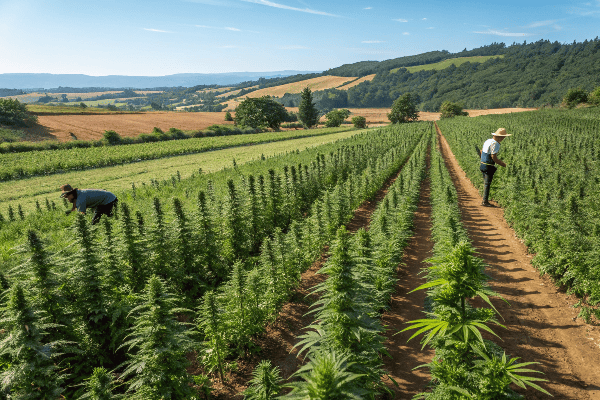
From my experience, hemp is still grown in smaller areas compared to cotton. Less supply means higher prices. Many farms also grow hemp organically, which adds to labor and certification costs.
A supplier in Yunnan, China, once told me that even though hemp grows with fewer chemicals, manual harvesting is labor-intensive. That raises the cost before the fabric even reaches the factory.
Learn more about hemp farming economics
Why is hemp fiber harder to process?
The raw hemp plant is tough.
Hemp stalks have strong outer fibers that need special machinery for decortication (fiber separation). The process is more time-consuming and costly than cotton ginning.
Cotton fibers are soft and easy to clean. Hemp requires soaking, breaking, and combing—each step adds labor, energy use, and time.
Typical hemp fiber process:
- Retting – Loosens fibers
- Breaking – Crushes stalks
- Scutching and Hackling – Combs and softens
That’s why raw hemp yarn is more expensive than cotton yarn.
Are weaving and knitting hemp fabrics costly?
Yes, because of yarn behavior.
Hemp yarn is stiffer and harder to spin. It requires slower weaving or blending with other fibers like cotton to improve softness. This increases production costs.
I once ordered 100% hemp jersey. The price was nearly twice that of an organic cotton jersey. The mill said spinning hemp took longer and needed special handling.
Common blends to reduce cost:
- 55% hemp + 45% organic cotton
- 40% hemp + 60% cotton
Even blends aren’t as cheap as conventional fabrics, since the base hemp yarn cost remains high.
Why hemp is rarely used alone in fashion
Why does hemp clothing have limited supply?
Hemp fashion is still a niche market.
Because fewer factories work with hemp, the economies of scale are smaller. Low demand compared to cotton and polyester means mills can’t produce huge batches, which keeps costs high.
I know only a few reliable suppliers in China and India who offer consistent hemp fabric lines. Most have small minimums and long lead times.
Brands like Patagonia or Tentree are helping increase demand, but the infrastructure is still catching up.
Are certifications and eco-labels adding cost?
Yes, especially for premium brands.
Hemp clothing often carries certifications like GOTS or OEKO-TEX, which require audits, testing, and paperwork. These extra steps add cost per garment.
I once handled a GOTS-certified hemp project. Certification fees and lab testing added nearly 15% to the production cost—but clients saw it as part of their sustainable image.
Global Organic Textile Standard (GOTS) process
Why is hemp considered a premium fabric?
It’s not just about cost—it’s also about performance.
Hemp fabric lasts longer, resists odor, and gets softer over time. It’s positioned as a luxury sustainable textile, which commands higher retail prices.
When I compare a hemp T-shirt to a cotton one:
- Hemp lasts longer
- Requires fewer washes
- Holds shape better
Even though the upfront price is higher, the value over time is better. That’s why many eco-conscious brands invest in hemp despite the cost.
Is hemp fabric worth the cost?
Conclusion
Hemp clothing is expensive because of limited supply, complex processing, and eco certifications. But it’s worth it for brands and buyers who want durability and sustainability. The price reflects the premium quality and environmental benefits.
- Hemp Foundation. Why Hemp Fabric Is Expensive. Retrieved from https://hempfoundation.net/why-hemp-fabric/
- Textile Exchange. Hemp Material Report. Retrieved from https://textileexchange.org/materials/hemp/
- Good On You. Hemp Fabric Sustainability Guide. Retrieved from https://goodonyou.eco/material-guide-hemp/
- Global Organic Textile Standard. Certification Standards. Retrieved from https://global-standard.org/
- Earth.org. Hemp vs Cotton Environmental Impact. Retrieved from https://earth.org/why-hemp-is-more-sustainable-than-cotton/