
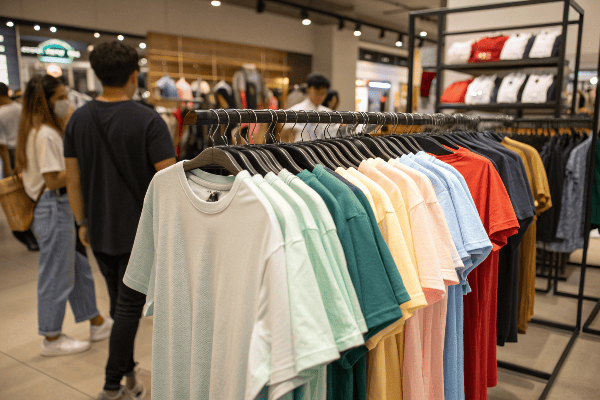
With trends constantly shifting in fashion, you’d think something as simple as the basic T-shirt would lose steam. I thought the same—until I dug into market data and realized our best-selling SKUs haven’t changed in years.
The basic T-shirt market has long-term growth potential because it serves essential needs, adapts easily to trends, supports personalization, and aligns with sustainability and e-commerce expansion.
I’ve seen firsthand how even small tweaks—better fabric, new colors, or a recycled version—can revive demand. For startups and large retailers alike, the basic T-shirt is a timeless engine for growth.
Table of Contents
- Why are basic T-shirts always in demand?
- How does customization drive growth?
- What role does sustainability play in T-shirt growth?
- How does e-commerce fuel basic tee sales?
- Conclusion
Why are basic T-shirts always in demand?
In every collection I’ve launched, T-shirts make up the foundation. Here’s why.
Basic T-shirts are wardrobe essentials across all demographics, offering daily comfort, versatility, and ease of styling.
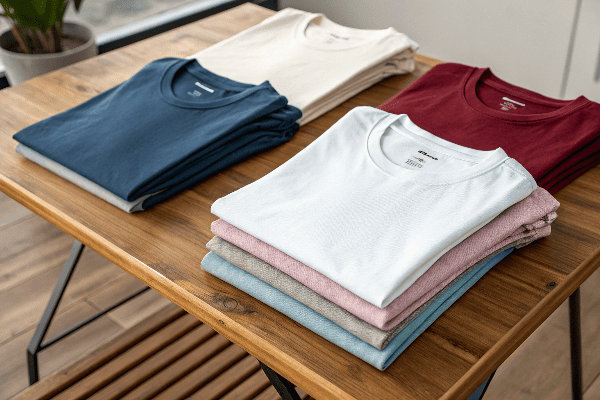
Core reasons for stable demand:
| Reason | Explanation |
|---|---|
| Universality | Worn by people of all ages, genders, and regions |
| Seasonless Appeal | Can be worn year-round or layered with other garments |
| Customization Ready | Perfect for printing, branding, or embroidery |
| Affordable Entry | Low manufacturing costs = high profit margins |
According to Statista[^1], the global T-shirt market is expected to surpass $263 billion by 2027. We’ve had clients reordering the same basic tee design for five years—just changing labels or colors. That’s the power of consistency.
How does customization drive growth?
Customization is where the basic T-shirt becomes something more.
The rise of print-on-demand, brand personalization, and event merchandise has turned basic T-shirts into brand carriers and storytelling platforms.
Customization use cases:
- Company uniforms
- Promotional giveaways
- Music tour and festival merch
- DTC fashion startups with graphic art
Tools like Printful and TeeSpring have made it easier than ever for small brands and creators to enter the market with zero inventory[^2][^3].
One of our U.S. buyers started with 200 printed tees. Three years later, they’re placing 20K-unit orders. The base product didn’t change—only the print did.
What role does sustainability play in T-shirt growth?
Consumers are buying fewer but better garments—and T-shirts are an easy entry point.
Sustainable T-shirts made from organic cotton, bamboo, or recycled fibers align with conscious consumer trends and ESG brand positioning.
Why this matters:
| Factor | Impact |
|---|---|
| Transparency | T-shirts are easier to trace through the supply chain |
| Price Accessibility | Eco options are more affordable compared to jackets/pants |
| Brand Building | Good for mission-driven marketing and storytelling |
A report by McKinsey & Company[^4] highlights sustainability as a key growth driver in fashion. We introduced organic cotton tees with biodegradable packaging. They cost a bit more, but buyers appreciated the eco angle—and it didn’t hurt sales.
How does e-commerce fuel basic tee sales?
The T-shirt is the ultimate e-com product.
It’s lightweight, low-risk, and easy to size—making it ideal for DTC, print-on-demand, and global e-commerce businesses.
Benefits in online selling:
- Low shipping costs
- Easy to showcase in lifestyle imagery
- Quick to restock and fulfill
- Supports influencer and micro-brand strategies
As outlined by Shopify[^5], the T-shirt business model remains one of the most accessible ways to start selling online. During COVID, our tee sales actually increased due to lounge and remote work trends. That wave is still going strong in many markets.
Conclusion
The basic T-shirt isn’t going anywhere. Its simplicity, versatility, and adaptability make it a lasting asset for brands, retailers, and factories alike. It’s not just a product—it’s a platform.
From sustainability to e-commerce, the basic tee continues to prove its value—even in a fast-changing fashion landscape.
[^1]: Statista. "T-shirts - Worldwide." https://www.statista.com/outlook/cmo/apparel/t-shirts/worldwide
[^2]: Printful. "On-Demand Custom T-Shirt Fulfillment." https://www.printful.com/
[^3]: Spring. "Create and Sell Custom Products." https://www.spri.ng/
[^4]: McKinsey & Company. "The State of Fashion." https://www.mckinsey.com/industries/retail/our-insights/state-of-fashion
[^5]: Shopify. "How to Start a T-Shirt Business." https://www.shopify.com/blog/t-shirt-business