
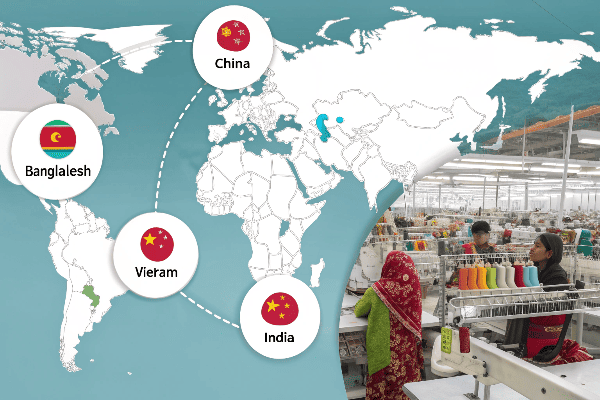
Fast fashion is built on speed—brands like Zara, H&M, and SHEIN bring new styles to market in days, not months. But to move that quickly, they rely on global manufacturing networks. So, where are these fast fashion garments actually made?
The top countries that produce fast fashion are China, Bangladesh, Vietnam, India, Turkey, and Pakistan—thanks to their low labor costs, massive garment infrastructure, and ability to handle quick turnaround orders[^1].
I’ve worked with several factories serving SHEIN and other fast retailers. What I’ve seen is clear: fast fashion is less about where a brand is headquartered, and more about where production can scale quickly and cheaply.
Table of Contents
- Why is China the leading fast fashion producer?
- What role does Bangladesh play in fast fashion?
- Why are Vietnam and India fast fashion alternatives?
- Is Turkey involved in fast fashion?
- What about Pakistan and other emerging markets?
- Conclusion
Why is China the leading fast fashion producer?
China remains the epicenter of fast fashion production.
China leads fast fashion manufacturing due to its complete textile supply chain, speed, and ability to scale both high- and low-volume orders.
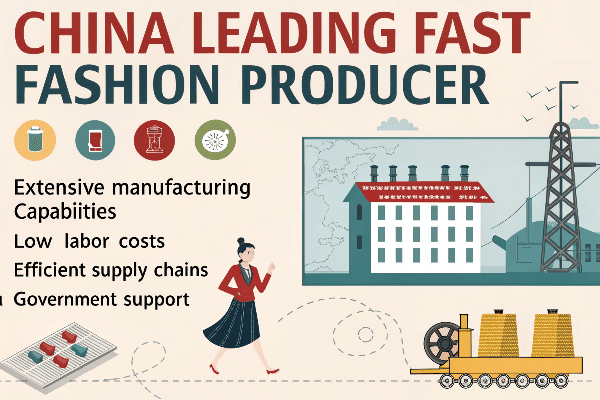
Why fast fashion thrives in China
| Strength | Detail |
|---|---|
| Vertical integration | Fabric, trims, dyeing, cutting, sewing in one location |
| Rapid prototyping | Samples in 3–7 days, production in 10–15 days |
| Tech-enabled factories | Use of PLM, AI, automation for fast reordering |
| E-commerce adaptation | Serves SHEIN, TikTok Shop, and Amazon brands |
Cities like Guangzhou, Dongguan, and Yiwu are hubs for ultra-fast production[^2].
What role does Bangladesh play in fast fashion?
Bangladesh supplies low-cost basics at massive scale.
Bangladesh is one of the largest garment exporters in the world, producing large volumes of fast fashion basics like T-shirts, sweatshirts, and woven shirts.
Bangladesh in the fast fashion supply chain
| Factor | Why It Works |
|---|---|
| Labor cost | Among the lowest globally |
| Mass capacity | Factories handle orders in the millions |
| Major clients | H&M, Zara, Uniqlo, Primark |
| Weakness | Slower turnaround than China or Vietnam |
If you’re focused on high-volume essentials, Bangladesh offers unbeatable unit cost[^3].
Why are Vietnam and India fast fashion alternatives?
These countries offer a balance of quality, speed, and cost.
Vietnam and India are rising stars in fast fashion, especially for brands looking to diversify beyond China or produce fashion-focused basics.
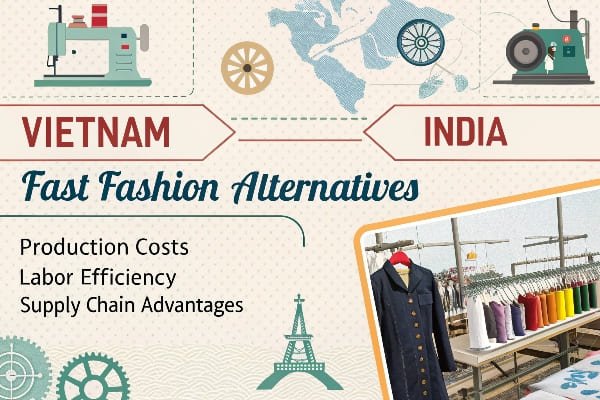
Comparing India and Vietnam
| Country | Strengths | Limitation |
|---|---|---|
| Vietnam | Clean production, strong QC, export treaties | Higher MOQs than Bangladesh |
| India | Great for cotton, prints, embroidery | Slower factory setup and delivery |
Both countries are increasingly used for “China + 1” sourcing strategies[^4].
Is Turkey involved in fast fashion?
Yes—especially for European brands.
Turkey is a key fast fashion supplier for the EU market, thanks to its proximity, speed, and mid-tier cost.
Turkey’s role in the supply chain
| Feature | Benefit |
|---|---|
| Geographic location | Fast truck shipping to Europe |
| Flexible production | Suits mid-sized fashion brands |
| Style alignment | Trend-forward designs and pattern making |
| Typical buyers | Zara, Mango, Bershka, European e-commerce |
Turkey is ideal for brands that prioritize speed to Europe and higher-end fast fashion styles[^5].
What about Pakistan and other emerging markets?
Pakistan is often overlooked but growing steadily.
Pakistan produces a significant share of fast fashion knitwear and denim, especially for U.S. and UK retailers.
| Category | Note |
|---|---|
| Knitwear | Cotton-heavy basics, joggers, sweatshirts |
| Denim | Raw denim + garment-washed fashion jeans |
| Major markets | U.S., U.K., Germany |
| Opportunity | Strong fabric mills and cost competitiveness |
Other upcoming markets include Cambodia, Ethiopia, and Myanmar, but infrastructure is still developing[^6].
Conclusion
Fast fashion is produced in a global network led by China, Bangladesh, Vietnam, India, Turkey, and Pakistan. Each country offers unique advantages—from ultra-fast sampling in China to low-cost mass production in Bangladesh. Choosing the right supplier depends on your price point, product type, and speed-to-market needs.
[^1]: FashionUnited: Top garment manufacturing countries
[^2]: China Briefing: Apparel Manufacturing in China
[^3]: BGMEA - Bangladesh Garment Manufacturers and Exporters Association
[^4]: McKinsey & Company: Sourcing in a volatile world
[^5]: Textile Today: Turkey’s textile growth
[^6]: ILO: Garment industries in developing countries