
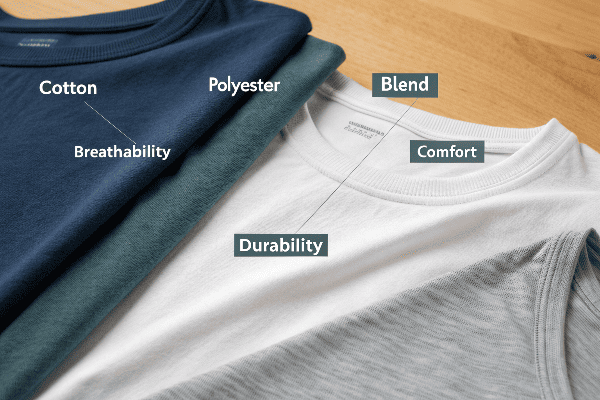
I’ve spent years sourcing fabrics for T-shirts—from budget blends to luxury knits. Each time a client asks, “What’s the best material?” I know they’re really asking: What balances comfort, durability, and cost for their audience?
The best material for a T-shirt depends on its use. For daily wear, 100% cotton is soft and breathable. For performance, polyester or blends offer moisture control. For sustainability, organic cotton or bamboo is ideal.
When we launched a T-shirt line using bamboo-cotton blends, the feedback was immediate—our customers loved the feel, and the story helped sales too.
Table of Contents
- What’s the most popular T-shirt material?
- What materials are best for sportswear?
- What about sustainable T-shirt fabrics?
- Which material should you choose?
- Conclusion
What’s the most popular T-shirt material?
Let’s start with the basics: the one everyone knows—cotton.
100% cotton is the most widely used T-shirt fabric due to its comfort, breathability, and natural softness.
Common features of cotton:
| Property | Details |
|---|---|
| Feel | Soft, natural |
| Breathability | High |
| Skin Sensitivity | Hypoallergenic |
| Downsides | Shrinks, wrinkles easily, slow to dry |
Cotton remains my go-to for casualwear and fashion clients who want natural fibers with a premium feel. According to Cotton Incorporated, more than 60% of all clothing contains cotton[^1].
What materials are best for sportswear?
Performance wear has different demands—sweat, stretch, and durability.
Polyester and cotton-polyester blends are best for sportswear because they wick moisture, dry fast, and stretch well.
Key benefits of synthetic and blended fabrics:
- Lightweight and quick-drying
- Durable with high color retention
- Often includes elastane (spandex) for stretch
- Doesn’t shrink or wrinkle easily
Brands like Nike and Under Armour rely heavily on poly-based tech fabrics for their performance lines[^2][^3].
For our activewear clients, we often use 95% polyester + 5% spandex for optimal movement and breathability.
What about sustainable T-shirt fabrics?
Many of my buyers now ask about eco-friendly options. That’s a good sign.
Organic cotton, bamboo, hemp, and TENCEL™ are the best T-shirt materials for sustainability, offering a balance of comfort and low environmental impact.
Comparison of sustainable fabrics:
| Fabric | Benefits |
|---|---|
| Organic Cotton | No chemicals, soft feel, widely accepted |
| Bamboo | Naturally antibacterial, moisture-wicking |
| Hemp | Strong, breathable, minimal water usage |
| TENCEL™ | Smooth, silky, made from wood pulp sustainably |
These materials are often certified by organizations like GOTS and OEKO-TEX[^4][^5]. We recently developed a custom label using bamboo-cotton fabric. It not only elevated the product image but also helped clients market their environmental values.
Which material should you choose?
It depends on your market, pricing, and values.
Choose cotton for comfort, polyester for performance, and sustainable blends if your audience values eco-responsibility. Blends often offer the best of both worlds.
Quick guide:
| Goal | Best Material |
|---|---|
| Everyday basics | 100% cotton |
| Budget bulk orders | Cotton-polyester blend |
| Activewear | Polyester with spandex |
| Eco-conscious brand | Organic cotton or bamboo blend |
| Premium feel | Supima cotton or TENCEL™ |
Before choosing, think about washability, climate, and your brand story. The right fabric helps you sell more than a shirt—it helps sell trust.
Conclusion
There’s no one-size-fits-all answer. The best T-shirt material depends on your audience, usage, and brand goals. Choose what fits your values—and theirs.
Want to dive deeper into sustainable textile choices? Earth.org has a great guide on eco materials[^6].
[^1]: Cotton Incorporated. "What Consumers Really Want in Cotton." https://www.cottoninc.com/
[^2]: Nike. "Sustainability at Nike." https://www.nike.com/sustainability
[^3]: Under Armour. "Environmental Sustainability." https://www.underarmour.com/en-us/about/environmental-sustainability
[^4]: Global Organic Textile Standard. https://global-standard.org/
[^5]: OEKO-TEX®. "STANDARD 100 by OEKO-TEX®." https://www.oeko-tex.com/en/
[^6]: Earth.org. "A Practical Guide to Sustainable Fashion." https://earth.org/guide-to-sustainable-fashion/