
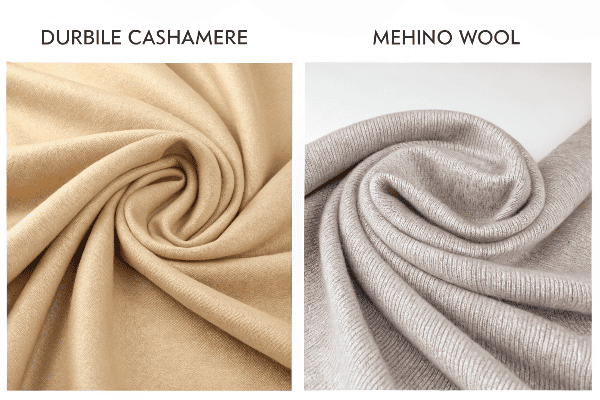
Many people love soft sweaters. They stand in a store and wonder which one to choose. Cashmere feels like luxury. Merino wool feels natural and fine. Both look good, but which is better?
Cashmere is softer and warmer, while merino wool is more durable and easier to care for. The best choice depends on your budget, your climate, and how you wear knitwear.
I still remember the first time I compared them in my factory. I touched cashmere on one hand and merino on the other. They both felt good, but very different.
Table of Contents
- How are cashmere and merino wool different?
- Which one is softer and warmer?
- Which one lasts longer?
- Which one gives better value?
- When should you choose cashmere? When should you choose merino?
- Conclusion
How are cashmere and merino wool different?
The source of the fiber makes these two wools unique. This is the first big difference you notice when you study them.
Cashmere comes from the fine undercoat of goats, while merino wool comes from a special breed of sheep called merino.

Origin details
- Cashmere goats: Found in Mongolia, Nepal, Inner Mongolia (China), and parts of Iran. They produce a very fine and warm undercoat.
- Merino sheep: Bred mostly in Australia and New Zealand. Their wool is thin, elastic, and soft.
- Key difference: Cashmere fibers are shorter, softer, and lighter. Merino fibers are slightly thicker, stronger, and more elastic.
For more on fiber origins, visit Britannica – Cashmere and Merino.
Which one is softer and warmer?
Many people choose knitwear by how it feels on the skin and how warm it is in winter.
Cashmere is softer and warmer than merino wool because its fibers are finer and trap heat better while staying very light.
Softness
- Cashmere: Silky, smooth hand feel. Can be worn next to the skin without itching.
- Merino: Soft but slightly more textured.
Warmth
- Cashmere: Traps air to insulate. Very warm for its weight.
- Merino: Warm but also breathable, keeping your body temperature stable.
For deeper reading, see Vogue’s cashmere buying guide.
Which one lasts longer?
Durability is a key question for buyers. I see clients choose between these two materials based on how long they want to use the garment.
Merino wool lasts longer than cashmere because it is more elastic, holds its shape better, and resists pilling with proper care.
Strength and care
- Elasticity: Merino stretches and recovers better.
- Pilling: Cashmere is more prone to pilling if the yarn twist is low.
- Care: Cashmere requires delicate hand wash. Merino can sometimes be washed on a gentle machine cycle.
| Property | Cashmere | Merino Wool |
|---|---|---|
| Softness | Very soft | Soft |
| Warmth | Very warm | Warm |
| Durability | Delicate | Stronger |
| Care | Hand wash | Easier to wash |
Which one gives better value?
When you compare price and performance, you see a clear pattern.
Merino wool gives better value for money for everyday use, while cashmere gives luxury and long-term value if you can maintain it well.
Price vs performance
- Cashmere: Rare and expensive. Best for luxury and special pieces.
- Merino: Affordable, practical, and strong.
For an industry perspective, check The Woolmark Company for why merino is popular for performance and everyday wear.
When should you choose cashmere? When should you choose merino?
Many of my clients ask me this before they place an order. They want to match material to purpose.
Choose cashmere for luxury, soft touch, and warmth in cold, calm conditions. Choose merino wool for active, everyday use where you need durability and breathability.
Cashmere is better if:
- You want luxury office or evening sweaters.
- You like very soft, lightweight clothing.
- You can give it careful hand washing.
Merino wool is better if:
- You need clothing for sports, hiking, or travel.
- You want a balance between quality and price.
- You prefer easy care.
Conclusion
Cashmere feels softer and warmer. Merino wool is stronger and more practical. The best choice depends on your lifestyle and how you plan to use the garment.