
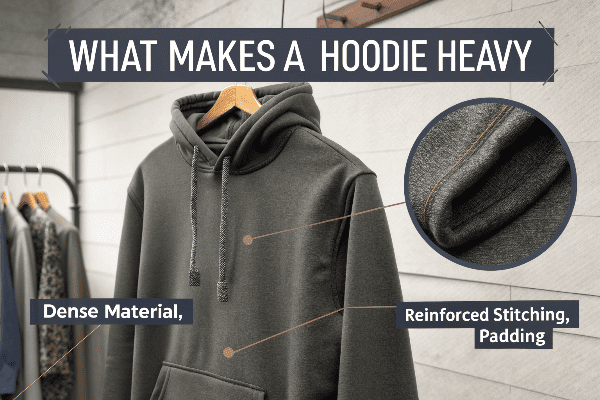
Not all hoodies are made equal. Some feel light and casual—others feel solid, structured, and warm. If you've ever wondered why certain hoodies feel heavier, the answer comes down to more than just thickness.
A hoodie’s weight is mainly determined by its fabric density (measured in GSM), material blend, and construction features like lining, trims, and stitching. Heavy hoodies typically use fleece or brushed back cotton fabrics with high GSM (over 400).
I’ve worked with brands that wanted their hoodies to “feel premium,” and the quickest way to achieve that was using heavier fleece and more structured construction.
Table of Contents
- What does GSM mean and how does it affect hoodie weight?
- How do fabric types influence the heaviness of a hoodie?
- What design details contribute to hoodie weight?
- Are heavyweight hoodies better quality?
- Conclusion
What does GSM mean and how does it affect hoodie weight?
GSM stands for grams per square meter—it measures fabric density.
The higher the GSM, the heavier the fabric. Lightweight hoodies range from 200–300 GSM, while heavyweight options go from 400–500+ GSM.
Learn more from this detailed GSM vs oz/yd² guide[^1].
GSM and fabric performance
| GSM Range | Description | Best For |
|---|---|---|
| 200–280 GSM | Lightweight, breathable | Spring/Summer wear |
| 300–380 GSM | Midweight, moderate insulation | Year-round casual use |
| 400–500+ GSM | Heavy, structured | Winter, streetwear, luxury |
Heavy GSM doesn’t just add warmth—it adds shape retention, durability, and a more premium hand-feel.
How do fabric types influence the heaviness of a hoodie?
Not all fabrics with the same GSM feel the same.
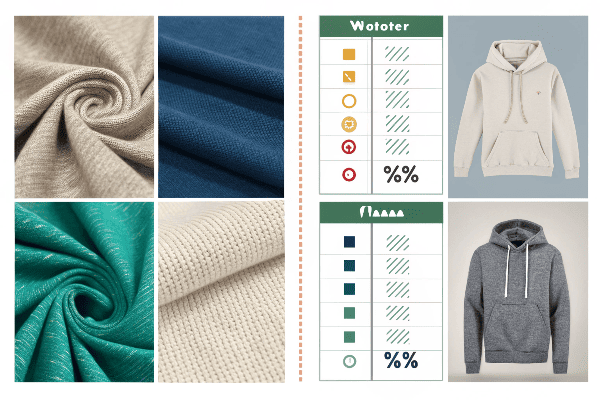
Heavy hoodies are usually made from cotton fleece, brushed cotton, or cotton/poly blends. These fabrics trap more air and warmth, adding to the weight and insulation.
Common heavyweight hoodie fabrics
| Fabric Type | Feel & Function | Notes |
|---|---|---|
| Cotton Fleece | Thick, warm, brushed inside | Most common for 400+ GSM hoodies |
| French Terry | Loop-back texture, less heat retention | Lighter feel, more breathable |
| Cotton-Poly Blend | Stronger, wrinkle-resistant | Adds durability, lowers cost |
For custom hoodies, I often recommend 70% cotton / 30% polyester blends at 420+ GSM for balance between structure and price.
What design details contribute to hoodie weight?
Beyond fabric, construction also adds weight.
Double-layer hoods, thick ribbing, kangaroo pockets, and metal zippers or eyelets all contribute to a hoodie’s overall weight and premium feel.
Structural design that adds mass
- Double-lined hood: Adds insulation and a more structured look
- Heavy rib cuffs and hem: Improves drape and durability
- Coverstitching: Adds extra thread layers that boost garment weight
- Zippers and hardware: Metal trims are heavier than plastic
Brands like Carhartt WIP and Fear of God Essentials use heavyweight elements to deliver a substantial, structured feel in their streetwear pieces[^2].
Are heavyweight hoodies better quality?
Not always—but often.
Heavier hoodies feel more substantial and durable, which consumers often associate with better quality. However, true quality also includes stitching, fabric type, shrink-resistance, and colorfastness.
When to choose heavyweight vs lightweight
| Weight Class | Use Case Examples |
|---|---|
| Heavyweight (400–500 GSM) | Streetwear, premium branding, cold-weather |
| Midweight (300–380 GSM) | Year-round use, brand basics |
| Lightweight (200–280 GSM) | Layering pieces, warm climates |
If you’re building a hoodie line, choose weight based on brand positioning—not just warmth.
Conclusion
What makes a hoodie heavy is a mix of high GSM fabric, warm materials like fleece, and layered design elements like double hoods or thick trims. It’s a deliberate choice that reflects quality, style, and seasonality.
[^1]: "GSM Fabric Conversion Chart" — Fabric UK. Retrieved from https://www.fabricuk.com/fabrics/2975-gsm-conversion.html
[^2]: "The Difference Between Cotton and Polyester Fleece" — Contrado Blog. Retrieved from https://www.contrado.com/blog/fabric-types-fleece/
[^3]: "French Terry vs Fleece: What’s the Difference?" — Sewport.com. Retrieved from https://sewport.com/fabrics-directory/french-terry-fabric