

When I started making knitwear samples years ago, the first thing I had to learn wasn’t the machine settings—it was fabric choice. My first mistake? Using stiff yarn that looked fine but felt awful. That’s when I realized the material decides everything.
Knitwear can be made from a wide range of materials, including cotton, wool, acrylic, polyester, viscose, nylon, and blends. The material affects how soft, stretchy, breathable, or warm the knitwear feels and performs.
Every time a client asks me, “What yarn should we use?” I answer with another question: “What’s the season, the function, and the budget?”
Table of Contents
- What are the most common materials used in knitwear?
- Is knitwear always made from natural fibers?
- What material is best for warm knitwear?
- What’s the softest material for knitwear?
- Is polyester good for knitwear?
- What are luxury knitwear materials?
- Do materials affect the shape and stretch of knitwear?
- Conclusion
What are the most common materials used in knitwear?
Most knitwear falls into one of a few main fiber types.
The most common materials used in knitwear are cotton, wool, acrylic, polyester, and viscose. These fibers can be used alone or blended to balance cost, feel, and function.
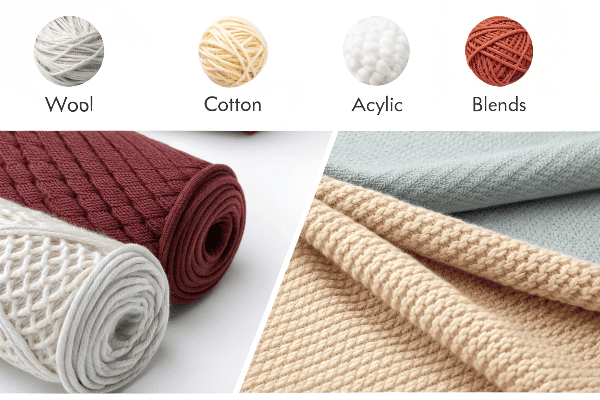
| Material | Key Traits | Best Use Cases |
|---|---|---|
| Cotton | Soft, breathable, natural | Spring/summer tops, light sweaters |
| Wool | Warm, insulating, elastic | Winter sweaters, scarves |
| Acrylic | Lightweight, budget-friendly | Casual sweaters, fashion items |
| Polyester | Durable, wrinkle-resistant | Performance knitwear |
| Viscose | Silky, drapes well | Fashion tops, dresses |
I often suggest cotton-viscose for summer, acrylic-wool for winter, and polyester blends for stretch sports knits.
See how fibers compare at Textile Exchange
Is knitwear always made from natural fibers?
Not always.
Knitwear can be made from both natural and synthetic fibers. While cotton and wool are traditional choices, modern knitwear often uses acrylic, polyester, or nylon for stretch, durability, or cost savings.
One of my clients insisted on 100% organic cotton until she realized her cardigan wouldn’t hold its shape. We switched to a 90% cotton + 10% nylon blend, and it solved the issue.
- Natural fibers (cotton, wool) = soft, breathable
- Synthetic fibers (polyester, nylon) = stretchy, strong
- Blends = combine benefits and reduce cost
That’s why most commercial knitwear is blended.
Explore natural vs synthetic fibers at Good On You
What material is best for warm knitwear?
When warmth matters, not all fibers perform the same.
Wool is the best material for warm knitwear. It traps heat, insulates even when wet, and has natural stretch. Acrylic is a cheaper alternative but less breathable.
| Fiber Type | Warmth | Breathability | Price Range |
|---|---|---|---|
| Wool | High | Medium | $$$ |
| Merino wool | Very High | High | $$$$ |
| Acrylic | Medium | Low | $ |
| Cotton | Low | High | $$ |
Wool and merino are top choices for luxury warm garments.
Why merino wool is ideal for warmth – Icebreaker
What’s the softest material for knitwear?
Many buyers prioritize touch and feel.
The softest knitwear materials are modal, viscose, bamboo viscose, and cashmere. These fabrics drape well and feel smooth against the skin.
I once made a ribbed bamboo-viscose knit tank top. The client called it “buttery.”
- Modal and viscose = ultra-soft, drapey
- Cashmere = luxurious, warm, delicate
- Cotton = soft with more structure
For softness + stability, I suggest a viscose-nylon blend.
Is polyester good for knitwear?
It depends on the purpose.
Polyester in knitwear adds strength, wrinkle resistance, and moisture-wicking, but it’s not breathable on its own. It's best used in blends or for performance knits.
I use polyester in activewear like yoga tops, leggings, and training tanks.
- Great for: gym apparel, travel clothes, fast fashion
- Not ideal for: premium fashion, skin-sensitive wearers
If comfort is key, I always blend polyester with cotton or rayon.
Learn about polyester from Made-How
What are luxury knitwear materials?
Some clients ask for upscale collections.
Luxury knitwear often uses cashmere, merino wool, silk blends, and organic cotton. These materials feel premium and last longer if properly cared for.
When producing for high-end brands, I recommend:
- 100% cashmere for scarves or premium sweaters
- Merino wool for fine gauge pullovers
- Silk-viscose blends for elegant drapes
These require hand washing or delicate cleaning.
Do materials affect the shape and stretch of knitwear?
Yes—this is a critical detail in production.
Fibers like nylon, spandex, and polyester help knitwear keep its shape. Without stretch fibers, cotton and wool knits may sag or lose structure.
| Fiber | Adds Stretch? | Holds Shape? | Best Used In |
|---|---|---|---|
| Spandex | Yes | Yes | Fitted tops, leggings, dresses |
| Nylon | Slightly | Yes | Rib knits, cardigans |
| Cotton | No | No | Relaxed fit, loose styles |
If a client wants a tight fit but uses 100% cotton, I always advise adding stretch yarn.
Conclusion
Knitwear can be made from many materials, from natural cotton and wool to soft viscose and strong synthetics. Choosing the right one depends on the season, function, and price target. The key to great knitwear is matching the fiber to the purpose—and always testing before bulk production.
- Textile Exchange. Material Snapshots. Retrieved from https://textileexchange.org/
- Good On You. The Ultimate Guide to Sustainable Fabrics. Retrieved from https://goodonyou.eco/sustainable-fabric-guide/
- Icebreaker. Why Choose Merino Wool?. Retrieved from https://www.icebreaker.com/en/why-merino/
- Made How. Polyester Production Process. Retrieved from http://www.madehow.com/Volume-3/Polyester.html