
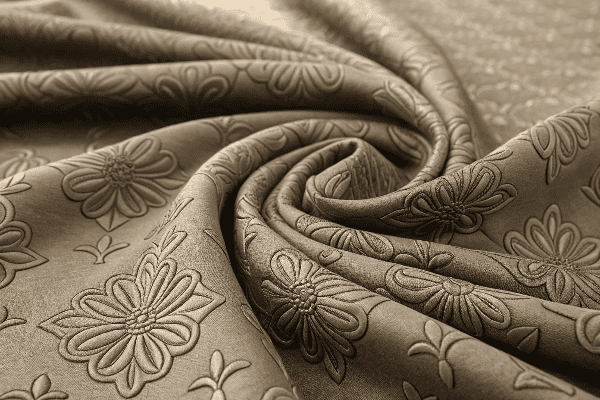
When people hear "embossed fabric," they often ask me what kind of fabric can have a 3D pattern. Many think it is a special material.
Embossed fabric is not a type of fabric. It is a fabric that has gone through heat and pressure to create a raised 3D pattern. Cotton, polyester, velvet, leather, fleece, knit blends, and even denim can be embossed.
I learned this in my factory years ago when a client wanted a raised logo on thick fleece. That project showed me how many fabrics can be embossed if you use the right technique.
Table of contents
- What fabrics can be embossed?
- How does embossing work on fabric?
- What is the difference between embossing and embroidery?
- Can you emboss stretch fabrics?
- Why do brands like embossed fabrics?
- Conclusion
What fabrics can be embossed?
Embossing is a surface process. It works on many kinds of materials.
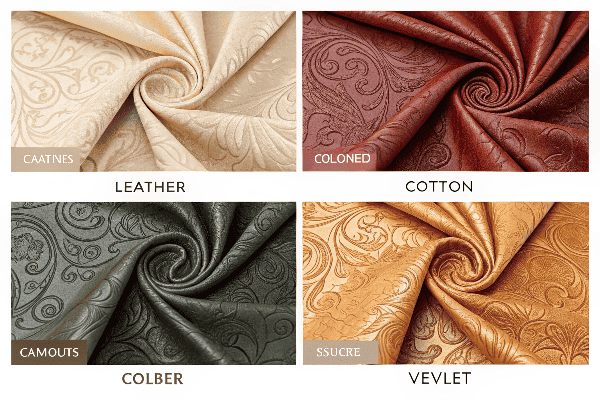
The most common fabrics for embossing are cotton, polyester, fleece, leather, velvet, denim, and synthetic blends.
Cotton
Cotton fabric can be embossed with heat. It gives a soft, natural look, but the pattern may be more subtle than on synthetic fabrics. Learn more about cotton fabric properties.
Polyester
Polyester responds very well to embossing because the heat makes the shape permanent.
Fleece
Fleece hoodies or blankets with embossing keep the raised pattern soft and fluffy.
Velvet
Velvet embossing creates a very rich, deep 3D effect. This is often used in fashion or home decor. Velvet fabrics are popular for this.
Leather and faux leather
Leather embossing is very popular. It is done with heavy pressure. Bags, shoes, and jackets often use this style.
Denim
Even denim can be embossed if the machine has enough pressure.
How does embossing work on fabric?
People think embossing means sewing. It does not.
Embossing uses heat, pressure, and sometimes steam to press a design into the fabric. The pattern is made using a heated mold or roller.
Heat and pressure
A machine presses the heated mold into the fabric. Heat softens the fibers, and pressure pushes them into shape. For an overview of textile embossing technology, see this fabric finishing guide.
3D pattern
After cooling, the raised pattern stays on the surface. On synthetic fibers, the effect is very durable.
Different finishes
Some embossing looks glossy. Others stay matte. It depends on fabric and mold.
What is the difference between embossing and embroidery?
Many clients ask this when we develop custom hoodies or jackets.
Embossing changes the surface of the fabric without adding thread. Embroidery uses thread to sew a pattern on top.
When to choose embossing
- You want a clean 3D texture with no added weight
- You want a modern look
- You want to avoid thread
When to choose embroidery
- You want colorful patterns
- You need a very durable logo
- You do not mind extra thickness
For more on embroidery techniques, visit MadeHow – Embroidery Process.
Can you emboss stretch fabrics?
Some fabrics like spandex or lycra are hard to emboss.
Stretch fabrics can be embossed if the design is simple and the fabric blend has stable fibers. Very elastic fabrics may lose the pattern after long use.
Stabilizing the fabric
Sometimes we add a layer behind the fabric before embossing. It helps the pattern stay.
Why do brands like embossed fabrics?
Embossing gives a very modern and clean effect.
Many sportswear and streetwear brands use embossing because it looks premium and it is not easy to copy.
My own projects
In my factory, we emboss logos on hoodies, sweatpants, and even yoga sets. It makes the style look unique.
Conclusion
Embossing can be done on many fabrics like cotton, polyester, fleece, velvet, leather, and denim. The key is using heat and pressure to create a permanent 3D pattern.