
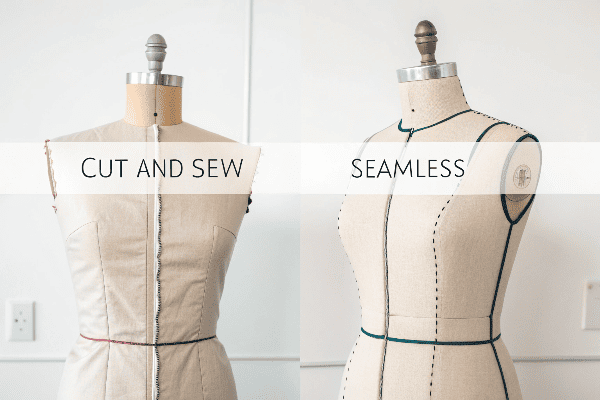
If you’ve ever compared two garments—one with visible stitches and one that seems to have no seams—you’ve probably wondered how they’re made. The answer lies in two popular manufacturing techniques: cut and sew vs. seamless. Understanding the difference can help you choose the right process for your brand or wardrobe.
Cut and sew involves cutting fabric into pieces and stitching them together, while seamless garments are made in one piece using circular knitting machines, reducing or eliminating seams.
I remember the first time I held a seamless yoga set—it felt like a second skin. But when I launched my first apparel line, we chose cut and sew for its flexibility and cost-effectiveness. Both methods have strengths depending on the design and use case.
Table of Contents
- What exactly is the cut and sew method?
- What is seamless garment production?
- How do cut and sew and seamless compare in performance and cost?
- Conclusion
What exactly is the cut and sew method?
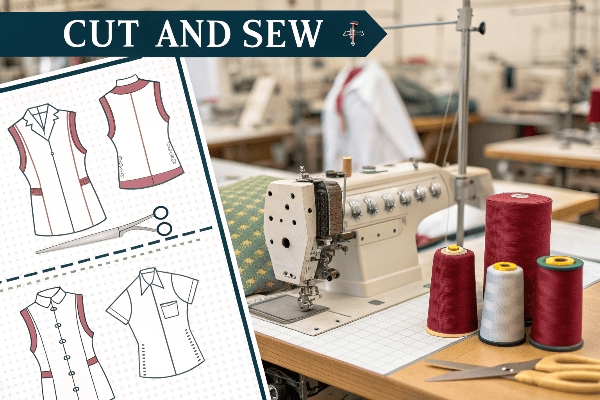
Cut and sew is the most traditional way to make garments.
It starts with fabric being cut into individual pattern pieces, which are then stitched together. This method is widely used for T-shirts, hoodies, jackets, and most fashion apparel.
Why is cut and sew so popular?
Cut and sew allows full control over:
- Fabric type
- Garment shape and size
- Custom details like zippers, pockets, or color-blocking
| Feature | Cut and Sew Details |
|---|---|
| Fabric Use | Any woven or knit fabric |
| Design Flexibility | High – allows complex shapes and custom features |
| MOQ | Lower MOQ for small brands |
| Application | T-shirts, hoodies, streetwear, jackets |
Cut and sew is ideal if you want full creative control or need garments with detailed construction[^1].
What is seamless garment production?
Seamless garments are made using circular knitting technology.
These garments are knit in a tube form, often without side seams, using advanced machines. They are especially common in activewear like leggings, sports bras, and compression tops.
Why choose seamless over traditional methods?
Seamless garments offer a clean, modern look and superior comfort for movement. The technology allows functional elements like ventilation zones or compression areas to be knit directly into the garment.
| Feature | Seamless Details |
|---|---|
| Fabric Use | Nylon, polyester blends with spandex |
| Fit | Body-hugging, often compression-based |
| Comfort | Fewer seams = less chafing and better mobility |
| Application | Yoga wear, gym sets, underwear, base layers |
Seamless garments are especially great for athletic or performance wear, where stretch and softness matter most[^2].
How do cut and sew and seamless compare in performance and cost?
Each method comes with trade-offs.
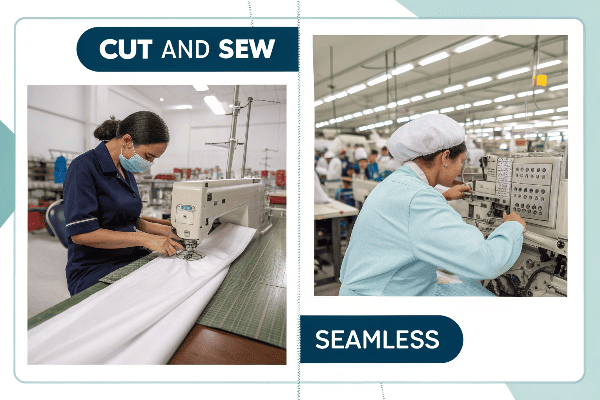
Cut and sew offers more design freedom and works well for most garments, while seamless is more specialized, usually limited to stretchy, body-hugging styles.
Cut and Sew vs Seamless Side-by-Side
| Category | Cut and Sew | Seamless |
|---|---|---|
| Design Complexity | High – any shape or detail | Medium – limited to tubular shapes |
| Fabric Flexibility | Works with most fabrics | Only works with circular knits |
| Comfort | May have seams | Seamless = less chafing |
| MOQ & Cost | Lower MOQs possible | Higher MOQ, more expensive machines |
| Application | Fashion, streetwear, outerwear | Activewear, underwear, yoga gear |
If you’re starting a brand, consider your niche: cut and sew is flexible and beginner-friendly. Seamless is excellent if you're targeting high-end performance wear[^3].
Conclusion
The key difference between cut and sew and seamless lies in how garments are constructed. Cut and sew is piece-by-piece assembly using stitching, while seamless garments are knit in one form. Each method has its place—cut and sew for design variety, seamless for comfort and performance.
[^1]: Cut and sew garment production guide: https://makerwise.com/blogs/apparel/cut-and-sew-production-explained
[^2]: Seamless technology overview from Santoni (leading machine manufacturer): https://www.santoni.com/en/products/seamless
[^3]: How brands use seamless knitting: https://www.technologytextile.com/seamless-garments/