
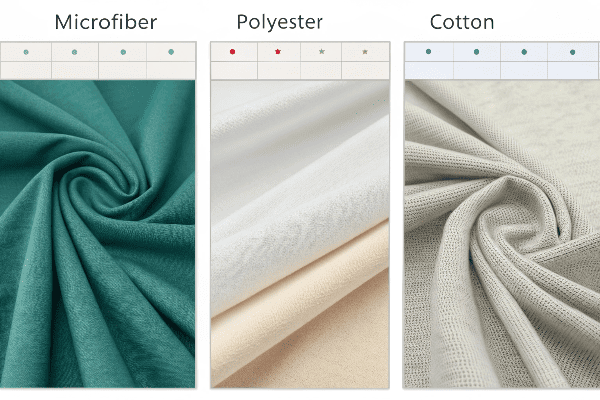
You love a sweater—until it starts to pill. Those little fuzz balls make even expensive clothes look worn out. So, is there a fabric that actually resists pilling?
The best non-pilling fabrics are tightly woven synthetics like polyester, nylon, and acrylic blends, as well as high-quality natural fibers like long-staple cotton and merino wool. These materials resist abrasion and fiber breakage, which cause pilling.[^1]
I used to think all clothes would eventually pill—until I bought a merino wool sweater that stayed smooth for years. It wasn’t magic. It was material quality and construction.
Table of Contents
- What causes pilling in fabrics?
- Which synthetic fabrics resist pilling best?
- Are there natural fabrics that don’t pill?
- How to choose clothes that won’t pill easily?
- Conclusion
What causes pilling in fabrics?
It starts with friction and weak fibers.
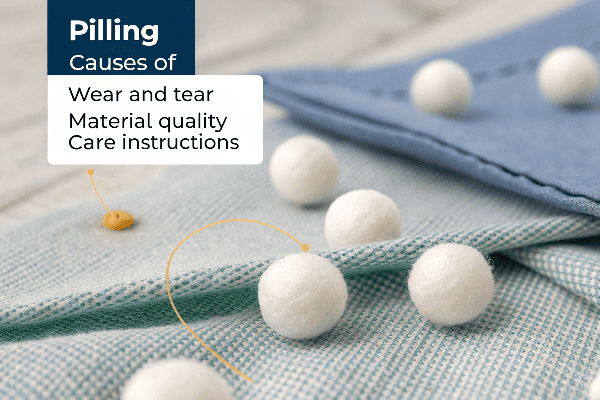
Pilling happens when short or loose fibers break from the fabric’s surface due to rubbing, washing, or wear. These fibers tangle into small balls, or “pills.”[^2]
Common causes of pilling
| Cause | How It Contributes to Pilling |
|---|---|
| Short-staple fibers | Break easily, especially in cotton |
| Loose weaves/knits | Allow more fiber movement |
| Repeated friction | From bags, washing, or body movement |
| Low fabric quality | Inconsistent yarns pill faster |
Even soft fabrics can pill if the structure is weak or the fibers are short.
Which synthetic fabrics resist pilling best?
Engineered fibers offer strong resistance.
Polyester, nylon, and acrylic—especially when tightly woven—resist pilling due to their smooth, durable surfaces and strong fiber structure.
Top pilling-resistant synthetic fabrics
| Fabric | Why It Resists Pilling |
|---|---|
| Polyester | Strong fibers, minimal breakage |
| Nylon | Tight weave, high abrasion resistance |
| Acrylic | Durable when blended and heat-set |
| Spandex Mix | Blended with others to maintain stretch & shape |
Look for anti-pilling fleece or performance wear in activewear lines—they’re often designed to resist abrasion and fuzz.
Are there natural fabrics that don’t pill?
Yes—when made from long fibers and quality yarns.
Long-staple cotton (like Pima or Egyptian cotton) and merino wool are natural fabrics that resist pilling better than lower-grade versions.
Natural fibers and pilling resistance
| Natural Fabric | Pilling Resistance Level | Notes |
|---|---|---|
| Pima Cotton | High (long staple) | Smoother surface, durable |
| Egyptian Cotton | Very high | Luxuriously soft, low pilling |
| Merino Wool | Moderate to high | Fine fiber, resists wear |
| Linen | High (loose weave, low friction) | Doesn’t hold lint or pills |
Avoid cotton-polyester blends if you're aiming for minimal pilling—these blends tend to shed on both ends[^3].
How to choose clothes that won’t pill easily?
Read labels, feel the fabric, and inspect the weave.
Choose garments made from long-staple natural fibers or tightly woven synthetic fabrics. Avoid loosely knit, fuzzy, or brushed surfaces.
Anti-pilling shopping checklist
- ✔ Look for “long-staple cotton” or “merino wool” on labels
- ✔ Prefer tight weaves over loose or brushed knits
- ✔ Check for terms like “anti-pilling” or “durable blend”
- ✔ Avoid fabrics that feel too fuzzy or overly soft
- ✔ Read customer reviews for durability feedback
If it looks like it’s already shedding in the store—it will definitely pill at home.
Conclusion
The best non-pilling fabrics include high-quality polyester, nylon, long-staple cotton, and merino wool. The right blend and weave make all the difference in keeping your clothes smooth and looking new.
[^1]: Good Housekeeping: The Best Anti-Pill Fabrics
[^2]: Consumer Reports: Why Clothes Pill and How to Stop It
[^3]: Cotton Incorporated: Fabric Pilling Explained