
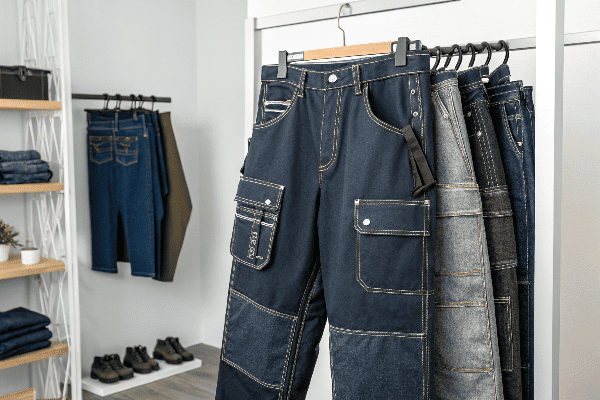
Choosing work pants isn’t just about fit—it’s about fabric. The wrong material can tear, overheat, or wear out fast. So what’s the best fabric for durability, comfort, and performance on the job?
The best fabric for work pants depends on your environment, but cotton canvas, cotton-polyester blends, and stretch twill are the most common. For durability and breathability, heavyweight canvas and ripstop fabrics lead the pack.
I’ve helped design and source work pants for construction, warehouse, and industrial brands. The right fabric makes all the difference between a comfortable shift—and a miserable one.
Table of Contents
- Why does fabric matter so much for work pants?
- What is canvas fabric and why is it so popular?
- What are cotton-poly blends used for?
- What is ripstop fabric?
- Is stretch fabric good for work pants?
- Conclusion
Why does fabric matter so much for work pants?
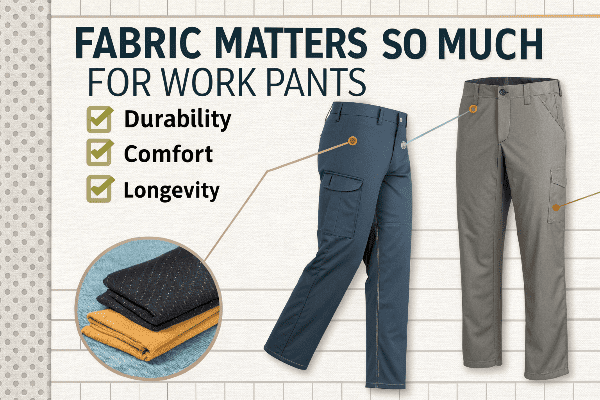
Fabric affects durability, comfort, breathability, and flexibility.
Since work pants take daily abuse—kneeling, bending, lifting, or brushing against rough surfaces—the material must hold up without restricting movement or trapping heat.
What fabric controls
| Factor | How Fabric Affects It |
|---|---|
| Abrasion resistance | Determines how fast pants wear out |
| Breathability | Affects comfort in hot environments |
| Stretch/mobility | Impacts ease of movement |
| Moisture wicking | Keeps you dry while working |
| Flame resistance | Required for certain job types |
Related reading: How to choose workwear for harsh conditions – Safety+Health Magazine[^1]
What is canvas fabric and why is it so popular?
Canvas is tough, stiff—and reliable.
Cotton canvas is a tightly woven, heavyweight fabric known for its durability. It's commonly used in construction and carpentry pants. It holds up well against tools, bricks, gravel, and repetitive wear.
Pros of canvas work pants:
- Thick weave resists abrasions and cuts
- Holds shape over time
- Good wind resistance
- Durable even without synthetics
Cons:
- Heavier and less breathable
- Can feel stiff before breaking in
- Slower to dry if wet
Carhartt, Dickies, and similar brands use duck canvas for many rugged work styles[^2].
What are cotton-poly blends used for?
They balance comfort, strength, and flexibility.
Cotton-polyester blends combine natural breathability with added strength. Polyester boosts tear resistance, reduces shrinkage, and improves quick-dry performance.
Pros of cotton-polyester work pants:
- Lighter than full canvas
- Resists wrinkles and fading
- Often softer out of the box
- Costs less than 100% cotton canvas
Common blends:
| Blend Ratio | Best For |
|---|---|
| 65% polyester / 35% cotton | Light industrial or maintenance work |
| 60% cotton / 40% poly | Balanced comfort and strength |
| Stretch blends (with Spandex) | Active jobs needing flexibility |
Industry advice: Understanding fabric blends – Workrite Uniform Company[^3]
What is ripstop fabric?
Ripstop is made to prevent tearing.
It’s a woven fabric with a reinforced grid pattern. When a snag happens, the structure keeps it from ripping further. Ripstop is common in tactical and outdoor workwear.
Ripstop advantages:
- Lightweight but tough
- Breathes better than canvas
- Tear-resistant under stress
- Often water- or flame-resistant
Great for electricians, first responders, or utility workers in variable conditions[^4].
Read more: What is Ripstop Fabric? – DuPont
Is stretch fabric good for work pants?
Yes—for jobs requiring a lot of movement.
Stretch twill or canvas with 1–3% spandex or elastane gives flexibility without sacrificing toughness. It’s ideal for mechanics, movers, or warehouse staff.
| Use Case | Recommended Fabric Type |
|---|---|
| Heavy lifting | Canvas with stretch |
| Hot climate | Cotton-poly blend or ripstop |
| Bending/kneeling | Stretch twill with gusseted crotch |
| Outdoor exposure | Coated canvas or flame-resistant blends |
Look for labeled features like “flex fit,” “action gusset,” or “stretch tech” to guide your decision.
Conclusion
The best fabric for work pants depends on your job and environment. Canvas offers unmatched durability. Cotton-poly blends are breathable and versatile. Ripstop resists tearing. Stretch fabrics add comfort. Choose based on the balance you need between protection, flexibility, and wearability.
[^1]: Safety+Health Magazine provides expert guidance on choosing appropriate PPE and garments for industrial use.
[^2]: Duck canvas is a subtype of canvas that uses tighter weaving for added toughness—common in legacy workwear brands like Carhartt.
[^3]: Workrite Uniform Company outlines key advantages of blended fabrics in flame-resistant and industrial uniforms.
[^4]: DuPont explains the science behind ripstop fabric used in military and emergency response apparel.