
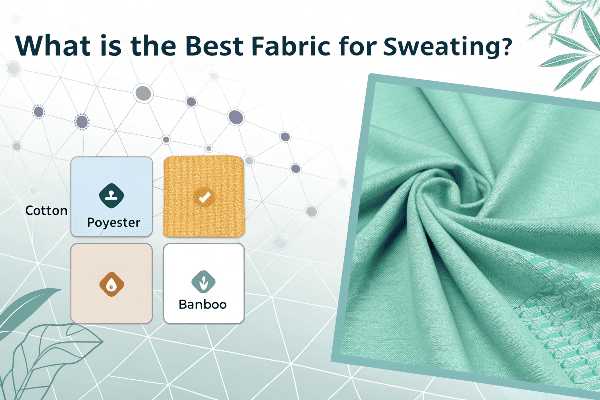
Sweat makes me feel sticky and slows me down. I learned that the right fabric changes everything for comfort.
The best fabric for sweating is a moisture-wicking fabric such as polyester blends, nylon blends, or merino wool. These fabrics pull sweat away from the skin, dry fast, and reduce odor. Natural cotton feels soft but it stays wet and heavy.
I still remember my first long run when my cotton shirt stuck to my back like glue. That was when I started to search for better fabrics.
Table of Contents
- Why do some fabrics work better for sweating?
- Which fabric dries the fastest when sweating?
- Is cotton bad for sweating?
- Does merino wool work for sweating?
- Should I choose synthetic fabrics or natural fabrics for sweating?
- What fabric is best for sweaty weather?
- Conclusion
Why do some fabrics work better for sweating?
I want to know why some clothes keep me dry when I sweat.
Fabrics work better for sweating when they can move sweat off the skin and dry fast. Polyester blends and merino wool manage sweat better than cotton.
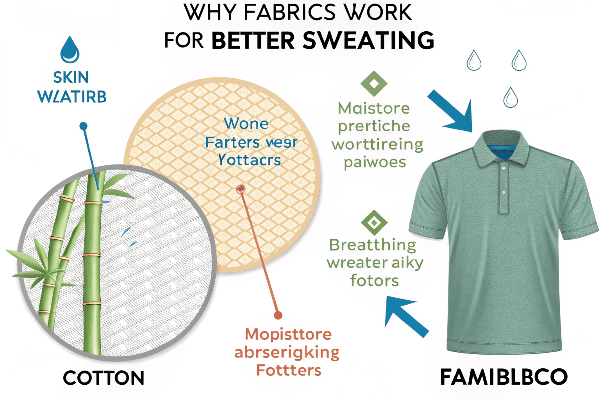
I learned this after years of running, cycling, and hiking. Sweat is a normal body reaction, but what my shirt does with it decides if I feel comfortable or not. When sweat stays on my skin, it blocks airflow and I feel sticky. When the shirt moves sweat away, I feel light and fresh.
How fabrics manage sweat
- Moisture-wicking: Moves sweat away from the skin so it can evaporate on the surface
- Breathable: Lets air pass through the fibers
- Fast-drying: Makes sure clothes do not stay wet for long
How different fabrics handle sweat
| Fabric | Sweat Management | Drying Speed | Odor Control |
|---|---|---|---|
| Polyester Blend | Excellent | Fast | Moderate |
| Nylon Blend | Very Good | Fast | Low |
| Merino Wool | Very Good | Medium | High |
| Cotton | Poor | Slow | Low |
I tested a polyester shirt on a hot day. It stayed light even after two hours. My cotton shirt in the same weather felt heavy after 15 minutes. Merino wool was also surprising. It stayed dry longer than I thought and did not smell even after a full day.
Why moisture-wicking is so important
As soon as my shirt stayed wet, my focus went away. I only thought about how heavy it felt. Moisture-wicking fabrics do the opposite. They pull sweat up and spread it out on the surface. Air does the rest by drying it fast.
Which fabric dries the fastest when sweating?
When I train hard, I need my shirt to dry fast.
Polyester dries the fastest when sweating. It is lightweight, smooth, and does not hold water. Nylon is also quick but holds a bit more moisture.
I tested this on a treadmill and during outdoor runs. I rotated three shirts: cotton, polyester, and nylon. The difference was clear. Polyester stayed light, nylon was close, and cotton stayed wet.
Fast-drying fabrics
- Polyester is the most common choice for activewear. It dries quickly and keeps its shape
- Nylon is smooth and strong. It feels soft but takes a little longer to dry than polyester
- Cotton traps water inside the fiber, so it dries slowly
- Blends use polyester or nylon with spandex to add stretch without losing drying speed
For more information, see REI Expert Advice on fabric technology.
Is cotton bad for sweating?
Many people love cotton. I also like its softness, but is it bad for sweat?
Cotton is not good for sweating because it holds water. Wet cotton feels heavy and does not dry fast. It can make you feel cold after you stop moving.
I always liked cotton for daily wear. It is soft and natural. But I learned that when I do sports, it does not work well.
Cotton and sweat
- Cotton fibers absorb water and keep it
- Once wet, the shirt clings to the skin
- Cotton works for light daily wear but not for heavy sports
Pros and cons of cotton for sweating
| Pros | Cons |
|---|---|
| Soft and gentle | Heavy when wet |
| Natural fiber | Slow to dry |
| Breathable | Can smell when wet for long |
Does merino wool work for sweating?
Wool sounds warm. I thought it would be bad for sweat. But is that true?
Merino wool is good for sweating. It pulls moisture away, controls odor, and stays dry longer than cotton.
I used to think wool was only for winter. When I tried merino wool, I found it different. It is not like normal wool. It is soft, thin, and cool. It also handles sweat better than I expected.
Why merino wool is special
- Merino fibers are fine and can pull sweat away
- It keeps heat in cold air but lets air pass when it is hot
- It controls odor better than polyester
- It dries slower than polyester but faster than cotton
For fabric properties, check Woolmark.
Should I choose synthetic fabrics or natural fabrics for sweating?
Many people ask me if synthetic fabrics are better than natural ones.
Synthetic fabrics like polyester and nylon are best for sports because they dry fast. Natural fabrics like merino wool work well for hiking and travel because they control odor.
Choosing based on your need
- For sports: Go for polyester or nylon blends
- For travel: Go for merino wool
- For casual wear: Cotton is fine for casual, slow walks
What fabric is best for sweaty weather?
Hot and humid weather makes me sweat a lot. I need the right fabric.
In hot and sweaty weather, polyester blends and nylon blends are best because they keep me dry and light.
Hot weather fabrics
- Polyester and nylon fabrics are light and smooth
- They do not soak up water
- Mesh panels and small holes in the fabric allow air to move
For more advice, see Backpacker fabric guide.
Conclusion
Moisture-wicking fabrics like polyester blends, nylon blends, and merino wool work best for sweating.