
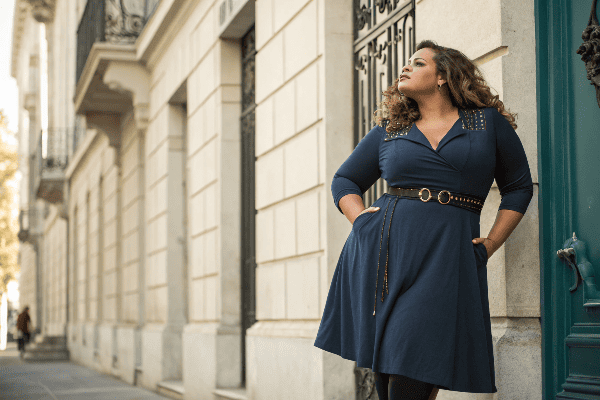
Ever looked at a size chart and wondered where “plus size” starts? The answer isn’t always clear—and it changes depending on the brand, country, and cut.
Plus size in women’s clothing generally starts at size 14 (US) or 18 (UK), and typically refers to sizes 14–32. In measurements, plus size often begins at a bust of 40 inches (102 cm) and a waist of 33 inches (84 cm) or more.
I once helped a friend shop for a formal dress and watched her struggle between “XL” in one store and “18W” in another. That’s when I realized: plus sizing isn’t just about numbers—it’s about fit, proportion, and inclusivity.
Table of Contents
- What numerical sizes are considered plus size?
- What does the “W” mean in plus size labels like 18W?
- Is XL the same as plus size?
- How do brands vary in their definition of plus size?
- Conclusion
What numerical sizes are considered plus size?
It usually begins where standard sizing ends.
In the U.S., plus sizes typically begin at size 14 or 16. Many brands label sizes 14–32 as plus size, though the exact start point can vary[^1].
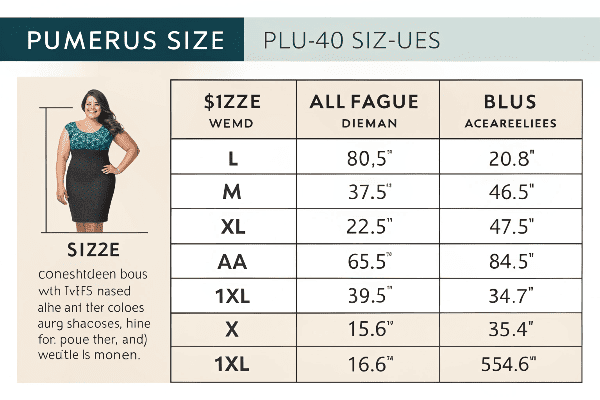
U.S. and U.K. plus size equivalents
| Region | Starts At | Common Plus Sizes |
|---|---|---|
| United States | 14 | 14, 16, 18, 20… up to 32 |
| United Kingdom | 18 | 18, 20, 22, 24… up to 36 |
| Europe | 44 | 44, 46, 48… up to 60 |
Some brands like ASOS Curve or Nordstrom Plus Size offer sizes starting from 12, while others begin at 16.
What does the “W” mean in plus size labels like 18W?
It’s not just a bigger size—it’s a different shape.
The “W” in size labels like 18W stands for “women’s,” and it indicates a plus-size fit that’s roomier in the bust, waist, hips, and arms than straight-size cuts[^2].
How 18W differs from regular 18
| Size | Bust (inches) | Waist | Hips | Cut Features |
|---|---|---|---|---|
| 18 | ~42.5 | ~34.5 | ~44.5 | Straighter torso, slimmer arm |
| 18W | ~44 | ~37 | ~46.5 | Fuller bust, wider hips, more ease |
Brands like Lane Bryant and Torrid specialize in W-sizing, which is essential for curvier silhouettes.
Is XL the same as plus size?
Not always—they’re not interchangeable.
XL is often the largest size in straight sizing, while plus sizes like 1X, 2X, or 18W are cut differently to better fit fuller figures[^3].
XL vs. 1X
| Size Label | Bust (inches) | Fit Type |
|---|---|---|
| XL | ~40–42 | Straight sizing |
| 1X | ~43–45 | Plus sizing cut |
1X often includes more room in key fit areas (bust, arms, waist) and is built on a different block than XL—even if the number measurements look close.
How do brands vary in their definition of plus size?
There’s no universal standard.
Some brands start plus sizes at 12, others at 16. And not all brands offer true plus-size cuts—many simply scale up straight sizes, which can result in poor fit[^4].
What to watch for
- “Curve” lines may use actual plus-size blocks
- Some brands use vanity sizing (items run large on purpose)
- Always compare size charts and garment measurements
- Look for reviews or model size references for better accuracy
Sites like SizeCharter and Universal Standard are helpful for navigating size inconsistencies.
Conclusion
Plus size generally begins at size 14 or 1X—but the true definition lies in fit, shape, and cut. Understanding these details helps you shop smarter and dress with confidence. Whether you're shopping for jeans, dresses, or blazers, knowing the difference between XL and 1X—or 18 and 18W—can make all the difference.
[^1]: Glamour Magazine. “What Is Considered Plus Size?” Link
[^2]: Nordstrom. “Women’s Plus Size Fit Guide.” Link
[^3]: Healthline. “What Does 1X Really Mean?” Link
[^4]: SizeCharter. “Why Clothing Sizes Differ So Much Between Brands.” Link