
You’ve probably seen the word “mohair” on a luxury sweater tag and wondered: what makes it different from wool or cashmere?
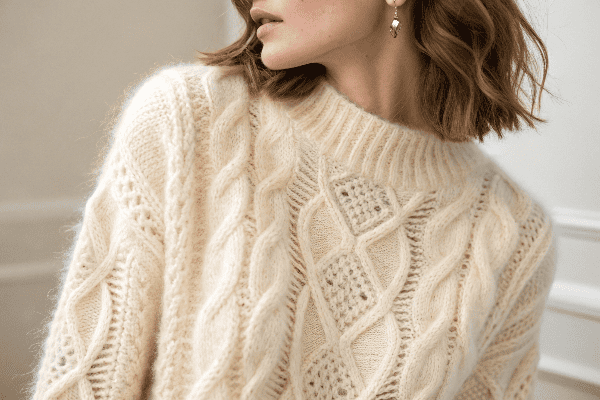
A mohair sweater is made from the hair of the Angora goat. It’s known for being lightweight, silky, and warm, with a soft halo effect that gives the sweater a fluffy, luxurious texture.
As someone who works with fashion brands, I’ve helped source and produce mohair knits—and believe me, it’s a standout fiber in both feel and look. Let’s explore what makes mohair sweaters so special.
Table of Contents
- What makes mohair different from regular wool?
- What does a mohair sweater look and feel like?
- Is mohair itchy?
- How do you care for a mohair sweater?
- Conclusion
What makes mohair different from regular wool?
It comes from a different animal—and the texture says it all.
Unlike sheep wool, mohair is smoother, shinier, and has a more airy, featherlight quality. It comes from the Angora goat, not to be confused with Angora rabbit.
Want to know more? The Woolmark Company explains wool and its alternatives⁽¹⁾.
Mohair vs Wool
| Feature | Mohair | Regular Wool |
|---|---|---|
| Source | Angora goat | Sheep |
| Texture | Silky, soft halo | Coarser, matte |
| Sheen | Natural luster | Less shiny |
| Warmth | Very warm, breathable | Warm, sometimes heavy |
| Prickle factor | Low (if high-quality) | Can be itchy depending on grade |
This difference makes mohair a great option for layering—especially in cooler months.
What does a mohair sweater look and feel like?
There’s something instantly eye-catching about it.
A mohair sweater looks soft and slightly fuzzy, with a light halo around the yarn. It feels airy but warm, and glides smoothly against the skin.
Mohair South Africa⁽²⁾ gives a full breakdown of its visual and tactile features.
| Attribute | Description |
|---|---|
| Appearance | Fluffy, light sheen |
| Weight | Lightweight but insulating |
| Feel | Soft, smooth, non-scratchy (usually) |
| Drape | Fluid but holds shape |
Some mohair sweaters are blended with wool, nylon, or acrylic for added durability and easier care.
Is mohair itchy?
It depends on the quality—and your skin sensitivity.
High-quality mohair is generally less itchy than coarse wool, but lower grades or blends may still cause irritation. Wearing a base layer can help.
| Fiber Type | Itchiness (1 = none, 5 = high) |
|---|---|
| Cashmere | 1 |
| Mohair (fine) | 2 |
| Lambswool | 3–4 |
| Coarse wool | 4–5 |
Look for “kid mohair”—finer and softer. Good On You⁽³⁾ discusses mohair's comfort and sustainability issues in detail.
How do you care for a mohair sweater?
Gently—this isn’t something to toss in a hot wash.
Hand wash mohair sweaters in cool water with mild detergent, or dry clean them. Avoid wringing, and lay flat to dry to prevent stretching.
Real Simple's care guide⁽⁴⁾ applies well to mohair too.
Mohair care tips:
- Avoid machine washing: It can felt or distort the fibers
- Use cold water + wool detergent: Prevents damage
- Dry flat: Keeps shape intact
- Store folded, not hung: Hangers can stretch mohair
- Use a sweater brush: Gently remove fuzz and refresh the halo
Well-cared-for mohair can last for years—and even get softer with age.
Conclusion
A mohair sweater is a warm, featherlight knit made from Angora goat hair, prized for its shine, softness, and fuzzy texture. It offers a blend of elegance and warmth, ideal for cold seasons or layering with style.
[^1]: What’s the Difference Between Wool and Other Fibers – The Woolmark Company
[^2]: What is Mohair? – Mohair South Africa
[^3]: What is Mohair and Is It Sustainable? – Good On You
[^4]: Wool Sweater Care Tips – Real Simple