

When I first started working in fashion, I kept hearing the word “apparel” in meetings. At first, it confused me because I thought it just meant clothes. Later, I learned that in business, the term has a much broader meaning. Many people ask me: “What does apparel actually mean in a business context?”
In business, apparel means clothing that is manufactured, marketed, and sold for consumers. It includes everything from basic garments to specialized activewear and luxury fashion. In the industry, “apparel” often refers to the entire clothing sector as a business category.
I remember the first time I filled out a trade show registration form. They asked me if I worked in “apparel” rather than “clothing.” That was when I realized how the word is used in the industry.
Table of Contents
- What is the definition of apparel in business terms?
- Does apparel include accessories?
- Why do businesses use the term apparel instead of clothing?
- What are the main categories of apparel in the business world?
- What is the difference between apparel and garment?
- How big is the apparel market?
- Conclusion
What is the definition of apparel in business terms?
In everyday language, apparel simply means clothing. In business, the meaning goes deeper.
In business, apparel refers to all types of clothing products as a market segment. It includes design, production, distribution, and sales of garments. The term is used in retail, manufacturing, trade, and finance.
- Broader term: Apparel includes basic clothes, workwear, sportswear, and even accessories that are part of outfits.
- Category: Companies use “apparel” as a category to track business performance.
- Professional tone: In trade reports and corporate meetings, “apparel” sounds more formal than “clothing.”
I remember reading my first business report that said “Global Apparel Market” instead of “clothing market,” and it finally clicked.
Does apparel include accessories?
This question comes up a lot.
In many business reports, apparel focuses on clothing only. Accessories like shoes, bags, and jewelry are often tracked separately as footwear or accessories categories. However, in some cases, the word apparel is used broadly to include them.
- Apparel: Shirts, pants, dresses, hoodies, outerwear
- Footwear: Shoes, boots, sneakers (separate)
- Accessories: Bags, hats, belts (sometimes included, sometimes separate)
I once helped a new startup that thought apparel included sneakers. When they applied for a trade show, they learned shoes were in a different category.
Why do businesses use the term apparel instead of clothing?
The reason is that it fits better for global trade and financial analysis.
Businesses use “apparel” because it is a formal term that works well for legal, commercial, and export-import purposes. It’s also broader and avoids the casual tone of “clothes.”
- Professional term: Sounds more formal in reports and documents.
- Market clarity: Defines a sector more clearly.
- Global use: International trade often lists HS codes for apparel products.
When I started writing emails to overseas buyers, I learned to use “apparel” instead of “clothing.” It made me sound more professional.
For example, U.S. International Trade Commission lists detailed HS codes under the “Apparel and Textiles” section instead of using the term "clothing."
What are the main categories of apparel in the business world?
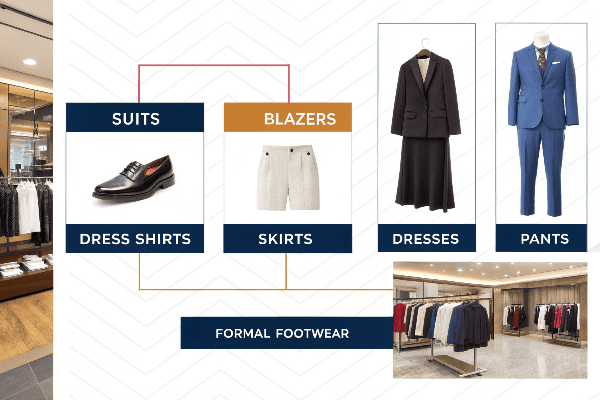
In business, apparel is divided into clear categories.
The main categories are menswear, womenswear, childrenswear, sportswear, outerwear, and sometimes loungewear and uniforms. Each has its own market trends and strategies.
- Menswear: Shirts, suits, jackets, casual wear
- Womenswear: Dresses, blouses, skirts, fashion pieces
- Childrenswear: Baby clothes, kids’ everyday wear
- Sportswear/Activewear: Gym, yoga, outdoor performance
- Outerwear: Jackets, coats, weather-specific apparel
- Loungewear and uniforms: Growing categories in recent years
I focus on sportswear and streetwear, which are both fast-growing segments in the apparel market.
What is the difference between apparel and garment?
This can be confusing, especially in manufacturing.
Garment usually means a single item of clothing, while apparel refers to the broader business category or all clothing collectively.
| Term | Meaning |
|---|---|
| Garment | A single piece (e.g., one hoodie) |
| Apparel | The whole industry or product range |
I often use “garment” when I talk to factories and “apparel” when I talk about the market or a brand.
How big is the apparel market?
The apparel market is huge.
According to market research reports, the global apparel market is worth over $1.7 trillion in 2024 and continues to grow as consumer demand for fashion and activewear rises.
- Online shopping: E-commerce drives growth (Statista: Global apparel market)
- Fast fashion: Quick production cycles dominate some segments.
- Sustainability: Eco-friendly fabrics and ethical production are major trends.
At trade shows, I am always surprised by how diverse the industry is—luxury brands, fast-fashion giants, sports brands, and small designers all in one space.
Conclusion
In business, apparel means more than just clothes. It refers to the entire clothing industry, including design, manufacturing, marketing, and sales. Understanding the term helps when you step into professional conversations, trade reports, and international sourcing.