


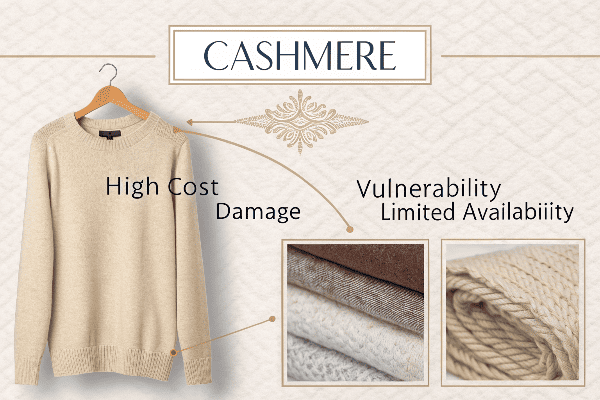
Cashmere is often called “soft gold” for its luxurious feel and high price tag. But as elegant as it is, cashmere isn’t perfect. If you're planning to buy or produce cashmere garments, it’s important to understand the downsides too.
The main disadvantages of cashmere are its high cost, delicate nature, tendency to pill, special care requirements, and ethical sourcing concerns.
When I first sourced cashmere for a winter collection, I was surprised how much extra care—and budget—it required. Beautiful, yes. But not always practical. Let’s break down why.
Table of Contents
- Why is cashmere so expensive?
- Why does cashmere pill easily?
- Is cashmere difficult to care for?
- Are there ethical concerns with cashmere?
- Conclusion
Why is cashmere so expensive?
It’s luxurious—but it comes at a price.
Cashmere is one of the most expensive natural fibers due to limited supply, labor-intensive harvesting, and high global demand.
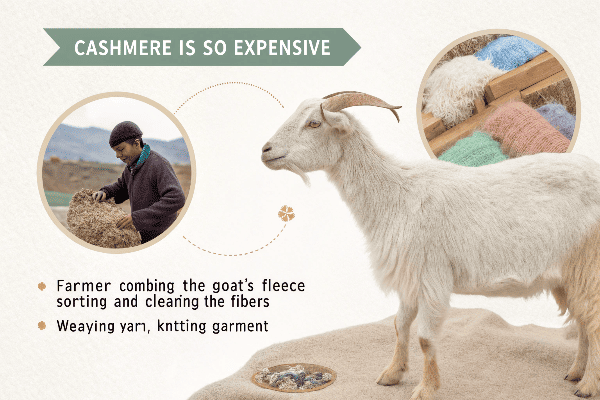
What drives up the price?
| Factor | Explanation |
|---|---|
| Scarcity of fiber | Only 150–200g of usable fiber per goat/year |
| Manual combing | Fiber is harvested by hand |
| Long production chain | Sorting, spinning, dyeing, knitting |
| Global demand | High-end brands dominate supply[^1] |
Even mid-range cashmere sweaters often cost $100–$300—and premium brands can go well beyond $1,000[^2].
Why does cashmere pill easily?
Cashmere is soft—but softness comes with fragility.
Because cashmere fibers are fine and short, they’re prone to pilling—especially in areas with friction like underarms, elbows, and sides.
How pilling affects appearance and longevity
Pilling doesn’t mean the garment is bad quality—but it does require extra maintenance.
| Cause | Example Area | Solution |
|---|---|---|
| Fiber friction | Sleeves rubbing against sides | Use a cashmere comb |
| Tight layering | Under coats or backpacks | Rotate wear and give it rest |
| Over-washing | Breaks down fiber | Wash only when necessary |
High-quality, long-staple cashmere pills less—but even premium pieces need upkeep[^3].
Is cashmere difficult to care for?
Yes—especially compared to cotton or synthetics.
Cashmere requires hand-washing or dry cleaning, careful drying, and proper storage. Mistreat it, and it loses softness and shape fast.

Common care challenges
| Care Task | Consideration |
|---|---|
| Washing | Use cold water, mild detergent, no wringing |
| Drying | Lay flat—never hang or tumble dry |
| Storage | Fold only, keep moth-protected[^4] |
| Season rotation | Needs careful off-season storage |
For everyday wearers, this can feel high-maintenance compared to low-effort fleece or cotton.
Are there ethical concerns with cashmere?
Yes—and they’re growing.
Cashmere production can contribute to overgrazing, desertification, and animal welfare issues—especially in poorly regulated regions.
What should ethical buyers know?
| Issue | Impact |
|---|---|
| Overgrazing | Damages grasslands in Mongolia and China[^5] |
| Goat welfare | Some farms over-comb or shear aggressively |
| Greenwashing | Not all “ethical cashmere” claims are valid |
Look for brands certified by the Good Cashmere Standard or those using recycled cashmere.
Conclusion
Cashmere offers unmatched softness—but it comes with trade-offs. It’s costly, delicate, and high-maintenance, and raises sustainability concerns. If you value luxury and are willing to care for it, it’s a worthy investment. If not, consider blends or alternatives.
[^1]: Harvard Business Review: Why Cashmere Is So Expensive – Read here
[^2]: Loro Piana cashmere sweaters regularly retail for $1,000–$2,000 – View on Loro Piana
[^3]: The longer the fiber, the less likely it is to tangle and form pills. – Naadam’s Cashmere Guide
[^4]: Moths are a serious issue for cashmere; cedar balls or lavender sachets are recommended.
[^5]: Overgrazing by cashmere goats has been linked to desertification in Inner Mongolia – WWF Report