
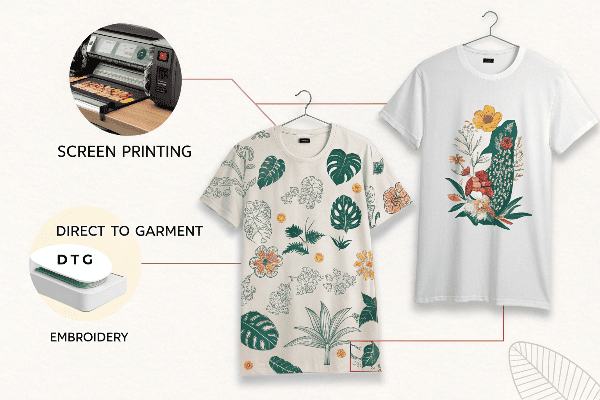
Custom T-shirt printing isn’t one-size-fits-all. Whether you're producing merch, uniforms, or your own clothing line, the print method you choose will shape how your design looks, feels, and holds up over time.
The main methods of custom T-shirt printing include screen printing, direct-to-garment (DTG), heat transfer, sublimation, and direct-to-film (DTF). Each technique has unique advantages based on design type, fabric, and order volume.
In my years running a garment factory, I’ve helped brands choose the right method based on budget, fabric choice, and branding goals.
Table of Contents
- What is screen printing?
- What is Direct-to-Garment (DTG) printing?
- What is heat transfer printing?
- What is sublimation printing?
- What is Direct-to-Film (DTF) printing?
- Conclusion
What is screen printing?
The most traditional and cost-effective method for bulk orders.
Screen printing pushes ink through a stencil onto fabric. It’s known for bold colors, durability, and low cost per unit for large quantities.
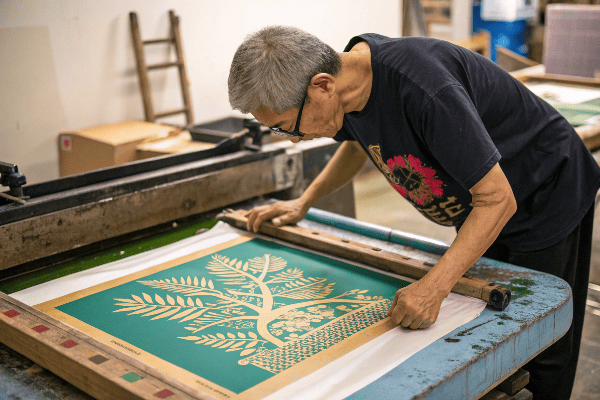
Screen printing pros and cons
| Feature | Details |
|---|---|
| Best For | Simple designs with few colors |
| Fabric Types | Cotton, blends |
| Pros | Durable, vibrant, low cost for bulk |
| Cons | Expensive setup for small orders |
We often use screen printing for large brand runs or team uniforms—especially when color matching and consistency matter.
Learn more from Ryonet’s Screen Printing Education【^1】.
What is Direct-to-Garment (DTG) printing?
The go-to for full-color, photographic designs.
DTG printing sprays water-based ink directly onto the fabric using a digital printer. It works best on cotton T-shirts and is ideal for small runs.
DTG at a glance
| Feature | Details |
|---|---|
| Best For | Detailed or full-color images |
| Fabric Types | 100% cotton recommended |
| Pros | No setup fees, soft feel, vibrant detail |
| Cons | Slower for bulk, less vibrant on dark colors |
DTG is perfect for limited edition drops or personalized gifts that require detail and color range.
See Printful’s guide to DTG printing【^2】.
What is heat transfer printing?
A flexible option for small-batch or custom name/number designs.
Heat transfer printing uses heat and pressure to apply a design (from vinyl or transfer paper) onto a garment. It’s common for sportswear and small-run designs.
Heat transfer use cases
| Feature | Details |
|---|---|
| Best For | Names, numbers, small batches |
| Fabric Types | Cotton, polyester, blends |
| Pros | Fast setup, good for personalization |
| Cons | May peel or crack over time |
When customers need personalized prints (like jerseys), this is our go-to method.
Learn more from Transfer Express – Heat Printing Guide【^3】.
What is sublimation printing?
For all-over prints and synthetic fabrics.
Sublimation turns solid dye into gas and embeds it into polyester fabric, resulting in vibrant, long-lasting color that doesn’t fade or crack.
Sublimation specifics
| Feature | Details |
|---|---|
| Best For | Polyester garments and full-coverage prints |
| Fabric Types | 100% polyester only |
| Pros | No hand feel, vibrant, doesn’t fade |
| Cons | Can’t print on cotton or dark shirts |
We use sublimation for performance wear and activewear sets—especially when the design requires seamless, all-over coverage.
Read more at Sawgrass's sublimation printing overview【^4】.
What is Direct-to-Film (DTF) printing?
A rising star in custom printing.
DTF involves printing a design onto a special film, then transferring it onto fabric with heat and adhesive powder. It combines flexibility with high detail and color vibrancy.
DTF benefits and limits
| Feature | Details |
|---|---|
| Best For | Complex designs on any fabric |
| Fabric Types | Works on cotton, polyester, blends |
| Pros | Bright colors, strong adhesion, versatile |
| Cons | Slightly rubbery feel, not ideal for very large prints |
DTF is now our go-to for small orders with complex logos, especially when the client wants a premium look on mixed fabrics.
Conclusion
Each custom T-shirt printing method serves a different purpose. Whether you need detail, durability, speed, or budget control, choosing the right technique is key to producing shirts that stand out and last.
[^1]: Ryonet – What is Screen Printing?
[^2]: Printful – What is DTG Printing?
[^3]: Transfer Express – Heat Printing Basics
[^4]: Sawgrass – What is Sublimation Printing?