
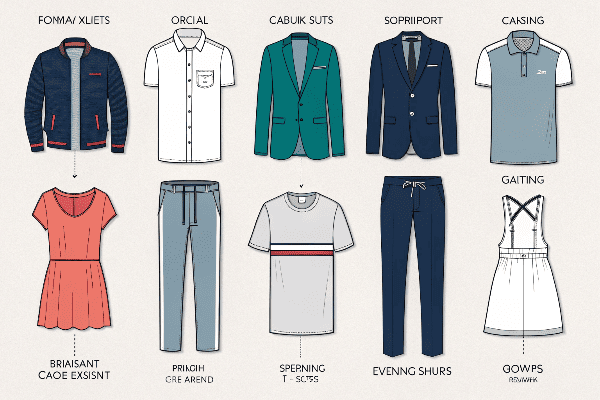
Fashion is a big world with many styles. When people talk about clothing styles and categories, they are describing how clothes look, feel, and are used.
Clothing styles and categories can be grouped by purpose (casual, formal, sportswear), design (streetwear, classic, trendy), and target audience (men, women, kids). Each style has a different cut, fabric, and way of wearing.
I work with different brands every year. One thing I see everywhere is that styles may change fast, but the main categories stay similar.
Table of Contents
- What are the main categories of clothing?
- What are the main clothing styles?
- Do men, women, and kids have different categories?
- Why do brands classify clothing this way?
- Conclusion
What are the main categories of clothing?
The broadest way to group clothing is by its use.
Most clothes fall into categories like casual, formal, sportswear, streetwear, loungewear, or workwear. These groups describe where and how the clothes are worn.
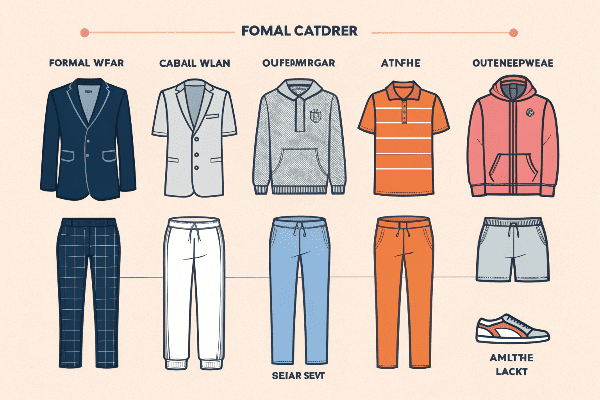
Key clothing categories
| Category | What It Includes |
|---|---|
| Casual | T-shirts, jeans, hoodies, polo shirts |
| Formal | Suits, blazers, dress shirts, ties, gowns |
| Sportswear | Activewear, gym sets, yoga pants, running gear |
| Streetwear | Hoodies, oversized T-shirts, joggers, sneakers |
| Loungewear | Pajamas, sweatpants, soft knits |
| Workwear | Coveralls, uniforms, protective gear |
| Outerwear | Jackets, coats, parkas |
These categories can overlap. For example, a hoodie can be casual, sportswear, or streetwear depending on styling.
Reference: Fashion United – Fashion Categories Explained[^1]
What are the main clothing styles?
Styles describe how clothes look and express personality.
A clothing style is a design direction or mood. It is shaped by fit, fabric, and how items are put together.
Common clothing styles:
- Classic style – Timeless, simple, tailored pieces
- Streetwear style – Oversized, logo-driven, urban influence
- Sporty/athleisure style – Performance wear worn casually
- Bohemian style – Flowing, natural fabrics, prints
- Trendy/fashion-forward – Fast fashion and current trends
- Minimalist style – Neutral colors, clean lines, less detail
- Preppy style – Polished, inspired by school or sports uniforms
- Vintage/retro style – Inspired by previous decades
- Business formal – Structured suits and work clothing
- Casual chic – Everyday basics with a stylish twist
For inspiration and current style trends, see Vogue – Fashion Trends[^2].
Each style can mix with another. For example, minimalist streetwear is now a common look.
Do men, women, and kids have different categories?
Yes, but they overlap.
The main differences are in fit and cut. Categories like casual, formal, and sportswear exist for everyone, but designs are adjusted for different bodies and uses.
Key market segments:
- Menswear – suits, shirts, casual wear, outerwear, activewear
- Womenswear – dresses, blouses, skirts, suits, activewear
- Kidswear – age-specific, often casual and easy to wear
Many unisex categories like streetwear and loungewear are now popular with all genders.
See also: The Business of Fashion – Apparel Segments[^3].
Why do brands classify clothing this way?
It helps with production, marketing, and shopping.
Grouping clothes into styles and categories makes it easier for buyers to understand a collection and for manufacturers to plan fabrics, sizes, and trends.
| Benefit | Example |
|---|---|
| Design clarity | A sportswear brand chooses quick-dry fabrics |
| Easier shopping | Customers find clothing faster online |
| Trend planning | Brands decide how many streetwear vs classic styles to produce |
Brands like McKinsey – State of Fashion[^4] often analyze how these classifications impact trends.
Conclusion
Clothing styles and categories organize the fashion world. Main categories include casual, formal, sportswear, streetwear, loungewear, and workwear. Within these, styles like classic, trendy, minimalist, and bohemian describe how a garment looks and feels.
[^1]: Fashion United – Fashion Categories Explained
[^2]: Vogue – Fashion Trends
[^3]: Business of Fashion – Understanding market segments
[^4]: McKinsey – State of Fashion Report