
If you're planning to start a clothing brand, you’ve probably heard people say “go overseas—it’s cheaper.” But what does that really mean?
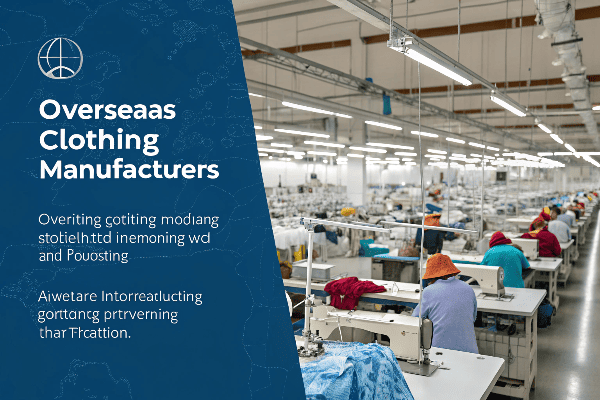
Overseas clothing manufacturers are factories located outside your home country, often in regions like Asia, Eastern Europe, or South America, that produce garments at lower costs due to affordable labor and large-scale infrastructure[^1].
I’ve worked with brands who scaled fast by working with reliable overseas suppliers—but I’ve also seen others struggle due to communication and shipping issues. Understanding the pros and cons matters.
Table of Contents
- Where are most overseas clothing manufacturers located?
- What types of services do overseas manufacturers offer?
- What are the benefits of working with overseas clothing manufacturers?
- What are the risks or challenges?
- Conclusion
Where are most overseas clothing manufacturers located?
The majority are based in Asia.
Top overseas clothing manufacturing hubs include China, Bangladesh, Vietnam, India, and Pakistan. Other growing regions include Turkey, Mexico, and Cambodia.
| Country | Known For | Best For |
|---|---|---|
| China | Full-service OEM/ODM, fast delivery | All categories, from T-shirts to outerwear |
| Bangladesh | Low labor cost, high capacity | Basic garments, fast fashion |
| Vietnam | Reliable quality, trade agreements | Knitwear, activewear, uniforms |
| India | Cotton expertise, artisan skills | Dresses, ethnic wear, embroidery |
| Turkey | Proximity to Europe, quick shipping | Fashion brands in EU |
These regions dominate global apparel exports due to competitive pricing and mass production[^2].
What types of services do overseas manufacturers offer?
Many offer full-package production (OEM/ODM).
Overseas manufacturers often provide design support, fabric sourcing, pattern making, sample creation, bulk production, and logistics. Some even offer private labeling.
| Service Type | Description |
|---|---|
| OEM | You provide the design, they produce it |
| ODM | They offer designs you can customize |
| CMT | You provide the fabric, they Cut, Make, Trim |
| FPP | Full Package Production, all-in-one service |
Factories like DeCheng Garment in China specialize in OEM/ODM clothing for brands worldwide[^3].
What are the benefits of working with overseas clothing manufacturers?
Cost savings is only one part of the picture.
Working with overseas manufacturers can give you lower prices, greater customization, faster scalability, and access to specialized skills or machinery.
Key Benefits
- Lower Costs: Cheaper labor and material sourcing
- Higher Volume Capacity: Handle bulk production easily
- Customization: Wide range of fabrics, prints, cuts
- Experience: Many factories have decades of know-how
- Full-Service Support: From tech packs to packaging
Many fashion startups grow faster when working with factories offering both low MOQ and customization services[^4].
What are the risks or challenges?
There’s no perfect solution—just tradeoffs.
Risks include longer shipping times, language barriers, customs delays, and quality control issues if not managed well.
| Challenge | How to Mitigate |
|---|---|
| Communication gaps | Use clear tech packs, work with English-speaking reps |
| Long shipping times | Factor in lead time or use air freight for rush orders |
| Minimum order limits | Start with low-MOQ factories |
| Quality inconsistency | Always approve samples and run inspections |
Trust is key. Start small, build the relationship.
Conclusion
Overseas clothing manufacturers offer cost-effective, scalable solutions for fashion brands. While there are risks, choosing the right partner—like an OEM/ODM factory in Asia—can give you the tools to launch and grow your brand successfully.
[^1]: What Are Overseas Manufacturers? – Shopify Guide
[^2]: Global Textile Export Statistics – Statista
[^3]: DeCheng Garment – Custom Apparel Manufacturer
[^4]: How to Work with Overseas Clothing Factories – Oberlo