Pajama and Sleepwear Manufacturer: How Do You Make Sleepwear That Feels Soft and Lasts?
Your pajama set looks perfect in the photos.
The fabric feels soft.
The piping looks clean.
The waistband sits neatly.
Then customers start wearing it every night.
A few weeks later, the feedback changes.
The waistband feels too tight.
The shorts ride up.
The surface starts to pill.
After washing, the collar no longer lies flat.
One customer says the side label scratches against their skin while sleeping.
Sleepwear is different from many fashion products because customers may wear it for:
eight hours at a time.
Good sleepwear depends on the complete comfort system: fabric hand, heat and moisture behavior, fit, waistband pressure, seam construction, trims, shrinkage, care performance, and product safety. Cotton, modal, viscose, polyester, and blended fabrics can all work, but no fiber name automatically guarantees breathability, coolness, softness, or sensitive-skin suitability.
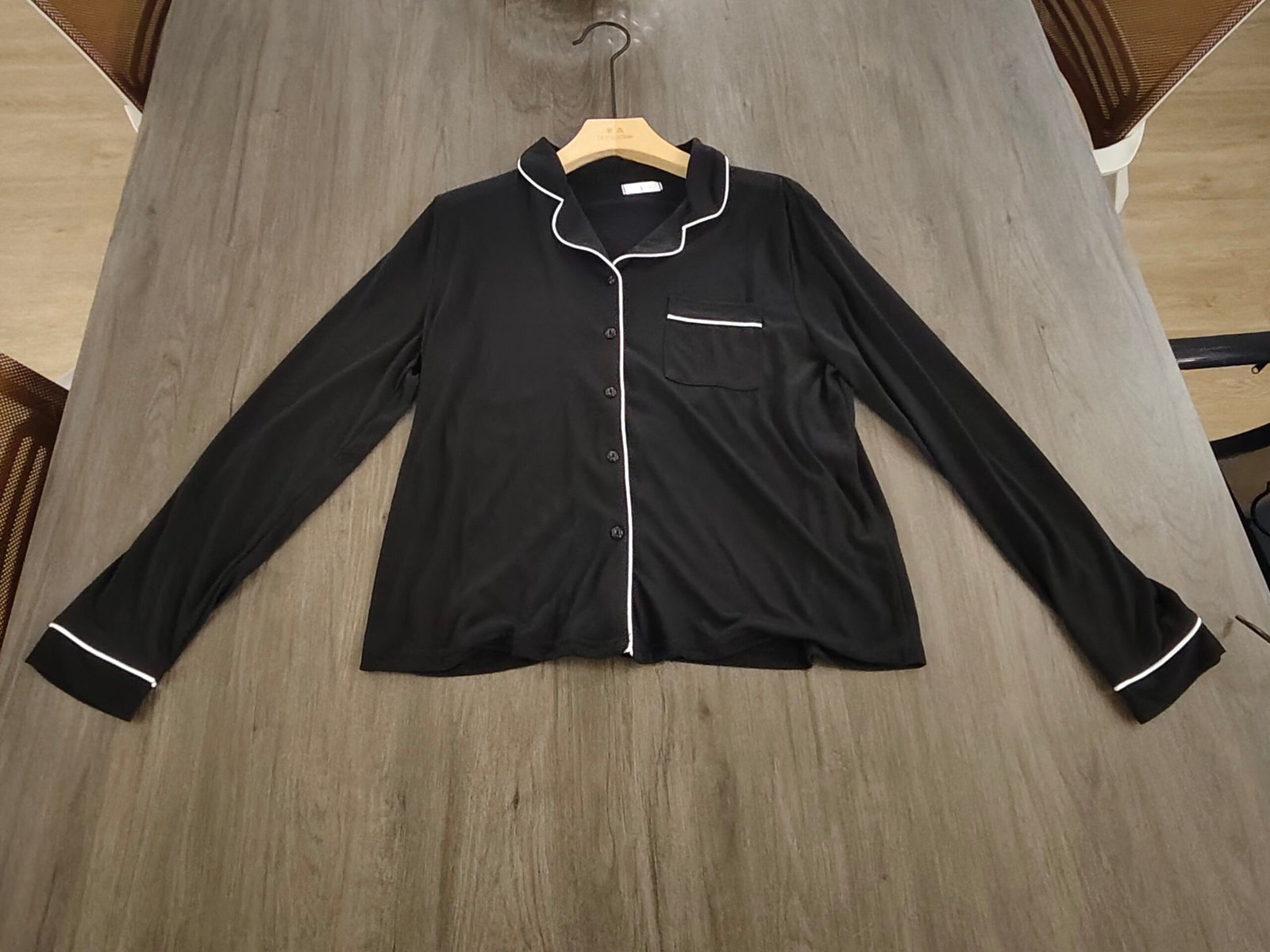
A sleepwear collection may include:
- Knit pajamas
- Woven pajamas
- Sleep shorts
- Nightshirts
- Long-sleeve sets
- Lounge-to-sleep sets
- Children's pajamas
The product may look simple.
But comfort problems usually come from small details.
Table of Contents
- What Does a Pajama and Sleepwear Manufacturer Make?
- Which Fabrics Work Best for Sleepwear?
- Which Construction Details Make Sleepwear Comfortable?
- What Are the Special Rules for Children's Sleepwear?
- How Should You Brand and Package Sleepwear?
- What MOQ, Cost, and Timing Should You Expect?
- Conclusion
What Does a Pajama and Sleepwear Manufacturer Make?
Sleepwear includes both knit and woven products.
A sleepwear manufacturer may produce knit pajama sets, button-up woven pajama sets, sleep shorts, tank sets, nightshirts, long-sleeve sets, lounge pants, sleep joggers, robes, and children's sleepwear. The correct fabric and construction depend on climate, fit, use, and target market.
Knit Pajama Sets
Knit sleepwear may use:
- Cotton jersey
- Modal blends
- Viscose blends
- Rib
- Waffle
- Brushed knit
These products usually prioritize:
- Stretch
- Soft hand
- Relaxed movement
Woven Pajama Sets
A traditional woven pajama set may include:
- Camp collar
- Button front
- Piping
- Chest pocket
- Elastic waistband
Possible fabrics include:
- Cotton poplin
- Viscose woven
- Lightweight twill
- Other soft woven materials
Sleep Shorts and Tanks
These are common for:
- Summer
- Warm climates
- Lightweight collections
The main challenge is balancing:
- Coverage
- Comfort
- Fit
Long-Sleeve Sleepwear
These may use:
- Jersey
- Rib
- Waffle
- Brushed fabric
But “winter sleepwear” does not automatically need:
very heavy fabric.
The target indoor temperature and customer preference matter.
Lounge-to-Sleep Products
Some brands intentionally blur the line between:
loungewear
and:
sleepwear.
A jogger may be worn:
- At home
- While traveling
- For sleeping
That means fit and styling may differ from a traditional pajama.
Children's Sleepwear
This needs its own development path.
Children's sleepwear is not simply:
an adult pajama pattern in smaller sizes.
In markets such as the United States, there are specific flammability and fit requirements.
Our Production Approach
We manufacture both knit and woven sleepwear products through our garment-production operation.
That allows a brand to coordinate:
- Knit sets
- Woven sets
- Sleep shorts
- Lounge pieces
with one production team.
Specialist processes such as:
- Printing
- Embroidery
- Certain trim development
may be completed through long-term partner workshops that we coordinate directly.
Which Fabrics Work Best for Sleepwear?
Sleepwear is worn directly against the skin for long periods.
That makes fabric choice especially important.
Choose sleepwear fabric based on hand feel, thermal comfort, moisture behavior, stretch, opacity, dimensional stability, surface durability, care requirements, and price—not simply from the fiber name.
Cotton Jersey
Cotton jersey is widely used for:
- Everyday pajamas
- T-shirts
- Sleep sets
It can offer:
- Soft hand
- Familiar feel
- Good comfort
But actual performance depends on:
- Yarn
- Knit density
- GSM
- Finishing
A 160 GSM cotton jersey and a 260 GSM cotton jersey are very different sleepwear products.
Modal
Modal is a regenerated cellulose fiber.
It is often used for:
- Soft knit pajamas
- Drapey sets
- Loungewear
Some modal fabrics can feel:
- Smooth
- Soft
- Fluid
But do not make universal claims such as:
modal is always cooler than cotton.
The final fabric construction matters.
“Bamboo” Fabrics
This needs accurate labeling.
Many fabrics marketed as:
bamboo
are actually:
- Rayon
- Viscose
made using bamboo as the cellulose source.
The U.S. Federal Trade Commission's bamboo-textile guidance[^1] states that textile products can only be called “bamboo” if they are made directly from actual bamboo fiber.
If the textile is rayon or viscose made using bamboo as the plant source, it should be described as:
rayon made from bamboo
or:
viscose made from bamboo.
Do Not Make Automatic Antibacterial Claims
The FTC also warns that rayon or viscose made from bamboo does not automatically retain the plant's claimed natural antibacterial properties.[^1]
So avoid unsupported claims such as:
- Naturally antibacterial
- Hypoallergenic
- Chemical-free
- Better for sensitive skin
unless you have evidence for the actual product.
Cotton Poplin
Cotton poplin is a classic choice for:
button-up pajamas.
It can create:
- Crisp appearance
- Lightweight structure
- Traditional styling
But it still needs:
- Shrinkage testing
- Wash testing
Viscose Woven
Viscose woven fabrics can create:
- Fluid drape
- Smooth surface
They can work well for:
fashion-oriented woven sleepwear.
But wet dimensional behavior should be checked.
Brushed Knits
Brushed fabrics may feel:
- Warmer
- Softer
- Cozy
because of the raised surface.
But the same brushing can affect:
- Pilling
- Appearance
- Drying
So test the actual fabric.
Waffle / Rib
These can work for:
- Lounge-to-sleep sets
- Winter collections
- Textured basics
But rib and waffle structures may behave differently in wash from smooth jersey.
What About Polyester?
Do not use the rule:
“polyester is bad for sleepwear.”
Polyester fabrics vary enormously.
A heavy, dense polyester fleece may feel too warm for some sleepers.
A lightweight engineered polyester knit may be suitable for another sleepwear program.
Choose from:
actual performance.
Sleepwear Fabric Comparison
| Fabric direction | Possible use | Main points to check |
|---|---|---|
| Cotton jersey | Everyday pajama | Shrinkage, hand, pilling |
| Modal blend | Premium-feel knit sleepwear | Recovery, dimensional stability |
| Viscose made from bamboo | Soft knit sleepwear | Labeling, shrinkage |
| Cotton poplin | Classic woven pajama | Shrinkage, wrinkle behavior |
| Viscose woven | Drapey woven set | Wet stability, seam behavior |
| Brushed knit | Cooler-season sleepwear | Pilling, warmth |
| Waffle / rib | Lounge-to-sleep | Growth, shrinkage |
Which Construction Details Make Sleepwear Comfortable?
Comfort is not simply:
“make it loose.”
A comfortable sleepwear pattern should allow movement without creating excess fabric, while the waistband, seams, labels, piping, buttons, hems, and trims should avoid concentrated pressure or roughness against the body.
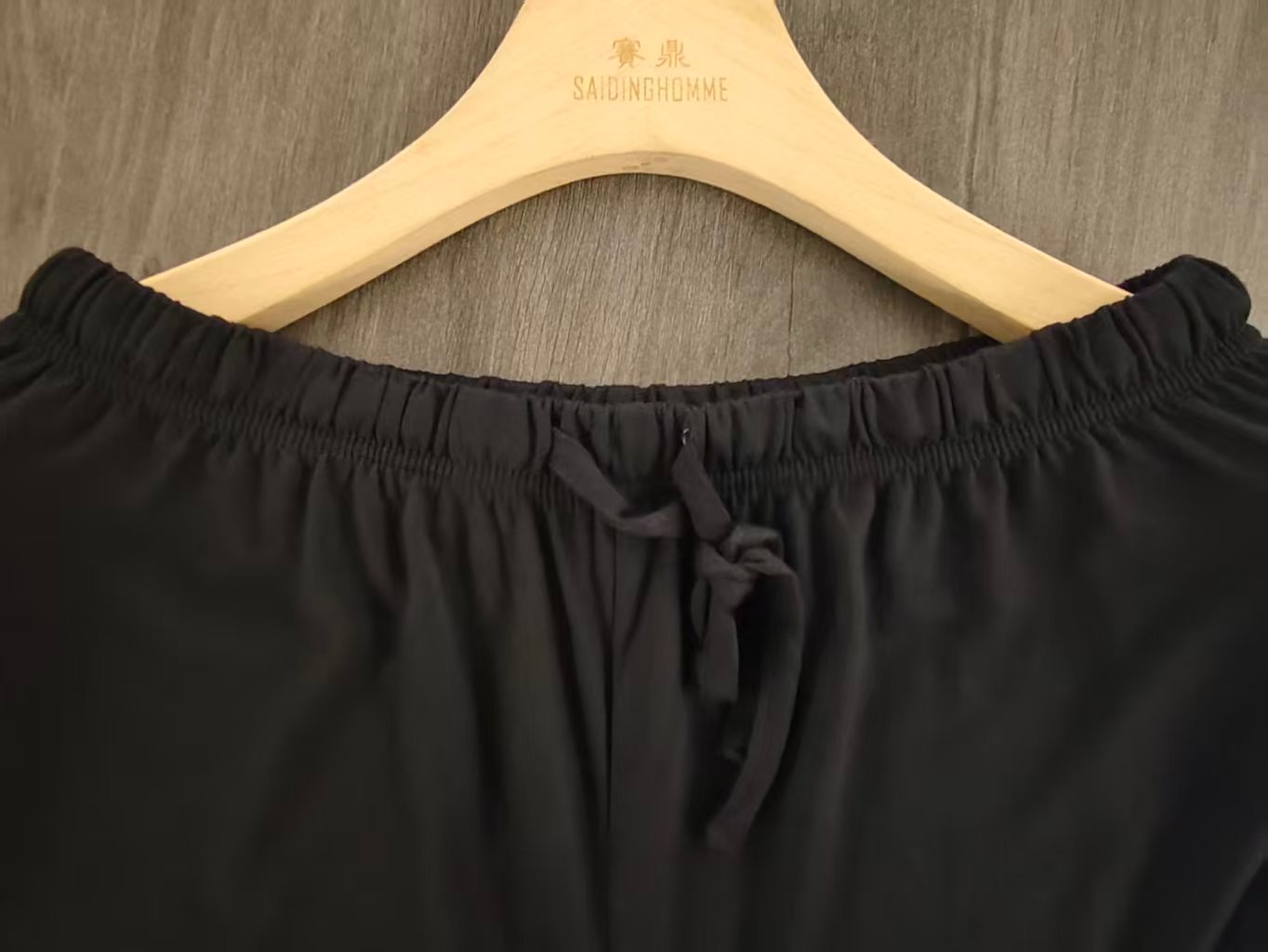
Waistband
A waistband can ruin a good pajama.
Important factors include:
- Elastic width
- Elastic recovery
- Waist measurement
- Casing construction
- Drawcord
- Garment ease
A wider elastic can sometimes distribute pressure more comfortably.
But:
wide elastic ≠ automatically comfortable.
If the elastic force is too high:
it can still dig in.
Test the Waistband on the Body
Do not judge the waistband only:
flat on a table.
Wear the sample.
Check:
- Sitting
- Lying down
- Turning
- Relaxing
A waistband that feels fine for five minutes may feel different after several hours.
Seams
Sleepwear does not automatically require:
flatlock seams.
A conventional seam can be comfortable if:
- Seam allowance is appropriate
- Thread is suitable
- Construction is clean
The goal is:
low irritation.
Not:
maximum technical complexity.
Labels
Possible approaches include:
- Printed neck label
- Heat-transfer label
- Soft woven side label
But even a printed label can become irritating if:
- Ink area is stiff
- Placement is wrong
Test the finished garment.
Piping
Piping is common on:
- Collar edges
- Cuffs
- Pocket edges
- Front openings
A common problem occurs when:
the piping and body fabric change dimensions differently after washing.
This can create:
- Puckering
- Curling
- Distortion
Does Piping Always Need Pre-Shrinking?
Not necessarily.
The correct approach is:
test both materials under the intended care process and control their dimensional compatibility.
Depending on the material, the solution may involve:
- Pre-washing
- Stabilization
- Different piping material
- Pattern adjustment
Do not apply one universal procedure to every fabric.
Buttons
Buttons on sleepwear should be checked for:
- Thickness
- Edge smoothness
- Attachment
- Position
A large raised button can become uncomfortable when:
lying on the stomach.
Fit
Sleepwear often needs:
more ease
than fitted daywear.
But oversized is not always more comfortable.
Too much fabric can:
- Twist
- Ride up
- Bunch while sleeping
So the correct fit should be:
relaxed
but controlled.
Shorts
Check:
- Rise
- Inseam
- Leg opening
- Seat ease
A very short inseam can ride upward during sleep.
Hems
Avoid unnecessarily:
- Thick
- Stiff
hems on soft sleepwear.
The finish should match:
the fabric weight.
How Should Sleepwear Shrinkage Be Controlled?
Sleepwear is washed frequently.
So dimensional stability matters.
Fabric and finished garments should be evaluated under the intended washing and drying conditions before bulk approval, especially when the garment combines different materials such as body fabric, rib, elastic, piping, or lining.
ISO 6330:2021[^2] specifies standardized domestic washing and drying procedures for textile testing.
Different procedures can produce different results.
That means:
“shrinkage 3%”
is incomplete information unless the test conditions are known.
Test Components Together
For woven pajamas:
body fabric + piping
should be evaluated as a system.
For knit pajamas:
body + rib + elastic
may all behave differently.
Pre-Shrunk Does Not Mean Zero Shrinkage
A pre-shrink process can improve stability.
It does not guarantee:
zero dimensional change.
Approve the actual result.
What Are the Special Rules for Children's Sleepwear?
This is the most important technical section in this article.
For U.S. children's sleepwear above size 9 months through size 14, the product generally needs either to meet applicable flame-resistance requirements or qualify as tight-fitting sleepwear under the specified dimensional and labeling requirements.
The U.S. Consumer Product Safety Commission[^3] explains that the federal children's sleepwear rules cover:
- Above 9 months through 6X under 16 CFR Part 1615
- Sizes 7 through 14 under 16 CFR Part 1616
The garments generally must:
- Meet the applicable flammability requirements, or
- Qualify as tight-fitting under the prescribed dimensions.
Tight-Fitting Does Not Mean “Just Make It Slim”
This is important.
The regulation provides specific maximum dimensions for areas including:
- Chest
- Waist
- Seat
- Upper arm
- Thigh
- Wrist
- Ankle
depending on garment type and size.[^3]
So:
“snug fit” is a regulatory construction
not a styling description.
Tight-Fitting Labels
CPSC guidance requires qualifying tight-fitting sleepwear to carry specific labeling and hangtag information explaining that the garment should fit snugly and is not flame resistant.[^3]
Do not create your own wording.
Use the applicable regulatory requirement.
Loose-Fitting Sleepwear
Loose-fitting children's sleepwear generally needs to meet:
the applicable flammability standard.
Material choice alone is not enough.
The product needs to comply with:
the relevant test and production requirements.
Sizes 9 Months and Under
The specific children's sleepwear flammability/tight-fit rules described above do not apply in the same way to sizes:
9 months and under,
subject to the regulatory definitions and garment requirements.[^3]
Other Children's Product Requirements
Depending on:
- Market
- Age group
- Product
- Trims
other children's product requirements may also apply.
For example:
- Small parts
- Drawstrings
- Chemical requirements
should be reviewed separately.
Do Not Use Adult Pajama Rules
If a buyer sends:
adult sleepwear tech pack
and asks:
“Make the same in kids sizes,”
do not simply scale it down.
First determine:
- Destination market
- Child size
- Intended sleepwear classification
- Applicable safety requirement
before sampling.
How Should You Brand and Package Sleepwear?
Sleepwear often works well as:
a gift product.
Branding should support the comfort experience.
Use branding that is proportionate to the fabric and sleeping use. Large rigid decorations can interfere with comfort, while small embroidery, soft-compatible prints, labels, piping, buttons, and packaging can create brand identity without dominating the garment.
Embroidery
Small embroidery can work on:
- Chest
- Sleeve
But dense embroidery can feel:
stiff
on lightweight sleepwear.
Check:
- Backing
- Stitch density
- Placement
Prints
A soft-hand print may suit:
certain sleepwear fabrics.
But:
water-based = always soft
is too broad.
Final hand depends on:
- Ink system
- Fabric
- Coverage
- Curing
Test it.
Piping
Contrast piping can become:
a signature brand detail.
It can also introduce:
dimensional-change risk.
Treat it as both:
design
and:
construction.
Printed Neck Labels
These can reduce:
loose-label irritation.
But test the actual print after:
washing.
Custom Buttons
These can add:
subtle brand identity.
Confirm:
- MOQ
- Mold
- Size
- Thickness
before approving the design.
Gift Packaging
Possible options include:
- Branded polybag
- Reusable pouch
- Gift box
- Paper band
Packaging needs its own:
- MOQ
- Cost
- Shipping volume
A rigid gift box may look premium but significantly increase:
freight volume.
So packaging should be chosen with logistics in mind.
Matching Accessories
Some brands add:
- Eye mask
- Scrunchie
using leftover fabric.
That can work well for:
gift sets.
But each accessory still needs:
- Construction
- MOQ
- Labor
planning.
What About Care Labels?
Care instructions should be based on the actual garment.
For U.S. apparel, the FTC Care Labeling Rule[^4] requires covered manufacturers and importers to provide care instructions and have a reasonable basis for them.
The rule specifically requires reliable evidence supporting the care procedure.[^4]
So do not automatically use:
Machine wash cold / tumble dry low
for every pajama.
The correct instruction should consider:
- Body fabric
- Piping
- Elastic
- Buttons
- Decoration
as a complete garment.
How Should Fiber Content Be Labeled?
This matters particularly for:
“bamboo” sleepwear.
The FTC's textile guidance requires truthful generic fiber names.[^1]
For example, if a fabric is:
95% viscose made from bamboo
5% spandex
do not simplify it to:
95% bamboo / 5% spandex
for U.S. labeling unless the material genuinely meets the definition of actual bamboo fiber.
Use the correct supplier fiber documentation.
What MOQ, Cost, and Timing Should You Expect?
Sleepwear is often sold as:
a set.
That can make merchandising simple.
But the garment may still involve:
- Multiple pieces
- Elastic
- Piping
- Buttons
- Labels
- Packaging
Typical Starting MOQ
For our normal programs:
| Product | Typical starting point |
|---|---|
| Pajama set | Around 50 sets/style |
| Sleep top / tee | Around 100 pcs/style |
| Sleep shorts | Around 100 pcs/style |
| Children's sleepwear | Around 150 pcs/style depending on program |
The exact MOQ depends on:
- Fabric
- Color
- Printing
- Size range
- Trim
- Safety requirements
Fabric
Do not use the blanket rule:
modal and bamboo always cost more than cotton.
Often certain regenerated-cellulose fabrics may cost more.
But actual cost depends on:
- Supplier
- Yarn
- Composition
- GSM
- Width
- Finish
- Quantity
Use the actual fabric quote.
Woven Construction
A button-up pajama set may include:
- Collar
- Placket
- Buttons
- Piping
- Cuffs
That adds more sewing operations than:
a basic jersey T-shirt.
Waistband
A waistband may include:
- Elastic
- Casing
- Drawcord
- Eyelet
Each changes:
cost and labor.
Prints
Placement print and all-over print have different:
production workflows.
Do not write:
“all-over print on 100% cotton fades easily, so use polyester.”
Cotton can use:
- Pigment printing
- Reactive printing
- Other textile-print systems
depending on the design.
Traditional sublimation, however, is primarily suited to:
appropriate polyester substrates.
Colors
Each additional color increases:
material purchasing complexity.
For small programs:
fewer colors
can make full-roll purchasing more efficient.
Packaging
Gift packaging can add:
significant cost
and:
shipping volume.
Price it separately.
Children's Testing
If lab testing is required for the destination market:
testing cost should be included in the project budget.
Sample Timing
For standard programs with available fabric:
5–14 days
is a normal sample range for us.
Custom:
- Fabric
- Printing
- Piping
- Packaging
- Compliance testing
can extend the timeline.
Bulk Timing
For standard programs:
20–30 days
after:
- Sample approval
- Deposit
- Materials ready
is a normal working range.
Payment
For new bulk orders, our standard structure is:
50% before production + 50% before shipment.
How Should You Test Sleepwear Before Bulk?
Sleepwear should be:
worn and washed
before final approval.
1. Overnight Comfort Test
Wear the sample for:
several hours.
Check:
- Waist pressure
- Seam irritation
- Label irritation
- Shorts riding up
- Button comfort
2. Wash Test
Check:
- Shrinkage
- Piping
- Collar
- Elastic
- Surface
after the intended care process.
3. Waistband Recovery
Stretch and release the waistband repeatedly.
Check whether it:
- Recovers
- Twists
- Rolls
4. Pilling
For soft knits, especially:
- Brushed
- Modal blends
- Viscose blends
surface performance may matter.
If needed, request controlled pilling testing.
5. Kids Compliance
For children's sleepwear:
do not approve production only from:
fit and appearance.
Confirm the applicable:
- Flammability route
- Tight-fit requirements
- Labels
- Testing
first.
Green Flags and Red Flags
| Green flag | Red flag |
|---|---|
| Recommends fabric by actual comfort needs | Calls one fiber “best for sleeping” |
| Uses correct viscose/rayon bamboo labeling | Calls rayon “100% bamboo” |
| Avoids unsupported antibacterial claims | Claims bamboo is naturally antibacterial |
| Tests waistband pressure on the body | Chooses elastic only by width |
| Tests piping and body together | Assumes piping shrinkage will match |
| Wash-tests the final garment | Approves only unwashed samples |
| Raises children's sleepwear rules early | Treats kids pajamas like small adult pajamas |
| Verifies tight-fit requirements | Says “just make it slim” |
| Bases care labels on actual evidence | Copies one care label onto every style |
| Explains packaging freight impact | Quotes gift boxes without considering volume |
| States real production capability | Overstates separate factory ownership |
| Tests complete garment comfort | Focuses only on fabric softness |
Conclusion
Good sleepwear should feel:
easy.
But making it feel easy requires:
careful development.
Start with the fabric.
Do not choose:
modal
because someone says it is always cooler.
Do not choose:
bamboo
because someone says it is naturally antibacterial.
Do not reject:
polyester
simply because it is synthetic.
Compare the actual:
- Hand
- Weight
- Structure
- Moisture behavior
- Pilling
- Shrinkage
- Care performance
Then develop the fit.
A sleep short needs enough room through:
- Rise
- Seat
- Leg opening
without becoming so oversized that it twists during sleep.
A waistband should stay in place without:
digging.
A seam should not:
scratch.
Piping should remain flat after:
washing.
Buttons should not become uncomfortable when:
lying down.
Then handle safety correctly.
Children's sleepwear is a separate compliance category in markets such as the United States.
You need to determine whether the product will follow:
- Flame-resistant requirements
- Tight-fitting requirements
and then develop:
the pattern, labeling, and testing
accordingly.
Finally:
label the product honestly.
If a soft fabric is actually:
viscose made from bamboo,
say that.
If you want to claim:
- Antibacterial
- Hypoallergenic
- Special cooling
make sure you have evidence for the actual product.
And build care instructions from:
the complete garment.
Because customers do not sleep in:
a fiber name.
They sleep in:
the fabric, waistband, seams, buttons, labels, fit, and finishing
all at the same time.
When all of those details work together:
the customer should barely notice the garment at all.
That is usually the best sign that sleepwear has been made well.
Footnotes & References
[^1]: U.S. Federal Trade Commission — Bamboo Textiles / How to Avoid Bamboozling Your Customers. FTC guidance states that textiles can only be labeled or advertised simply as “bamboo” when they are made directly from actual bamboo fiber. Regenerated cellulose textiles produced from bamboo should use the appropriate generic fiber name, such as “rayon made from bamboo” or “viscose made from bamboo.” FTC also warns against unsupported claims that such regenerated fibers retain bamboo's alleged natural antibacterial properties.
https://www.ftc.gov/bamboo-textiles
https://www.ftc.gov/business-guidance/resources/how-avoid-bamboozling-your-customers
[^2]: International Organization for Standardization — ISO 6330:2021, Textiles — Domestic Washing and Drying Procedures for Textile Testing. Specifies standardized domestic washing and drying procedures applicable to fabrics, garments, and other textile articles. The standard notes that differences in washing-machine type, detergent, drying method, and other parameters can affect test results.
https://www.iso.org/standard/75934.html
[^3]: U.S. Consumer Product Safety Commission — Children's Sleepwear, 16 CFR Parts 1615 and 1616. CPSC guidance explains that children's sleepwear above size 9 months through size 14 generally must either satisfy applicable flame-resistance requirements or meet the prescribed tight-fitting dimensions. Tight-fitting children's sleepwear is also subject to specific labeling and hangtag requirements.
https://www.cpsc.gov/s3fs-public/1615-and-1616-Fact-Sheet-Childrens-Sleepwear-English.pdf
[^4]: U.S. Federal Trade Commission — Care Labeling Rule, 16 CFR Part 423. Requires manufacturers and importers of covered textile wearing apparel to provide regular care instructions and possess a reasonable basis, supported by reliable evidence, for those instructions before sale.
https://www.ftc.gov/legal-library/browse/rules/care-labeling-textile-wearing-apparel-certain-piece-goods