
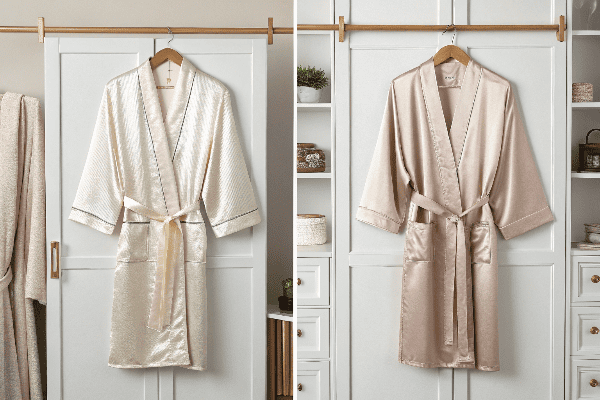
You’re choosing a robe—something soft, breathable, and perfect for lounging. But should you go with silk or cotton? Both are popular, but which one actually suits your lifestyle better?
Silk robes offer luxury, smoothness, and temperature regulation, while cotton robes are more absorbent, durable, and low-maintenance. The better option depends on your needs—comfort vs practicality, indulgence vs daily use.
I’ve helped apparel brands source both silk and cotton robes. Customers who want “spa luxury” love silk. But those who want something they can wear daily—right out of the shower—usually go for cotton.
Table of Contents
- What are the key differences between silk and cotton robes?
- Which is more comfortable to wear?
- Which fabric is easier to care for?
- Which one is more durable over time?
- Which is better for gifting or branding?
- Conclusion
What are the key differences between silk and cotton robes?
At a glance, both look soft and cozy—but their feel, care, and functionality are quite different.
Silk is a lightweight, protein-based natural fiber that feels smooth and cool. Cotton is a plant-based fiber known for softness, absorbency, and breathability.[^1]
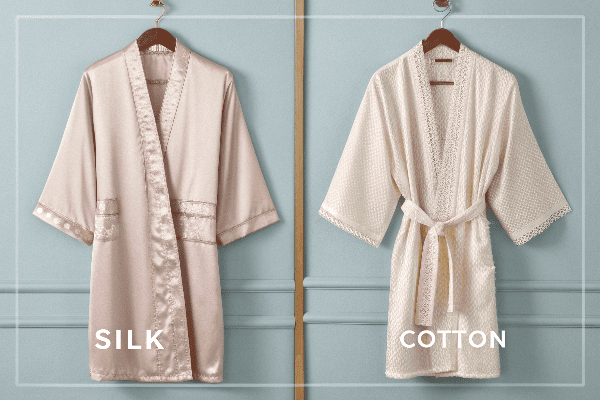
Silk vs Cotton comparison
| Feature | Silk Robe | Cotton Robe |
|---|---|---|
| Feel | Smooth, slippery, luxurious | Soft, fluffy, natural |
| Weight | Lightweight, drapey | Medium to heavy, cozy |
| Absorbency | Low | High (great after shower) |
| Breathability | High | High |
| Wrinkle Resistance | Wrinkles easily | More resistant (especially terry) |
| Care Requirements | Delicate, hand-wash preferred | Easy machine wash |
| Price Range | $100–$300+ | $30–$100 |
Explore fabric differences in more detail via Textile Exchange[^2].
Which is more comfortable to wear?
It depends on the setting—hot bedroom or post-shower chill?
Silk feels cool against the skin and drapes lightly, making it ideal for warm nights and lounging. Cotton feels warm and cushy, which is better for cozy mornings or drying off after a shower.
Comfort scenarios
- Warm climates: Silk is more breathable and lighter
- Cold mornings: Cotton adds warmth and insulation
- Sensitive skin: Both are good—just avoid synthetic blends[^3]
- Post-shower: Cotton wins for absorbency
Silk robes are often used in high-end hotels and spas like Ritz-Carlton VIP suites, while cotton robes dominate in casual or family-friendly lodging.
Which fabric is easier to care for?
No one wants a robe that requires dry cleaning after every use.
Cotton is much easier to care for—it can handle machine washes and dryers. Silk is delicate, requiring gentle hand washing or dry cleaning to maintain its sheen.
Care routine breakdown
| Task | Silk Robe | Cotton Robe |
|---|---|---|
| Washing | Hand wash or dry clean | Machine wash OK |
| Drying | Air dry only | Machine dry allowed |
| Stain Treatment | Risk of damage | Easy to spot clean |
| Ironing | Low-temp only | Medium heat OK |
If you're building a loungewear brand, cotton offers lower maintenance for end users and fewer return issues.
Which one is more durable over time?
Durability matters if you’re wearing your robe every day.
Cotton robes are more durable for frequent use and washing. Silk robes may fray, snag, or fade with heavy wear unless handled very carefully.
Lifespan comparison
| Factor | Silk Robe | Cotton Robe |
|---|---|---|
| Daily Use | 2–4 years (w/ care) | 4–7 years |
| Occasional Use | 5–10 years | 5–8 years |
| Wash Frequency | Low recommended | High recommended |
Check durability advice on The Laundress and similar care platforms.
Which is better for gifting or branding?
If you’re choosing robes for clients, hotels, or promotional use—think about experience vs function.
Silk robes feel high-end and luxurious, making them ideal for gifts, bridal sets, or premium branding. Cotton robes are practical, affordable, and easier to logo-print or embroider.
B2B Use Case Comparison
| Use Case | Recommended Fabric |
|---|---|
| Hotel spa luxury | Silk (for VIP rooms) |
| Airbnb guest stays | Cotton |
| Bridal party gifts | Silk |
| Gym locker rooms | Cotton (easy wash) |
| Retail loungewear | Cotton or blend |
For startups and small apparel brands, cotton is also easier to source from factories offering low MOQ robe production[^4].
Conclusion
Choose silk robes for elegant comfort, breathability, and luxury. Choose cotton robes for durability, absorbency, and everyday ease. Your lifestyle (or your customer’s) will decide which one truly feels better.
[^1]: Silk is a protein fiber produced by silkworms; cotton comes from the seed hairs of the cotton plant. See more at Britannica: Silk vs Cotton.
[^2]: Learn about sustainable cotton and silk on Textile Exchange.
[^3]: Sensitive skin can react to polyester blends. Natural 100% silk or 100% cotton is recommended by dermatologists.
[^4]: Cotton robes are the most commonly sourced option for B2B customization due to lower costs and machine compatibility.