
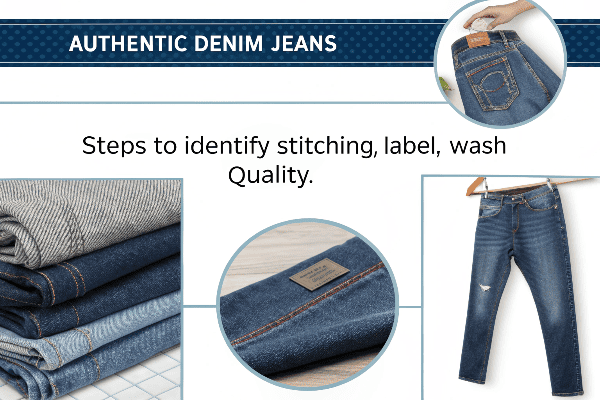
Not all jeans are created equal. Some are made with authentic, heavyweight denim, while others use lightweight, stretchy fabrics that only look like denim. So how do you know if the jeans you're buying—or already own—are made of real denim?
To tell if jeans are real denim, check the fabric content, weave pattern, weight, fading behavior, and overall structure. Real denim is usually made from 100% cotton in a twill weave, with a sturdy, textured feel and visible diagonal ribbing.
As someone who works with denim fabrics daily, I often help clients spot the difference between authentic denim and cheaper imitations.
Table of Contents
- What is real denim made of?
- How can fabric tags help?
- What does real denim feel like?
- What about fading and wear?
- Conclusion
What is real denim made of?
It starts with 100% cotton and a twill weave.
Real denim is typically made from 100% cotton yarn, woven in a twill pattern with indigo-dyed warp threads and white weft threads. The result is a durable fabric with diagonal lines and a deep blue color.
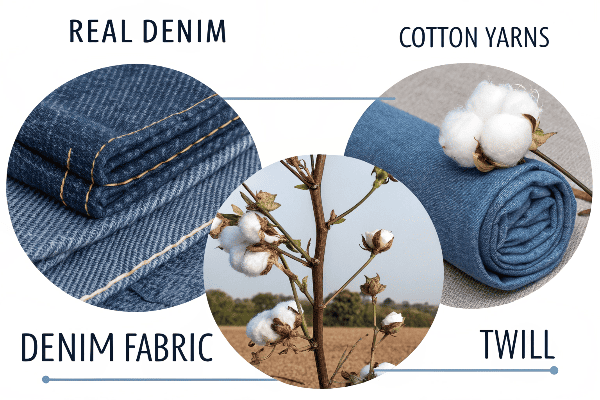
Key indicators of real denim
| Feature | Real Denim | Fake or Faux Denim |
|---|---|---|
| Fabric Content | 100% cotton or cotton-heavy blends | Polyester-heavy or stretchy blends |
| Weave Pattern | Diagonal twill weave | Plain or knit weave |
| Color Composition | Blue outside / white inside | Uniform color or printed surface |
| Weight | 10–16 oz per square yard | Lightweight, under 8 oz |
For a detailed guide on denim construction, visit CottonWorks – Denim Basics[^1].
How can fabric tags help?
The label tells the truth.
Always check the inner label for fiber composition. Real denim will list “100% cotton” or a majority cotton blend (like 98% cotton / 2% elastane). If polyester is the top ingredient, it’s not traditional denim.
Common tag translations
| Label Says | What It Means |
|---|---|
| 100% Cotton | Classic, raw or rigid denim |
| 98% Cotton / 2% Spandex | Slight stretch denim, still authentic |
| 70% Cotton / 28% Poly / 2% EA | Soft or jegging-style denim alternative |
| 50% or less cotton | Likely a denim-look fabric, not real denim |
If there's no fabric breakdown listed, that’s a red flag. For authentic labeling examples, check Levi’s product details.
What does real denim feel like?
Thick, sturdy, and slightly rough.
Real denim has weight and structure. It should feel firm in hand, especially before the first few washes. It doesn’t cling to your skin like leggings and holds its shape when folded or worn.
Physical clues to test
- Pinch Test: Real denim won’t stretch much if you pull it horizontally.
- Light Test: Hold fabric to the light—real denim won’t be see-through.
- Crease Test: Press a fold—real denim creases sharply and doesn’t bounce back like knits.
Want more tests? Denimology provides hands-on evaluations of real vs. imitation jeans[^2].
What about fading and wear?
Fading tells the story.
One of the signature traits of real denim is its fading pattern. Over time, real denim will fade along stress points—like the knees, thighs, or wallet outline—creating a unique patina.
Signs of authentic wear
| Area | Fade Pattern (Real Denim) |
|---|---|
| Thighs | Horizontal whiskering |
| Knees | Honeycomb folds |
| Seat & Pockets | Wallet or phone outlines |
If your jeans fade evenly—or worse, the surface dye peels off—they’re likely not made of real indigo-dyed denim[^3].
Conclusion
To know if jeans are real denim, look beyond the label size and color. Check the fabric content, weave pattern, weight, and how they fade over time. Real denim feels sturdy, breaks in slowly, and develops unique wear patterns that reflect your lifestyle.
[^1]: CottonWorks offers in-depth technical knowledge on authentic denim composition and twill weave structure. See: CottonWorks – Denim Fabric Guide
[^2]: Denimology’s reviews help consumers distinguish between real and imitation denim by feel, fit, and fade. Visit Denimology for hands-on denim testing.
[^3]: Indigo-dyed warp threads fade uniquely with friction, unlike surface-printed synthetic blends. Learn more at Textile Exchange – Denim.