

You buy a new hoodie or sweatshirt—it’s buttery-soft inside. But after a few washes? It feels stiff, scratchy, and just not the same. So, how do you make that cozy feeling last?
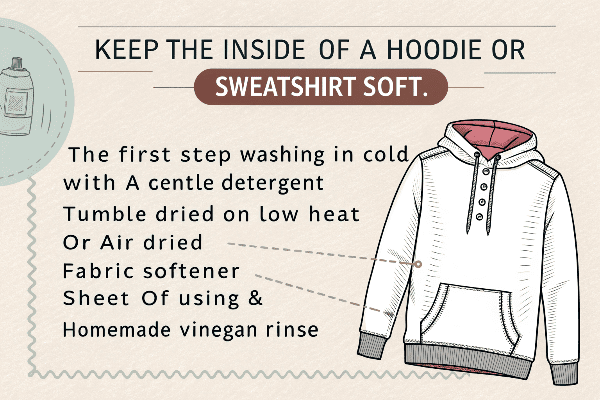
To keep the inside of a hoodie soft, wash it in cold water, turn it inside out, use a gentle detergent, skip the dryer, and let it air dry flat. Avoid harsh heat and fabric softeners that break down fleece fibers.
I work with brushed fleece and French terry every day in our factory. When customers ask how to preserve softness, I always give them one rule: treat it like skincare—gentle and consistent[^1].
Table of Contents
- Why does the inside of a hoodie get rough?
- What fabrics stay softer longer?
- How should you wash a hoodie to keep it soft?
- Can you restore softness to an old hoodie?
- Conclusion
Why does the inside of a hoodie get rough?
It’s usually due to washing habits and fiber wear.
Heat, friction, and harsh detergents can strip the soft brushed layer inside fleece and terry hoodies. Over time, the fabric pills, flattens, and loses its plush texture.

Common reasons for hoodie softness loss
| Cause | What It Does |
|---|---|
| Hot water wash | Opens fibers and reduces softness |
| Dryer heat | Shrinks and hardens inner fleece |
| Fabric softener | Leaves residue, reduces fluffiness |
| Overwashing | Accelerates fiber breakdown |
| Friction in machine | Creates pilling and wear on inner surface |
That fuzzy inside layer is usually created by a brushed or napped finish—easy to damage if not protected[^2].
What fabrics stay softer longer?
Fabric choice makes a big difference in softness retention.
High-quality cotton-poly fleece blends (with brushed interiors) retain softness longer than 100% cotton. Ring-spun cotton and peached fleece also outperform basic textiles.
Fabric comparison for hoodie softness
| Fabric Type | Softness Retention | Notes |
|---|---|---|
| Cotton-poly brushed fleece | High | Durable, plush, moisture-wicking |
| 100% cotton fleece | Moderate | Soft but prone to shrinking and pilling |
| French terry (loopback) | Moderate | Soft loops inside, more breathable |
| Ring-spun cotton | High | Tightly twisted fibers, stays smooth |
If you’re creating your own hoodie line, always ask suppliers about fleece brushing and fabric GSM (280–360 GSM is ideal for softness and durability)[^3].
How should you wash a hoodie to keep it soft?
Be gentle—and always wash it like it's your favorite item.
Turn it inside out, use cold water, avoid heavy spin cycles, and use a detergent made for delicates. Never use bleach or softener. Air dry only.
Soft-wash laundry method
- ✅ Turn inside out before washing
- ✅ Wash on cold, gentle cycle
- ✅ Use a mild, fragrance-free detergent
- ❌ Skip the dryer—air dry flat
- ❌ No bleach, softeners, or harsh chemicals
- ✅ Brush lightly with a fabric comb if pilling occurs
If you must tumble dry, use the lowest heat setting and remove it slightly damp to finish drying flat.
Can you restore softness to an old hoodie?
Yes, but only to a certain extent.
You can use a gentle fabric conditioner like white vinegar in the rinse cycle, fabric combs to remove pilling, or even a quick steaming method to relax stiff fibers.
But once the inner fleece wears out, the best solution is prevention next time.
Conclusion
The key to keeping your hoodie soft inside is low heat, gentle washing, and the right fabric. Whether you're buying for yourself or producing for your brand, softness equals satisfaction—and long-term customer loyalty.
[^1]: Brushed fleece softness is created by a mechanical process called "napping" that raises surface fibers—this texture is delicate and requires low-stress care.
[^2]: Dryer heat can exceed 150°F (65°C), which is enough to damage polyester and fleece fiber structure.
[^3]: GSM = Grams per Square Meter. A higher GSM generally indicates a thicker, softer, and more luxurious hoodie interior.