
There’s nothing more frustrating than a hoodie zipper that starts to ripple or curl after a few washes. It ruins the look, affects functionality, and makes your garment look cheap—even if it wasn’t.
To prevent hoodie zippers from curling, choose stable fabric blends, use quality zippers, pre-shrink materials before sewing, and reinforce the zipper area with interfacing or stay tape. Proper ironing and storage also help maintain shape.
I’ve worked on production lines where the wrong stabilizer—or skipping pre-shrink—led to an entire batch of curled zippers. It’s a fixable problem, but best avoided from the start.
Table of Contents
- Why do hoodie zippers curl in the first place?
- How can manufacturers prevent curled zippers?
- Can you fix a curled zipper after washing?
- What materials are least likely to curl at the zipper?
- Conclusion
Why do hoodie zippers curl in the first place?
It usually starts with fabric tension.
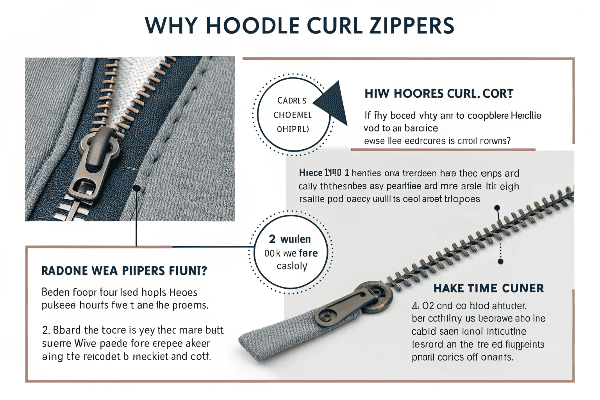
Zipper curling is caused by shrinkage in the fabric around the zipper, poor stabilizing during sewing, or mismatched zipper and fabric tension. After washing, one layer shrinks more than the other—causing the ripple.
Common causes of zipper curling
| Cause | Explanation |
|---|---|
| Fabric shrinkage | Unwashed fabric shrinks after stitching |
| Lightweight or stretchy knits | Pull and distort under zipper stress |
| Poor zipper alignment | Uneven sewing or tension during sewing |
| No stabilizer/interfacing | Fabric too soft to support zipper's structure |
Learn more about sewing stabilization techniques for knits and activewear.
The curling might look minor at first, but over time it creates a wavy front that ruins the garment’s structure.
How can manufacturers prevent curled zippers?
It starts before the sewing even begins.
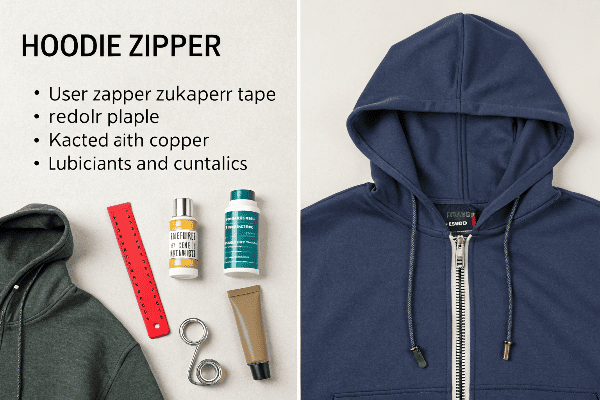
Manufacturers should pre-shrink all hoodie fabric, use fusible interfacing or stay tape along the zipper seam, and choose high-quality zippers with matching flexibility.
Garment factory zipper control checklist
- ✅ Pre-wash all fabric before cutting
- ✅ Use stay tape or woven interfacing on zipper seams
- ✅ Topstitch both sides evenly to keep zipper flat
- ✅ Use zippers with appropriate stiffness
- ✅ Avoid pulling fabric during stitching
Premium brands typically use YKK zippers with soft woven tape, which hold better tension and last longer.
Factories that produce for premium streetwear brands usually test zipper areas under heat and stress during sampling to ensure no distortion after production.
Can you fix a curled zipper after washing?
You can improve it, but not always fully reverse it.
For minor curling, steam pressing with a pressing cloth can smooth it out. If the curl is severe, you may need to open the seam and resew with added stabilizer.
Home fixes for curled zippers
| Method | Tools Needed | Effectiveness |
|---|---|---|
| Steam + pressing | Iron, damp cloth | Medium |
| Re-blocking | Pin to flat surface, dry flat | Low–Medium |
| Seam adjustment | Unpick seam, add stabilizer | High (if sewn) |
Need a visual guide? Try this zipper repair tutorial from the Sewing & Craft Alliance.
For brand owners, if curled zippers show up after production—it’s often cheaper to remake the batch than fix each one by hand.
What materials are least likely to curl at the zipper?
Choose stable, high-quality blends.
Mid- to heavyweight cotton fleece with added polyester or spandex resists curling better than loose knits or lightweight jerseys. Woven facing tapes also reduce zipper stress.
Material recommendations
| Fabric Type | Curl Resistance | Best Use |
|---|---|---|
| Cotton-poly fleece (350–460 GSM) | ★★★★★ | Streetwear, sportswear hoodies |
| French terry with Lycra | ★★★★☆ | Casualwear, light layering |
| Brushed back cotton knit | ★★★☆☆ | Everyday basic hoodies |
Also, reverse coil zippers with soft tape tend to curl less than rigid plastic-tooth ones on soft garments.
Conclusion
Zipper curling on hoodies is avoidable with proper fabric prep, stabilizing techniques, and quality zippers. Whether you're sewing at home or managing factory production, these steps help your hoodie look clean and structured wear after wear.
- YKK is widely regarded as the most reliable zipper brand used in global apparel manufacturing.
- Stay tape and interfacing are essential stabilizers often used in both fashion and technical sewing to prevent distortion.
- Fabric shrinkage is especially common in 100% cotton that hasn't been pre-shrunk before cutting.
- Garment factories often test zipper areas under simulated wear and washing conditions to catch issues early in sampling.
- Using improper zipper types—like hard plastic zippers on soft jerseys—contributes to distortion over time.