

I often see people order custom shirts and feel disappointed when the result is not what they imagined. It is a common worry that stops many from making their own designs.
To ensure the best quality for a customized shirt, choose the right fabric, create a detailed design, confirm samples, work with an experienced manufacturer, and check quality during every production stage. These steps protect your vision from idea to final delivery.
I still remember my first overseas client. They thought choosing fabric and sending a logo was enough. After that project, I made a clear system to guide every client.
Table of contents
- Why does fabric matter so much in custom shirts?
- Why is a clear design important for shirt quality?
- How important is the sample approval step?
- How do I check quality during production?
- Why does the choice of manufacturer affect quality?
- Conclusion
Why does fabric matter so much in custom shirts?
Fabric is the base of a shirt. Without the right fabric, even the best design fails.
The fabric decides how a customized shirt feels, looks, and lasts. Cotton, blended fabrics, and technical fabrics all perform differently in comfort, print quality, and durability.
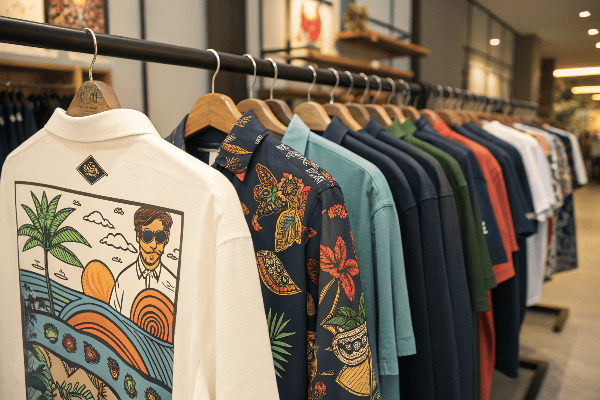
If you are not sure which fabric to choose, you can explore resources like fabric guides on Fibre2Fashion or read Wikipedia’s section on textile manufacturing.
Types of fabrics for custom shirts
| Fabric Type | Features | Best For |
|---|---|---|
| Cotton | Soft, breathable | Daily wear |
| Polyester | Strong, wrinkle-free | Sportswear |
| Cotton blend | Balanced feel | Casual shirts |
| Technical fabric | Quick-dry, stretch | Activewear |
How I choose fabric
I always touch and stretch the fabric. I check if it feels soft and strong. I also test how it reacts to printing or embroidery. If the fabric cannot hold the design well, the final result will not be good.
Many people ignore fabric testing. A client once chose a low-cost polyester without testing. After printing, the logo cracked. Since then, I insist on fabric swatches and tests.
Why is a clear design important for shirt quality?
Even good fabric cannot save a poor plan. A shirt design must be clear and detailed.
A clear design makes sure that every detail—placement, size, colors, and logo—is correct before production. Tech packs or detailed sketches help avoid misunderstandings.
You can also refer to tech pack creation tools like Techpacker to make sure every detail is documented.
Key parts of a good design
- Measurements and sizing charts
- Color codes (Pantone or CMYK)
- Logo size and placement
- Decoration method (screen print, embroidery, digital print)
A brand once sent me a simple photo. Without exact details, the first sample was wrong. After that, we spent more time fixing things than making shirts. A detailed design would have saved weeks.
How important is the sample approval step?
Samples are the first chance to see your idea come to life.
Approving a sample is essential because it confirms fabric, sizing, and printing accuracy before bulk production. Skipping this step often causes mass mistakes.
What to check in a sample
- Fit and measurements
- Stitching quality
- Color accuracy
- Logo or print quality
I once worked with a rush order where the client said "no time for samples." The final batch came out one size smaller. That mistake cost both of us a lot. Now, I never skip this step.
How do I check quality during production?
After samples are approved, I do not relax. Problems can still appear during bulk production.
The best way to ensure quality is to perform regular inspections: fabric check, mid-production check, and final inspection before shipping.
Quality control steps
- Pre-production: Inspect fabrics and trims before sewing.
- In-line inspection: Check pieces randomly during sewing.
- Final inspection: Review finished shirts for defects.
Professional buyers often hire third-party quality inspection companies to handle this.
Factories also prefer smooth production. When defects are caught early, it saves rework. That is why I always invite clients to allow quality control instead of waiting until the end.
Why does the choice of manufacturer affect quality?
Not every factory has the same skills.
Choosing an experienced factory with a proven record ensures better production quality, clear communication, and consistent delivery.
Signs of a good manufacturer
- They provide clear communication.
- They are open to showing past work.
- They share advice instead of only taking orders.
- They agree to inspections and quality reports.
A good partner helps you avoid mistakes you did not even think of. You can find reliable partners through trusted B2B platforms like Alibaba or sourcing events.
Conclusion
Good fabric, clear designs, sample approval, and strong quality checks with a reliable factory are the key steps to ensure your customized shirts come out exactly as you imagined.