
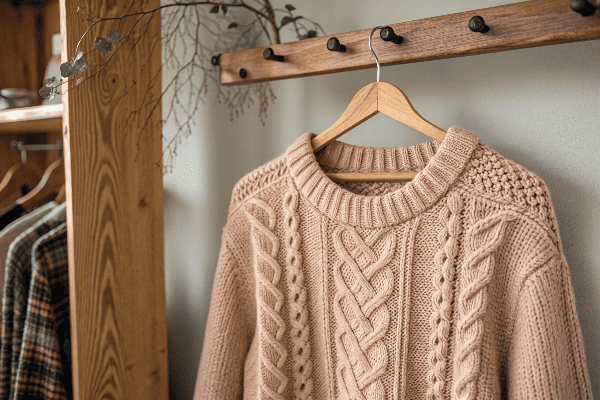
Many people like sweaters but do not know how to start designing one. They think it is simple. In fact, making a knitted sweater needs planning, skill, and patience.
To design a knitted sweater you need an idea, choose yarn, make a sketch, create a pattern, knit samples, adjust fit, and check every detail before making the final piece.
I still remember my first sweater project. It started with a simple sketch in my notebook. By the time I held the finished sample, it had gone through more than ten steps.
Table of Contents
- Where do ideas for sweater design come from?
- How do you choose the yarn?
- How do you make a sweater sketch?
- How do you create a sweater pattern?
- How do you knit a sample?
- How do you check fit and make changes?
- What happens before the final sweater is ready?
- Conclusion
Where do ideas for sweater design come from?
Every sweater starts with an idea. Some ideas come from fashion shows. Some come from daily life. For me, both are true.
Sweater ideas come from fashion trends, fabrics, personal style, and customer needs. Designers use these ideas as the base for a new product.

Sources of inspiration
- Inspiration boards: Collect photos, colors, and styles that set the mood.
- Street and runway: Observe new shapes, colors, and patterns.
- Customer demand: Requests for specific designs, such as oversized, cropped, or certain sleeve shapes.
For example, trend platforms like WGSN help designers track new knitwear concepts.
How do you choose the yarn?
Yarn is the soul of a sweater. The type of yarn decides how the sweater feels, looks, and wears over time.
You choose yarn based on fiber type, thickness, softness, and season. Cashmere, wool, cotton, or blends all give different effects.
Key yarn factors
- Fiber type:
- Wool: Warm and elastic
- Cashmere: Soft and light
- Cotton: Breathable for warmer weather
- Blends: Cost-effective and versatile
- Yarn thickness:
Thicker yarn for chunky sweaters, finer yarn for delicate knits. - Color and dye:
Test how well yarn holds color to ensure lasting vibrancy.
For fiber properties, you can explore Textile School’s guide on yarn types.
How do you make a sweater sketch?
A sketch turns ideas into something clear. I always sketch before I start any sample.
A sweater sketch shows the front, back, and sleeve design, and it guides the next steps like pattern making and knitting.
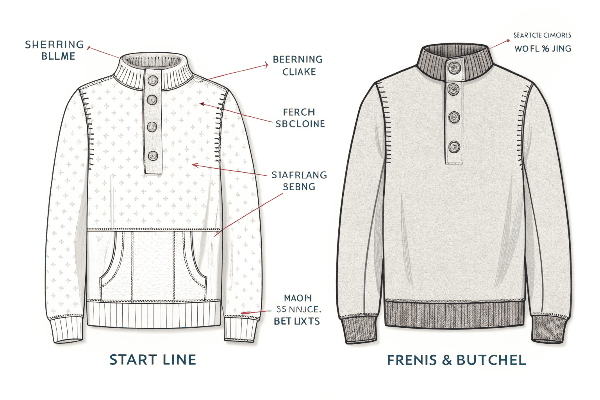
Sketch details
- Shape: Oversized, slim, cropped, or long.
- Neckline: Round neck, V-neck, or turtleneck.
- Sleeves: Long, short, raglan, or drop shoulder.
- Design elements: Color blocks, jacquard patterns, embroidery.
Design software like Adobe Illustrator is often used to create technical fashion sketches.
How do you create a sweater pattern?
A sketch is flat. A pattern gives the real shape of a sweater.
To create a sweater pattern, a pattern maker turns the sketch into pieces with exact measurements for front, back, and sleeves.
Pattern process
- Measurements: Decide chest width, sleeve length, shoulder width.
- Ease: Add space depending on fit (loose, relaxed, or slim).
- CAD software: Use pattern-making software to create precise patterns for knitting machines.
How do you knit a sample?
Before making the full production, I always make a small sample. This is like a test.
Knitting a sweater sample checks if the yarn, tension, and pattern work well before full production.
Sample process
- Machine setup: Adjust knitting gauge.
- Sample panel: Knit a small panel, wash it, check shrinkage.
- Assembly: Knit the full pieces and link seams.
| Step | Purpose |
|---|---|
| Panel knit | Test yarn tension and pattern |
| Wash test | Check shrinkage and feel |
| Adjustments | Make corrections before full run |
How do you check fit and make changes?
Fit is very important. Even if the design looks good on paper, it may not feel good on the body.
Fit checking means trying the sample on a model, making notes, and adjusting the pattern to fix any problem.
Key adjustments
- Adjust shoulder and sleeve length.
- Modify body length for cropped or oversized designs.
- Ensure comfort at the neckline and underarms.
What happens before the final sweater is ready?
The final step is to check quality. This makes sure the sweater looks perfect.
Before making a finished sweater, I do final quality control for yarn quality, knitting tension, seams, and washing results.
Control points
- Yarn defects: Look for knots or breaks.
- Seam quality: Ensure smooth, even linking.
- Finishing: Check shrinkage and colorfastness after washing.
For more about garment QA, refer to Fibre2Fashion on quality control.
Conclusion
Designing a knitted sweater needs an idea, good yarn, careful sketching, pattern making, sampling, and checking. Each step makes the sweater better.