
How T-Shirts Are Made: A Complete Guide for Brands, Startups, and Wholesale Buyers
T-shirts are one of the most in-demand clothing items worldwide, and understanding how they are made helps brands create better products, reduce mistakes, and choose reliable manufacturers. This guide explains the full T-shirt production process—from fabric selection to printing, sewing, and final packaging—based on real factory workflow.
📌 Table of Contents
- Understanding T-Shirt Fabrics
- How T-Shirt Patterns Are Made
- Cutting Process in T-Shirt Production
- Sewing and Assembly Workflow
- Printing & Embroidery Options
- Final Quality Checks and Packaging
- Why Working With a Professional Manufacturer Matters
🧵 Understanding T-Shirt Fabrics
Choosing the right fabric determines comfort, durability, shrinkage, and overall product quality. Most best-selling T-shirts fall into four main fabric categories.
📷 Image 1 – Fabric Swatch Displa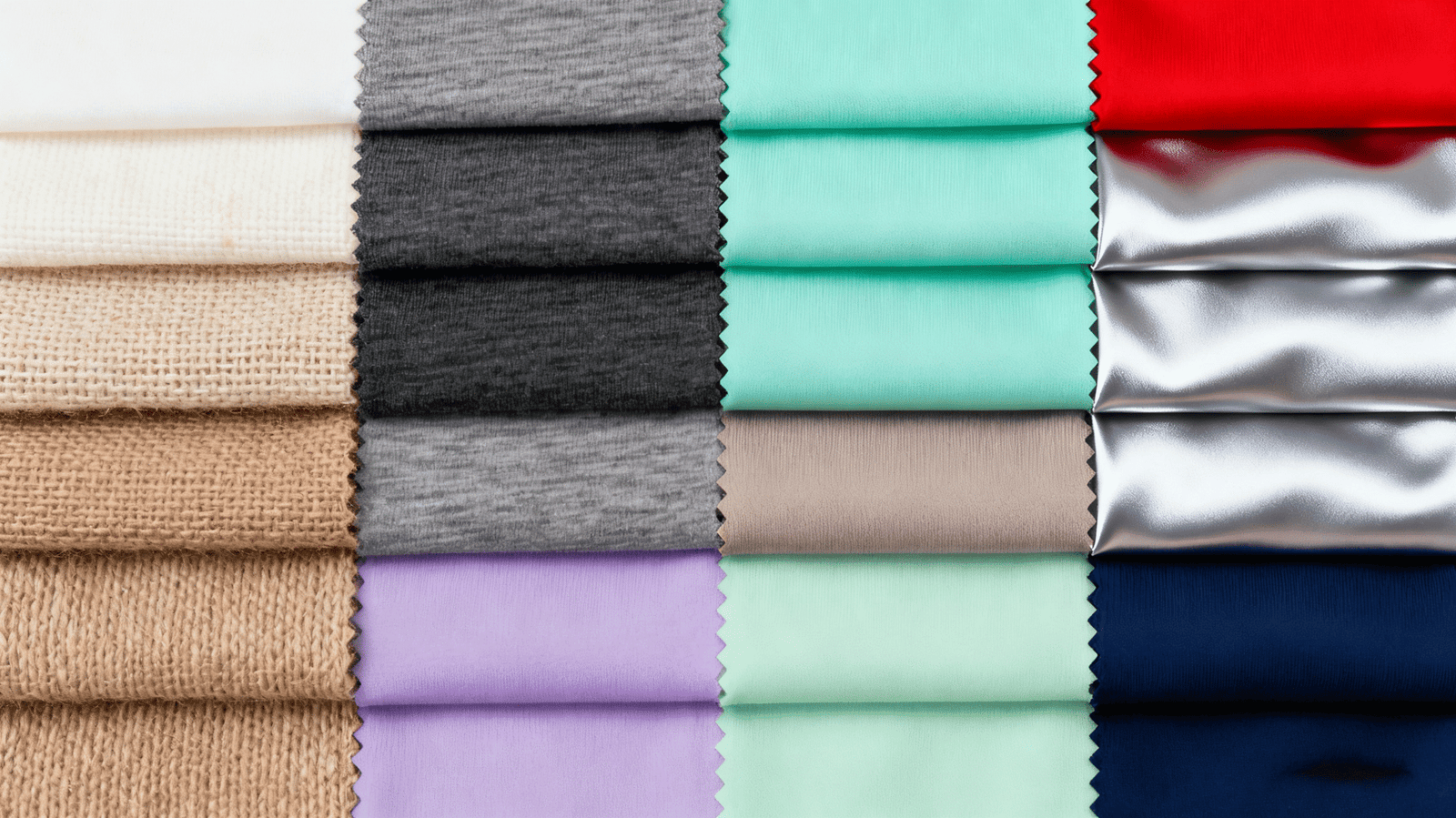
Key Fabric Types Used in T-Shirts
1. 100% Combed Cotton
Soft, breathable, ideal for premium lifestyle T-shirts.
2. Cotton–Polyester Blend (CVC 60/40, TC 65/35)
Less shrinkage, smoother surface, great for printing.
3. Heavyweight Cotton (220–260 GSM)
Popular in streetwear and oversized designs.
4. Performance Fabric
Used for sportswear due to moisture-wicking abilities.
🧩 How T-Shirt Patterns Are Made
Patterns define the shape, fit, and design of the T-shirt. A proper pattern ensures correct sizing and consistent manufacturing.
What Pattern Making Includes:
- Body measurements
- Grading for full size range
- Seam allowance
- Neckline shape and depth
- Sleeve length and fit
📷 Image 2 – Pattern Draftin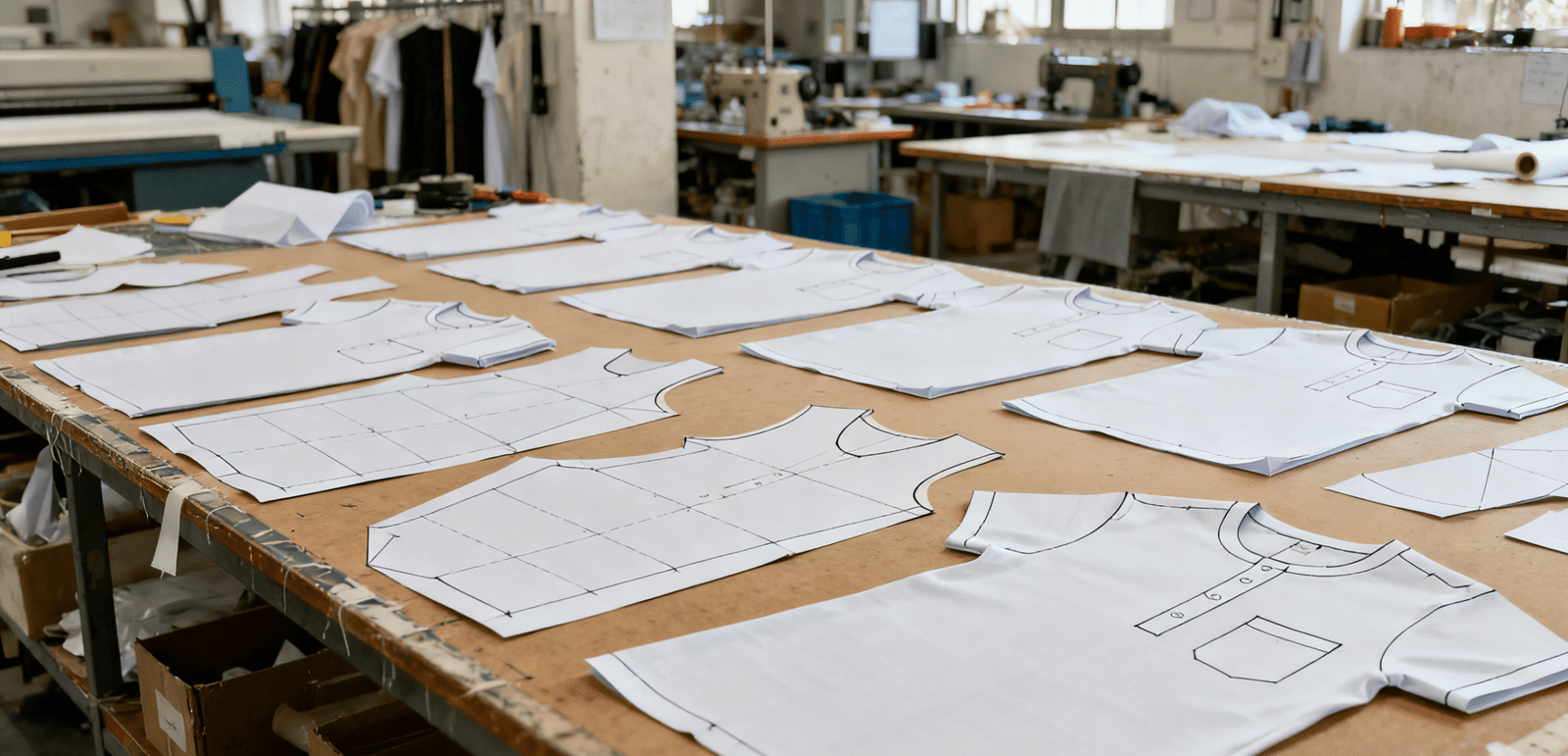
✂️ Cutting Process in T-Shirt Production
Once the fabric is prepared, large layers are stacked and cut using:
- Manual electric cutters
- Automatic cutting machines
- Laser cutting for special fabrics
Accuracy in cutting ensures the T-shirt maintains the correct shape and measurements.
📷 Image 3 – Fabric Cuttin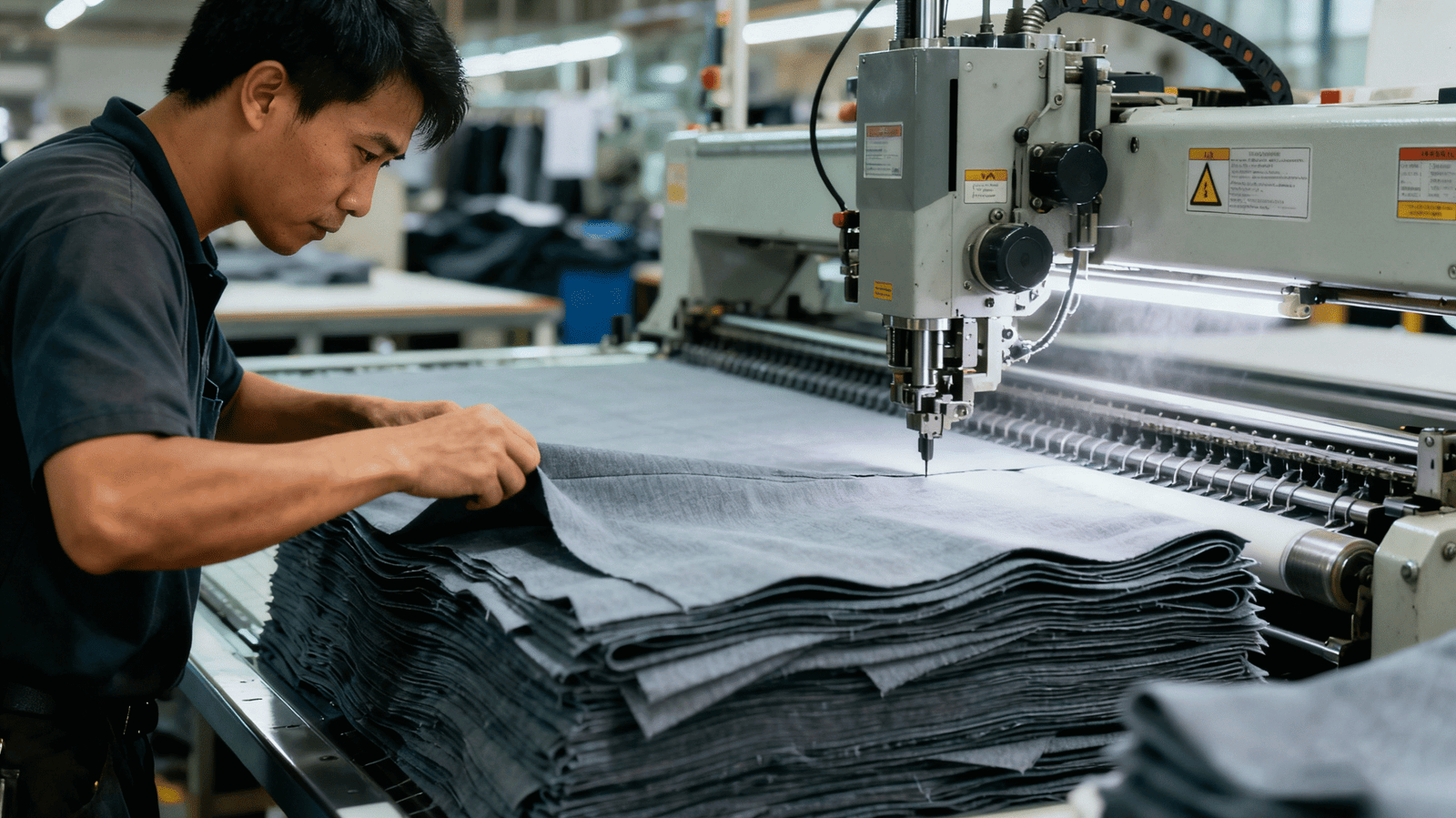
Title: Bulk Fabric Cutting for T-Shirts
Alt Text: A worker cutting stacked T-shirt fabric layers using an industrial cutting machine.
Description: A high-precision cutting setup commonly used in large-scale T-shirt production.
🪡 Sewing and Assembly Workflow
Sewing is the core of T-shirt manufacturing. Different parts are stitched using specialized machines to ensure durability and comfort.
Main Stitching Steps
- Shoulder seam stitching
- Neck rib binding
- Sleeve joining
- Side seam closing
- Hemming
- Label attachment
Each step affects the final comfort, stretch, and overall finish.
📷 Image 4 – Sewing Worksho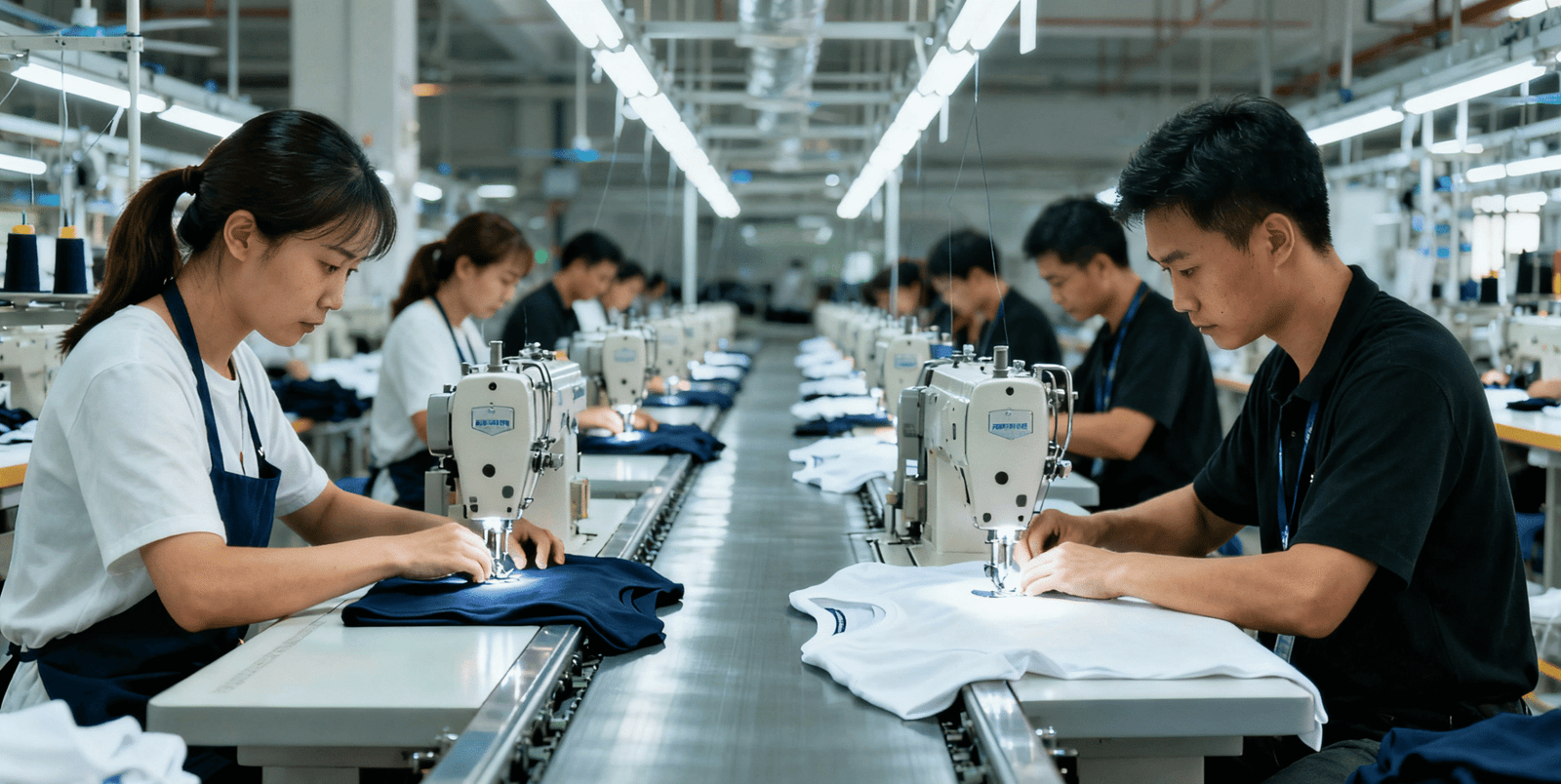
🎨 Printing & Embroidery Options
Brands often differentiate through artwork. Here are the most popular decoration techniques:
1. Screen Printing
Best for bulk orders, vibrant colors, long-lasting.
2. DTG (Direct-to-Garment)
Perfect for small orders and detailed full-color artwork.
3. Puff Print
3D texture used heavily in streetwear.
4. Embroidery
High-end and durable, ideal for logos.
📷 Image 5 – Printing & Embroidery Close-U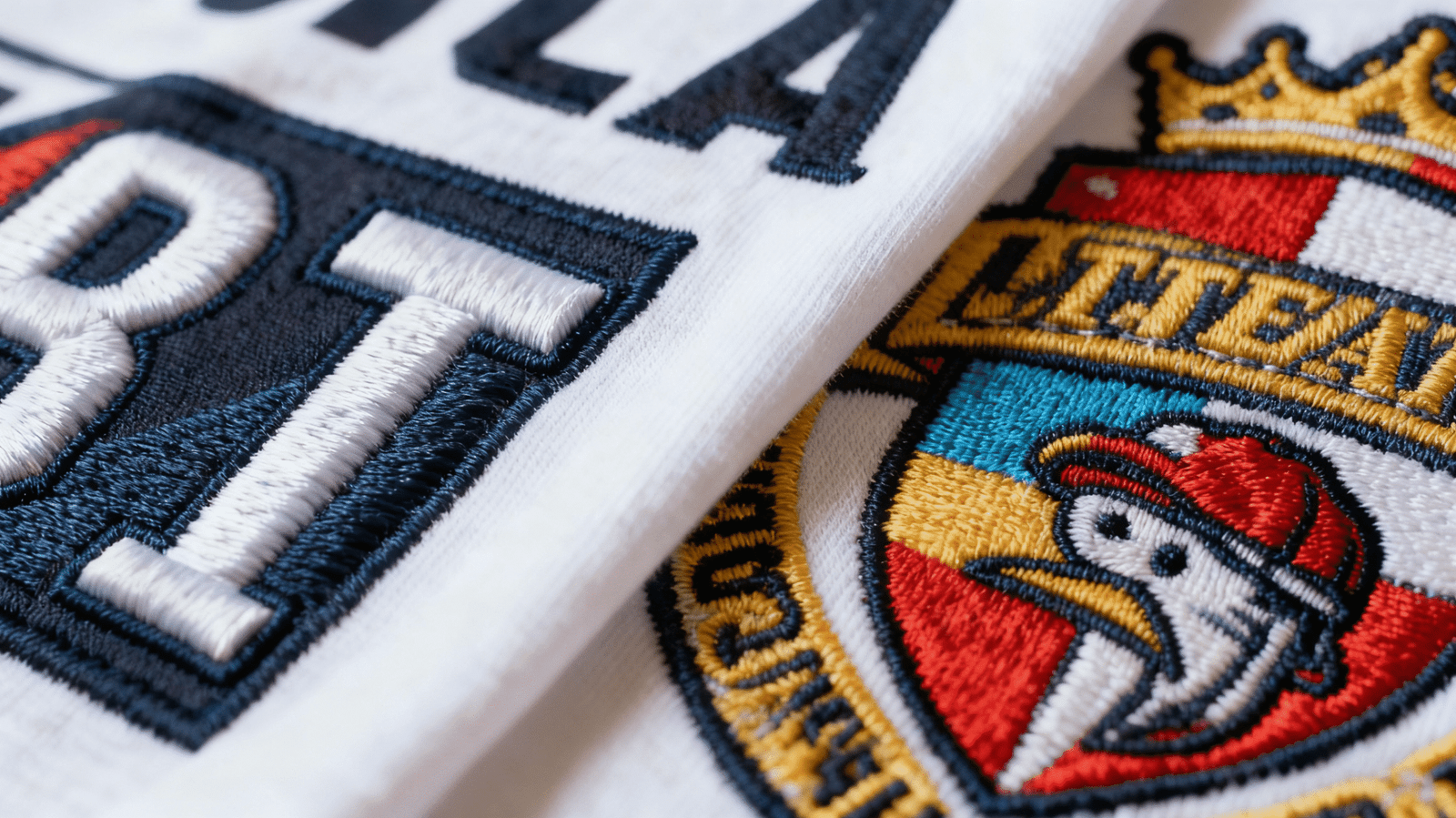
📦 Final Quality Checks and Packaging
Before shipping, every T-shirt undergoes strict checks:
- Stitching strength
- Fabric defects
- Printing alignment
- Shrinkage & colorfastness testing
- Size measurement accuracy
Packaging options include:
- Polybags
- Recycled bags
- Custom branded packaging
Reliable packaging reduces damage during shipping and improves customer experience.
🤝 Why Working With a Professional Manufacturer Matters
A skilled manufacturer ensures:
- Stable quality
- Accurate sizing
- Shorter lead times
- Lower defect rates
- More printing/embroidery options
- Customization for brand identity
This helps brands launch best-selling T-shirts faster and enter the market with confidence.
🔖 Tags (SEO Optimized)
t-shirt manufacturer, custom t-shirts, t-shirt production process, t-shirt printing, screen printing t-shirt, dtg t-shirts, puff print t-shirt, wholesale t-shirts, t-shirt factory china, cotton t-shirts, apparel manufacturer, private label t-shirts, custom logo t-shirts, bulk t-shirt supplier
📌 Meta Description (SEO)
High-quality guide explaining how T-shirts are made, including fabrics, cutting, sewing, printing, and packaging. Ideal for brands, startups, and wholesale buyers looking for reliable T-shirt manufacturing.
📌 Canonical URL
<link rel="canonical" href="https://yourdomain.com/t-shirt-manufacturing-guide" />
📌 Open Graph / X (Twitter) Preview Tags
<title>T-Shirt Manufacturing Guide: How High-Quality T-Shirts Are Made</title>
<meta property="og:title" content="T-Shirt Manufacturing Guide">
<meta property="og:description" content="Learn how T-shirts are made—from fabrics to sewing, printing, and quality control. Perfect for brands and buyers.">
<meta property="og:image" content="https://yourdomain.com/og-image.jpg">
<meta property="og:url" content="https://yourdomain.com/t-shirt-manufacturing-guide">
<meta name="twitter:title" content="T-Shirt Manufacturing Guide">
<meta name="twitter:description" content="Full T-shirt production process explained.">
<meta name="twitter:image" content="https://yourdomain.com/x-image.jpg">
External References
- Textile Exchange – Sustainable Fabrics Guide
- Fashion United – Apparel Manufacturing Insights
- The Business of Fashion – Printing Technologies
- OEKO-TEX® Certified Materials
- Made-How: How Sweatshirts Are Made
Meta Description:
Discover the complete sweatshirt manufacturing process—from fabric selection to printing, embroidery, and final packaging. Learn how professional factories ensure quality and innovation in every design.
Canonical URL:
https://dechoreal.com/how-sweatshirts-are-made
https://dechoreal.com/customization-service/