
When I started my first bulk printing order, the number 100 always came up. Many new brands ask me: “How much does it cost to print 100 T-shirts?” At first, I didn’t know how much difference bulk printing makes. After many years working with different orders, I now understand how pricing works.
The cost to print 100 T-shirts depends on the fabric, printing method, number of colors, and design size. On average, for 100 basic cotton shirts with a single-color screen print, the cost ranges from $500 to $900 total, or $5 to $9 per shirt.
I still remember my first 100-piece order. The client wanted a simple logo on the chest. After comparing methods, screen printing saved them almost 40% compared to digital printing.
Table of Contents
- Why does quantity make a big difference in price?
- What printing methods are best for 100 T-shirts?
- How much do fabrics affect the price?
- How much do colors and design size add to the cost?
- How much does it cost to print 100 T-shirts with one-color screen printing?
- What about full-color printing for 100 shirts?
- How can I reduce the cost of printing 100 T-shirts?
- Conclusion
Why does quantity make a big difference in price?
The number of shirts affects the cost per piece more than almost anything.
Printing 100 shirts allows setup costs (screens or machines) to be spread across more pieces. The larger the order, the lower the cost per shirt.
- 20 shirts: $12–$15 per shirt
- 50 shirts: $8–$10 per shirt
- 100 shirts: $5–$9 per shirt
I always see the client’s face light up when they realize that ordering 100 pieces almost halves the unit price.
Reference: Printful – Bulk order pricing explained
What printing methods are best for 100 T-shirts?
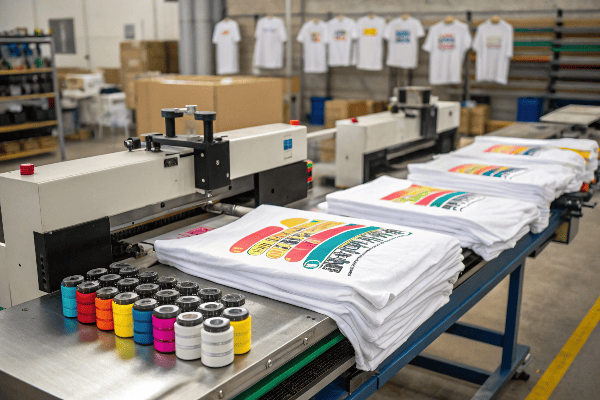
Not every printing method is good for 100 shirts.
Screen printing is the most cost-effective for 100 T-shirts, especially if the design uses 1 to 3 colors. DTG (direct-to-garment) works for small runs but becomes more expensive for bulk orders.
- Screen printing: Best for 100-piece runs
- DTG printing: Good for complex, full-color designs but costs more
- Heat transfer: Good for small logos or names
- Sublimation: Used for polyester fabric
One client of mine switched from DTG to screen printing after seeing how much cheaper it was for a 100-piece order.
How much do fabrics affect the price?
Fabric is the base of everything.
Basic cotton T-shirts cost less to print than heavyweight or organic cotton shirts. Premium fabrics and blends increase the price.
- Basic cotton (160 GSM): $2–$3 blank
- Heavyweight cotton (220 GSM): $4–$5 blank
- Organic cotton: $5–$7 blank
For 100 lightweight blank shirts, the printing price can stay low. For heavy fabric, the cost of blank shirts almost doubles.
How much do colors and design size add to the cost?
More colors = more cost.
Each extra color in screen printing requires an additional screen and setup. Large designs or front-and-back prints increase the price.
- One color logo: Cheapest
- Two to three colors: Adds cost per shirt
- Front + back: Almost double the printing work
- Oversized print: More ink and time
For a 100-piece order, I recommend simple designs with fewer colors to keep the cost down.
How much does it cost to print 100 T-shirts with one-color screen printing?
This is the most common request.
A 100-piece order with one-color screen printing usually costs $500–$900 total ($5–$9 per shirt), depending on blank shirt quality.
Example pricing:
- 100 basic cotton tees + one color logo: ~$5.50 each
- 100 heavy cotton tees + one color logo: ~$8 each
I often tell clients that a single-color logo is the best way to control costs at 100 pieces.
What about full-color printing for 100 shirts?
Full-color prints cost more.
DTG printing for 100 shirts can cost $10–$15 per shirt because there is no discount for multiple colors. Complex screen printing with 6–8 colors also increases the total cost significantly.
- DTG uses more ink and takes longer
- Screen printing with many colors means more setup time
- More quality checks are needed
I had a customer who ordered 100 full-color DTG shirts. It ended up being almost twice the cost of a one-color screen-printed batch.
How can I reduce the cost of printing 100 T-shirts?
There are simple ways to save money.
Simplify the design, choose a one-color screen print, and stick to one placement (front or back). Also, use standard cotton blanks instead of heavy custom fabrics.
- Avoid oversized prints
- Combine small orders into one 100-piece run
- Order early so you don’t pay rush fees
Most new brands are surprised how much these simple choices reduce their first production cost.
Conclusion
Printing 100 T-shirts typically costs $500 to $900 depending on fabric, method, and design. Screen printing is the most cost-effective choice for this quantity. Complex designs, premium fabrics, and additional placements increase the cost per piece.