
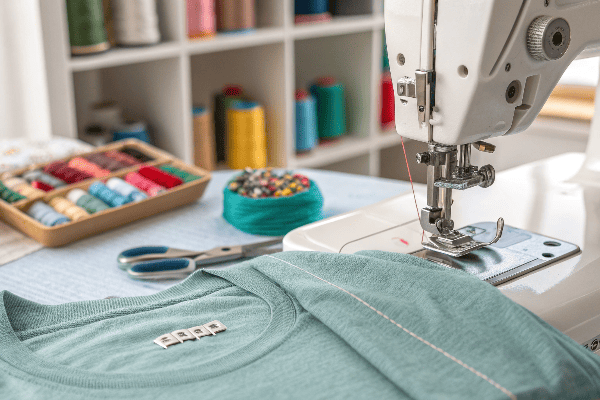
If you’ve ever wondered how long it takes to sew a T-shirt, whether you're designing your own or working with a manufacturer, the answer depends on several factors. From the type of fabric used to the complexity of the design, many variables can affect the sewing time.
On average, it takes about 15–30 minutes to sew a basic T-shirt, but more intricate designs with added elements like prints, embroidery, or custom fit adjustments can take longer.
As someone who works in garment production, I’ve seen how different factors, like the fabric choice or factory setup, influence production time.
Table of Contents
- What are the main steps in sewing a T-shirt?
- What factors influence the time it takes to sew a T-shirt?
- How long does it take to sew a T-shirt by hand?
- How does production speed affect costs?
- Conclusion
What are the main steps in sewing a T-shirt?
Sewing a T-shirt involves several essential steps.
The process includes pattern making, cutting the fabric, stitching the pieces together, and adding any finishing touches. Each step varies in time based on the complexity of the design and the number of pieces involved.
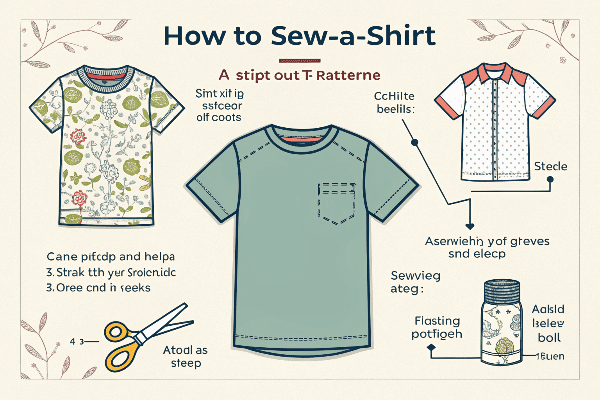
Key steps in T-shirt production
| Step | Estimated Time | Details |
|---|---|---|
| Pattern Making | 30 minutes–2 hours (depends on design) | Creating a custom template for cutting fabric |
| Fabric Cutting | 5–10 minutes per T-shirt | Cutting fabric according to the pattern |
| Sewing the Body | 5–10 minutes | Joining the front, back, and sleeves |
| Adding Details | 5–10 minutes | Adding necklines, hems, and finishes |
| Finishing | 5 minutes | Inspecting, folding, and packaging |
The actual sewing portion typically only takes about 10-15 minutes, but preparation time for cutting, pattern-making, and finishing can add extra time.
For more details on garment production, visit Garment Industry Production Process.
What factors influence the time it takes to sew a T-shirt?
Several factors can shorten or lengthen sewing time.
The type of fabric, design complexity, and whether the T-shirt is mass-produced or made custom can all influence how long it takes to sew a shirt.
Key factors affecting sewing time
| Factor | Impact on Time |
|---|---|
| Fabric Type | Heavier fabrics (like denim) take longer to sew than lightweight cotton. |
| Design Complexity | Simple designs are faster to sew, while detailed graphics or embroidery require additional time. |
| Production Scale | Mass production can be faster with automated machinery; custom or small-batch sewing takes longer. |
Larger production runs in factories often use specialized machines to speed up tasks, such as automated sleeve attachment or seam joining. For an overview of fabric types and their production times, check Cotton Incorporated.
How long does it take to sew a T-shirt by hand?
Hand-sewing takes much longer than using a machine.
Hand-sewing a T-shirt can take anywhere from 1–3 hours depending on the level of detail and stitching involved. This is rarely done for large runs, but it can be used for custom or high-end garments.
Hand-sewing vs. machine-sewing time
| Task | Machine Sewing Time | Hand-Sewing Time |
|---|---|---|
| Seaming | 5–10 minutes | 1–2 hours |
| Attaching Sleeves | 3–5 minutes | 1 hour |
| Hemming | 2–3 minutes | 30 minutes–1 hour |
Hand-sewing is typically reserved for alterations, repairs, or high-end bespoke garments. For more information on hand-sewing techniques, visit Sewing.org.
How does production speed affect costs?
Speed often correlates with cost efficiency.
Faster production can reduce costs, especially when larger quantities are involved. However, custom or slow-production T-shirts with intricate designs tend to cost more due to the added time and labor involved.
Speed vs. Cost in T-shirt production
| Production Type | Time Required | Cost Implications |
|---|---|---|
| Mass Production | 10–15 minutes per T-shirt | Lower cost per unit, higher efficiency |
| Small-Batch or Custom | 30–45 minutes per T-shirt | Higher cost due to slower production and customization |
The cost of custom or designer T-shirts reflects the extra time, fabric, and finishing that go into each garment. For a breakdown of production costs, see Fashion Manufacturing Guide.
Conclusion
On average, it takes 15–30 minutes to sew a basic T-shirt, but factors like fabric, design complexity, and production scale can either shorten or lengthen this time. For small batches or custom T-shirts, you can expect longer production times, while mass production can streamline the process, lowering costs.
[^1]: Learn more about the garment production process at Garment Industry Production.
[^2]: For an in-depth look at different fabric types and their impact on production time, visit Cotton Incorporated.
[^3]: Hand-sewing techniques for custom garments are discussed in detail at Sewing.org.