
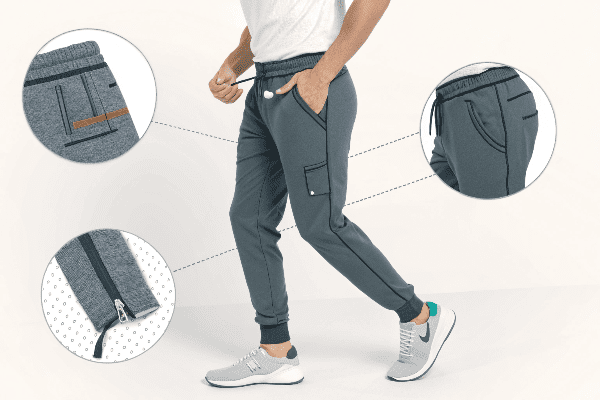
You loved how your joggers fit the first time—snug waistband, perfect shape. But after a few wears and washes, they start sagging at the knees or waistband. So how do you keep joggers from losing their shape?
To keep your joggers from sagging, choose high-quality fabric with stretch recovery, wash them properly in cold water, avoid high heat drying, and rotate wear between pairs. Reinforced waistbands and cuffed ankles also help retain shape.[^1]
I had a favorite pair that sagged at the knees after two weeks. I learned the hard way that not all joggers are built the same—and that how you care for them really matters.
Table of Contents
- Why do joggers start sagging?
- How to choose joggers that don’t sag?
- How should you wash joggers to prevent sagging?
- How to maintain fit during wear?
- Conclusion
Why do joggers start sagging?
It comes down to fabric fatigue and poor recovery.
Joggers sag due to overstretched fabric, worn-out elastic, and damage from heat or overwashing. Knees and waistbands are the first to lose shape.
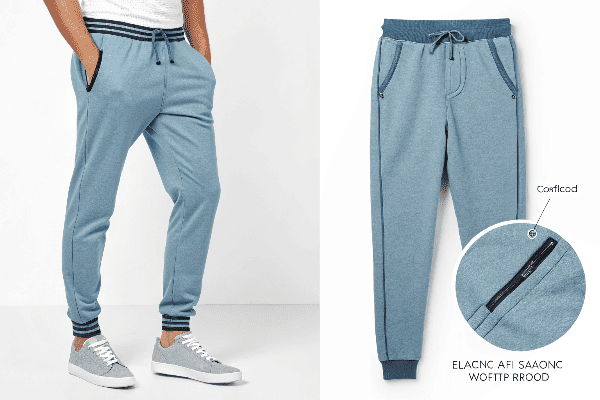
Common causes of sagging
| Cause | Area Affected |
|---|---|
| Low-quality fabric | Whole silhouette |
| Weak or worn-out elastic | Waistband, cuffs |
| Overwashing or high heat | Knees, thighs, waistband |
| Constant sitting or stretching | Backside, knees |
Sagging often starts small—but gets worse with each wear if not managed[^2].
How to choose joggers that don’t sag?
Start with the right materials and construction.
Look for joggers made with spandex/elastane blends (at least 5%), reinforced stitching, and elastic waistbands that include drawstrings. Avoid 100% cotton if shape retention is important.[^3]
Fabric and fit checklist
| Feature | Why It Helps |
|---|---|
| Spandex or elastane | Adds stretch and shape recovery |
| Tapered or cuffed leg | Prevents bunching and drag |
| Drawstring waistband | Maintains a secure fit |
| Double-stitched seams | Adds structure and durability |
Brands like Lululemon, Vuori, and Nike often use recovery-friendly technical fabrics that reduce sagging over time[^4].
How should you wash joggers to prevent sagging?
Wash cold. Dry low—or not at all.
Use a gentle cycle with cold water. Avoid hot water and never tumble dry on high heat, which breaks down fabric elasticity and waistband tension.[^5]
Washing do's and don’ts
| ✅ Do | ❌ Don’t |
|---|---|
| Wash inside out | Wash with heavy jeans or towels |
| Use mild detergent | Use bleach or fabric softener |
| Air dry or tumble dry low | Use high heat or overdry |
| Wash only when needed | Wash after every light wear |
The gentler you are with joggers, the longer they’ll hold their shape.
How to maintain fit during wear?
Rotate, rest, and reshape.
Rotate between joggers so one pair isn’t overstressed. Avoid wearing the same pair multiple days in a row, especially for long periods of sitting or squatting.
Smart daily habits
- Let joggers “rest” between wears to bounce back
- Fold instead of hanging to avoid stretching out[^6]
- Smooth out knees and waistband while drying
- Use the drawstring for better waist support
If they’re sagging after just a few wears, it may be time for an upgrade.
Conclusion
To keep your joggers from sagging, start with high-quality fabric, wash with care, and avoid daily overuse. A little attention to fabric and fit goes a long way in keeping your joggers sharp, comfortable, and supportive.
[^1]: Healthline: What Is Spandex and Why Is It Used in Clothing?
[^2]: REI Co-op: Caring for Your Workout Clothes
[^3]: MasterClass: What Is Elastane? Fabric Properties & Care Guide
[^4]: Nike Dri-FIT Technology
[^5]: The Spruce: How to Prevent Clothing from Shrinking in the Wash
[^6]: Good Housekeeping: The Best Way to Store Sweatpants