Looking to launch your own clothing or skincare brand without setting up a factory? You’ll need a private label manufacturer. But finding one that’s reliable, flexible, and understands your vision takes more than a Google search.
To find a private label manufacturer, research trusted platforms like Alibaba, contact suppliers directly, attend trade shows, ask for samples, and verify certifications. Prioritize factories that offer low MOQs, fast lead times, and strong customization capabilities.
When I helped a U.S. brand scale from 100 pieces to 10,000, it started with finding the right private label partner in China. Here's how you can do the same.
Table of Contents
- What is a private label manufacturer?
- Where can I find private label manufacturers?
- How do I evaluate manufacturers?
- How can I test before committing?
- What are red flags to avoid?
- Conclusion
What is a private label manufacturer?
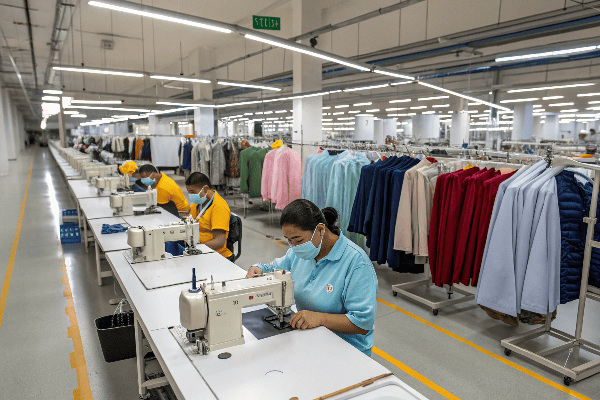
A private label manufacturer produces goods that are sold under another company’s brand name.
You provide the logo, label, and design direction; they handle the production. It’s the easiest way to launch a custom brand without owning a factory.
Private label vs. white label
| Feature | Private Label | White Label |
|---|---|---|
| Customization | High (you provide branding, design) | Low (generic product, brand logo only) |
| MOQ (min order) | Usually higher | Often lower |
| Control | You control specs and design | Fixed by supplier |
Learn more about private vs white label products^[1].
Where can I find private label manufacturers?
Start with trusted sourcing platforms and industry-specific websites.
Top options include Alibaba, Global Sources, ThomasNet (US), Maker’s Row (US), and TradeKey. Also consider trade shows like the Canton Fair or MAGIC Las Vegas for in-person vetting.
Recommended sourcing platforms
| Platform | Strengths |
|---|---|
| Alibaba | Thousands of verified manufacturers worldwide |
| Global Sources | Focus on Asia-based certified suppliers |
| ThomasNet | U.S.-based manufacturers and suppliers |
| Maker’s Row | U.S.-focused platform for fashion and cosmetics |
| TradeKey | Global B2B sourcing marketplace |
Use filters like “private label,” “OEM/ODM,” and “custom logo” when searching.
How do I evaluate manufacturers?
Don’t just look at price—look at their capacity, certifications, and communication.
Request product samples, tour factories virtually or in-person, check client reviews, and verify ISO, BSCI, or WRAP certifications^[2]. A good private label partner communicates well, understands your market, and delivers consistent quality.
Evaluation checklist
| Factor | What to Check |
|---|---|
| Quality | Samples, previous client brands, reviews |
| Certifications | ISO, CE, BSCI, GOTS (for organic) |
| Lead Time | Ask for timelines from design to delivery |
| Communication | Do they understand your vision and respond fast? |
| Custom Options | Label, tags, packaging, sizes, fabric, etc. |
How can I test before committing?
Start with a small trial order to evaluate production reliability.
Most private label factories accept 50–300 pieces per style as a trial. Use this batch to check fit, quality, packaging, and shipping time.
Sample order strategy
| Step | What to Do |
|---|---|
| Request samples | Blank product or mockup with logo |
| Test production | Place a 50–100 unit trial order |
| Give feedback | Check packaging, print quality, labeling |
| Adjust as needed | Improve before full-scale order |
This lets you build trust while minimizing risk.
What are red flags to avoid?
Some suppliers aren’t what they claim to be.
Avoid manufacturers that hesitate to show samples, hide certifications, or ask for full payment upfront. Poor communication and no after-sales support are also warning signs.
Red flags checklist
| Red Flag | What It Might Mean |
|---|---|
| No sample offering | Low confidence in product quality |
| Generic responses | Possibly a trading company, not a factory |
| No certifications | Not compliant with export standards |
| Unrealistic low pricing | Risk of poor quality or bait-and-switch |
This guide on choosing manufacturers^[3] offers more tips.
Conclusion
To find a private label manufacturer, you need to research trusted platforms, verify capabilities, and test small orders. Don’t rush into large production without confirming quality and support. Once you find the right partner, you’ll be able to scale your brand confidently and cost-effectively.
- Shopify. "Private Label vs White Label: What's the Difference?" https://www.shopify.com/blog/private-label-vs-white-label
- BSCI and ISO certification standards – Intertek: https://www.intertek.com/business-assurance/bsci/
- Entrepreneur. "How to Find a Manufacturer or Supplier for Your Product." https://www.entrepreneur.com/growing-a-business/how-to-find-a-manufacturer-or-supplier-for-your-product/284492