
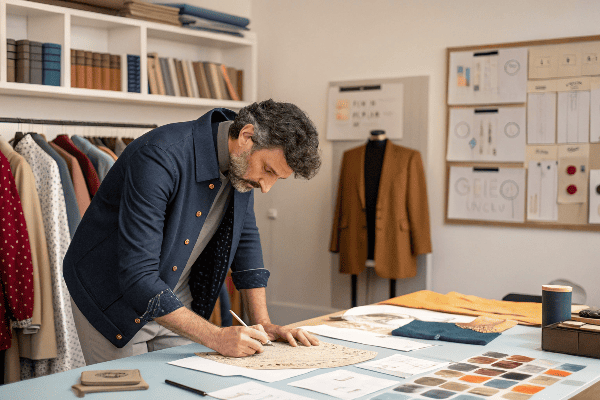
Building a clothing brand sounds exciting—but without a plan, most people either waste time or burn cash. That’s exactly why I want to break it down step by step.
To create your own clothing brand, start by choosing your niche, defining your brand identity, designing your product line, finding a manufacturer, and building your sales and marketing channels.
When I helped a friend launch his label, we started with just an idea and a few sketches. Three months later, he had real products, packaging, and customers. If he could do it, so can you.
Table of Contents
- What niche should I choose for my clothing brand?
- How do I build a strong brand identity?
- How do I create designs for my brand?
- Where do I find a reliable clothing manufacturer?
- How should I price, pack, and position my products?
- How do I market and sell my brand?
- Conclusion
What niche should I choose for my clothing brand?
You can’t sell to everyone. You need to focus.
Pick a niche that fits your style, your target audience, and real market demand.[^1]
How do I find my niche?
Ask yourself three simple questions:
- What kind of clothing do I love?
- Who do I want to wear it?
- What’s missing in the market?
| Niche Type | Ideal Buyer Group | Key Features |
|---|---|---|
| Streetwear | Gen Z, Urban consumers | Bold prints, oversized fits |
| Activewear | Fitness lovers | Stretch fabrics, breathable styles |
| Loungewear | Remote workers, couples | Cozy materials, relaxed silhouettes |
| Sustainable Wear | Eco-conscious buyers | Organic cotton, recycled fabrics |
Finding the right niche gives your brand a clear voice and direction.
How do I build a strong brand identity?
Your brand needs to be more than just a logo.
A great brand identity has a clear name, a logo, a story, and a style that makes people remember you.[^2]
What should I prepare?
Brand Name
- Keep it short and easy to say
- Avoid numbers and tricky spelling
Logo
- Make sure it works on tags, packaging, and online
- Use a consistent style across all visuals
Story
Tell people why your brand exists. For example, I created my factory brand to support emerging streetwear creators who couldn’t meet big MOQs.
Style Guide
Pick a color palette and font that fits your vibe. Keep everything consistent across social media and packaging.
How do I create designs for my brand?
Even if you’re not a designer, you can still bring your idea to life.
You can sketch designs yourself, hire a freelance designer, or work with your manufacturer’s design team.
3 Ways to Get Your Designs Made
1. DIY Design
- Use apps like Canva or Procreate
- Start with simple logos or slogans
2. Freelancers
- Try Fiverr, Upwork, or 99designs
- Look for people who’ve worked with fashion clients
3. Work with Your Manufacturer
At DeCheng, we help clients turn rough ideas into production-ready tech packs.
| Option | Pros | Cons |
|---|---|---|
| Design Yourself | Free, flexible | Time-consuming, limited |
| Freelancers | Professional touch | Cost varies, revisions take time |
| Manufacturer Team | Fast, integrated | Less design freedom |
Where do I find a reliable clothing manufacturer?
Your idea becomes real only when a good factory brings it to life.
Choose a manufacturer that supports low MOQs, offers samples, and helps with custom logos, fabrics, and packaging.[^3]
How to vet manufacturers?
Ask these key questions:
- What’s your MOQ per style?
- Do you do sampling? How long does it take?
- What kinds of fabric and printing do you offer?
- Can I visit your factory or see photos/videos?
| Criteria | What to Look For |
|---|---|
| MOQ | 50–100 pcs per style |
| Sampling Time | 7–14 days |
| Customization | Labels, logos, packaging |
| Experience | Brands in your target market |
If you’re just starting out, choose a supplier who’s worked with small brands before. They’ll understand the challenges you face.
How should I price, pack, and position my products?
Even great designs can fail without good business basics.
Price your product to cover costs and profits. Your packaging and branding should match your audience.
The business side of fashion
Pricing Formula
(Production Cost + Shipping + Branding) × 2–3 = Retail Price
Packaging Tips
- Use eco mailers or ziplock bags with your logo
- Add thank-you cards or care instructions
Product Positioning
Think about where your product fits:
| Product Type | Retail Price Range | Packaging Idea |
|---|---|---|
| T-shirt (basic) | $20–$35 | Kraft mailer, printed tag |
| Hoodie (streetwear) | $50–$90 | Ziplock bag, sticker set |
| Leggings (activewear) | $40–$70 | Minimal box, hangtag |
Your branding doesn’t stop at the product—it includes how it arrives and how it feels in the customer’s hands.
How do I market and sell my brand?
Even the best hoodie won’t sell if no one sees it.
Use a mix of social media, your website, and online platforms to reach your first customers.[^4]
What works for new brands?
1. Social Media
Instagram and TikTok are key. Post behind-the-scenes, style shots, and short videos.
2. Website
Start with Shopify or WooCommerce. Add:
- Product pages
- Size guide
- Story/About page
- Contact form
3. Influencer Seeding
- DM micro-influencers
- Send free samples in exchange for posts
- Give discount codes to share
4. Marketplaces
- Start with Etsy, Amazon Handmade, or local markets
| Channel | Why It Works | Tip |
|---|---|---|
| Instagram/TikTok | Builds trust and visibility | Post consistently |
| Shopify Website | Full control of the brand | Optimize for mobile |
| Influencer Outreach | Social proof from others | Choose 5–10 micro creators |
| Pop-up Booth | Local visibility | Use to test your pricing |
Conclusion
Start with one clear idea. Build your brand slowly but consistently. You don’t need a huge budget—just commitment, clarity, and a real connection to your audience.
[^1]: Shopify. How to Find Your Clothing Niche – A great beginner guide to choosing a profitable niche.
[^2]: Tailor Brands. Clothing Brand Identity Guide – Explains how to create a brand name, logo, and story that stands out.
[^3]: ThomasNet. How to Find a Manufacturer – Trusted source for manufacturing tips and supplier vetting.
[^4]: Later. TikTok Marketing Strategy for Brands – Actionable insights for growing your brand using TikTok.