
When I first explored sourcing in Southeast Asia, I wondered how large the Singapore apparel market truly was. Many business owners ask me this too. Singapore is small in size, but its fashion industry punches above its weight. So just how big is the Singapore apparel market?
Singapore’s apparel retail sector generated around US $3.5 billion in 2023 and continues growing steadily. Its e‑commerce channel brought in about US $1.7 billion in 2024, accounting for over one‑third of total apparel sales.
I still remember walking through Orchard Road in 2023—luxury boutiques, local brands, and busy malls. That atmosphere showed me Singapore isn’t just retail—it’s fashion vibrancy rooted in high income and tourism.
Table of Contents
- What is the current size of Singapore’s apparel market?
- How big is apparel e-commerce in Singapore?
- What is the market outlook and growth forecast?
- What are the key segments in Singapore’s apparel market?
- Which brands and channels dominate the market?
- How does Singapore compare regionally in apparel market size?
- What’s driving future growth in Singapore’s apparel market?
- Conclusion
What is the current size of Singapore’s apparel market?
Singapore’s apparel retail industry reached about US $3.5 billion in revenue in 2023. This figure reflects growth from US $3.1 billion in 2022, with a compound annual growth rate (CAGR) of 4.8–2.1% over recent years.
- The women’s segment leads at around US $2.0 billion (56% of total).
- Menswear and childrenswear make up the rest.
- Growth drivers include fast fashion, e‑commerce gains, seasonal promotions, and high brand awareness.
Singapore’s high income and tourism mean shoppers spend more per person than in many regional markets. That keeps the apparel sector strong despite the country’s small population.
(Data source: Statista – Singapore Apparel Market)[^1]
How big is apparel e-commerce in Singapore?
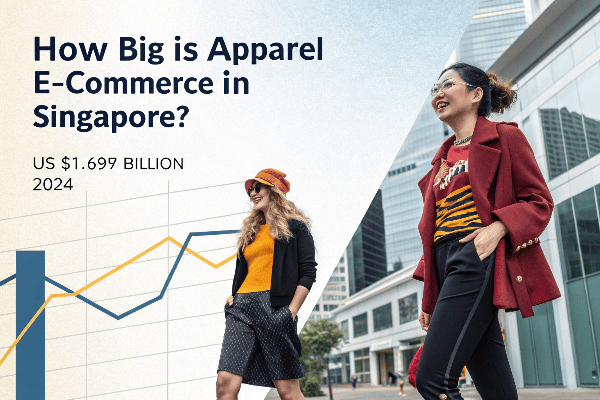
Singapore's fashion e‑commerce market reached approximately US $1.697 billion in 2024. This represents about 20–25% of total apparel and footwear sales.
- Growth forecast at 10–15% year-over-year into 2025.
- Mobile-first shoppers and social commerce drive digital sales.
- Popular platforms include Shein, Uniqlo, Nike online channels.
E‑commerce is no longer niche—it’s central. Even flagship physical stores in Singapore integrate omni‑channel strategies to keep pace.
(Industry report from eCommerceDB)[^2]
What is the market outlook and growth forecast?
Singapore’s apparel market is expected to continue growing steadily. Industry forecasts project a CAGR of around 6.2% from 2025 to 2031.
- Premium and luxury labels remain strong in urban centers.
- Sustainability, ethical sourcing, and eco-friendly fabrics attract more attention.
- Athleisure and fast fashion dominate popular categories.
Tourism rebounds and digital innovation keep fueling growth. Singapore's strategic location also attracts regional fashion brands.
What are the key segments in Singapore’s apparel market?
Singapore’s market is split across womenswear, menswear, and childrenswear. Women’s apparel is the largest share, accounting for over half of total sales (~56%).
- Womenswear: Dresses, tops, sportswear, and sweaters dominate.
- Menswear: Business shirts, outerwear, and casual apparel.
- Children’s wear: Smaller but growing—baby apparel alone was US $49 million in 2024.
Consumers in Singapore show rising interest in organic, hypoallergenic, and sustainably produced clothing—especially for kids.
Which brands and channels dominate the market?
Singapore hosts many global and local labels. Big names such as Uniqlo, Zara, H&M, Nike, and Adidas have a strong presence.
- Physical stores: About 60% of apparel sales still come from brick-and-mortar.
- Online platforms: Social commerce trends, flash drops, and convenience services boost e‑commerce.
Local designers are also rising, leveraging sustainability and customization to appeal to discerning shoppers.
How does Singapore compare regionally in apparel market size?
Despite its small size, Singapore competes well in per capita apparel spending. Its total sales (~US $3.5 billion) are significant compared to neighboring countries' larger but lower‑income markets.
- Consumers spend more per person due to high disposable income and tourism.
- Singapore acts as a testing ground for new fashion concepts in Asia.
Regional brands and global labels alike view Singapore as a gateway to Southeast Asia’s broader fashion trends.
(Read more: McKinsey’s State of Fashion in Asia)[^3]
What’s driving future growth in Singapore’s apparel market?
Innovation and shifting consumer values shape the market ahead.
Major drivers include the rise of e‑commerce, sustainability demand, athleisure trends, and tourism recovery.
- Digital-first brands focus on personalized experiences and fast delivery.
- Sustainable clothing and transparent supply chains appeal to eco-conscious buyers.
- Athleisure and performance wear continue growing, blurring lines between fashion and comfort.
Brands that integrate online and offline, quality and ethics, are best positioned.
Conclusion
Singapore’s apparel market is bigger than it seems—about US $3.5 billion in retail sales and US $1.7 billion in e‑commerce. It grows steadily at ~6% CAGR, driven by fashion-savvy consumers, rising incomes, and digital innovation. For brands and suppliers, Singapore offers both opportunity and a high standard of retail demand.
[^1]: Statista – Singapore Apparel Market Data
[^2]: eCommerceDB – Singapore fashion e-commerce insights
[^3]: McKinsey – State of Fashion in Asia