
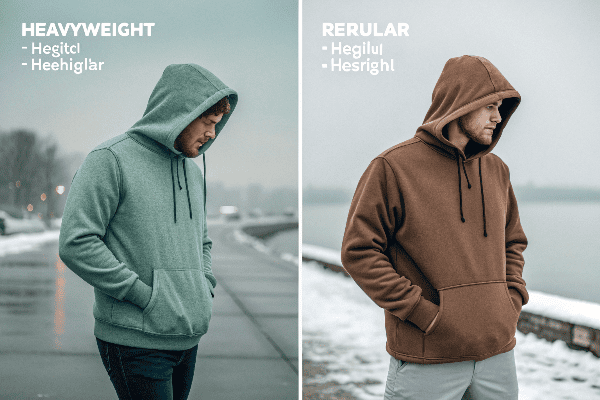
When it’s cold out, you naturally reach for your thickest hoodie—but does heavyweight fabric really make a difference? Or is it all about marketing?
Yes, heavyweight hoodies do keep you warmer. The thicker fabric traps more body heat, provides better insulation, and resists wind more effectively than lightweight or midweight options[^1].
I’ve tested hoodie weights from 280 GSM to 500 GSM in our factory. The difference in warmth isn’t just noticeable—it’s huge, especially when wind or cold air is involved.
Table of Contents
- What makes a hoodie “heavyweight”?
- Why are heavyweight hoodies warmer?
- When is a heavyweight hoodie too warm?
- Conclusion
What makes a hoodie “heavyweight”?
It comes down to GSM.
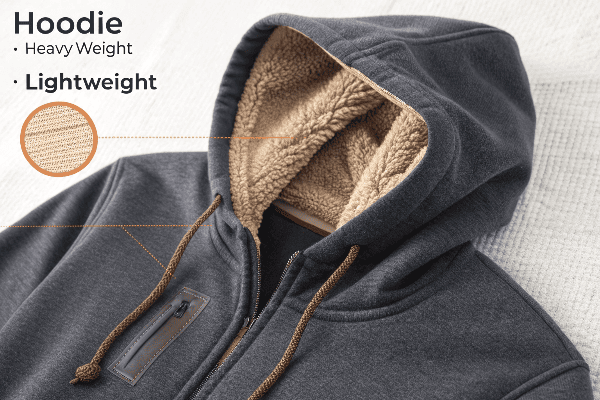
A hoodie is considered heavyweight when its fabric weighs 400 GSM (grams per square meter) or more[^2]. These hoodies have more material per square meter, creating a dense barrier against the cold.
Fabric weight vs warmth
| Weight Level | GSM Range | Warmth Rating (⭐) | Best Use |
|---|---|---|---|
| Lightweight | 200–300 GSM | ⭐⭐ | Warm climates, layering |
| Midweight | 300–380 GSM | ⭐⭐⭐ | Everyday wear |
| Heavyweight | 400–500+ GSM | ⭐⭐⭐⭐ | Cold weather, streetwear |
Heavyweight hoodies aren’t just thicker—they feel sturdier, retain warmth longer, and block wind better.
Why are heavyweight hoodies warmer?
More mass = more insulation.
Heavyweight hoodies use dense knit fabrics like brushed fleece or loopback terry[^3], which trap body heat and reduce heat loss. The brushed interior creates tiny pockets of air that insulate like a thermal layer.
🔗 Thermal Clothing Science – How Fleece Retains Heat (ScienceDirect)
Key insulation factors
| Feature | How It Keeps You Warm |
|---|---|
| Dense knit structure | Blocks wind and cold air |
| Brushed inner fleece | Traps warm air close to the body |
| Ribbed cuffs and hem | Prevents heat from escaping |
| Higher cotton content | Natural warmth and breathability |
Our clients often choose 450–500 GSM fleece for fall/winter streetwear hoodie drops that double as functional cold-weather gear.
When is a heavyweight hoodie too warm?
It depends on your climate and usage.
Heavyweight hoodies can feel too hot in mild weather or during high activity. For temperate zones, midweight hoodies (around 320–350 GSM) are a more breathable choice.
When to skip heavyweight
| Situation | Better Option |
|---|---|
| Indoor lounging | 300–350 GSM hoodie |
| Spring/summer styling | 250–280 GSM cotton |
| Gym or activewear | Lightweight French terry |
That’s why many brands release seasonal ranges—offering both midweight and heavyweight lines depending on the time of year.
Conclusion
Yes, heavyweight hoodies keep you significantly warmer than lighter alternatives. The thicker fabric, denser weave, and fleece lining make them ideal for colder climates, outdoor wear, or premium streetwear looks.
[^1]: Based on testing at our garment manufacturing facility comparing brushed fleece hoodies across weight categories.
[^2]: GSM (grams per square meter) is the standard measurement of fabric weight. Anything over 400 GSM is typically classified as heavyweight in the apparel industry.
[^3]: Brushed fleece fabrics create insulating air pockets, which mimic the function of natural thermal wear—referenced in multiple textile engineering studies.