
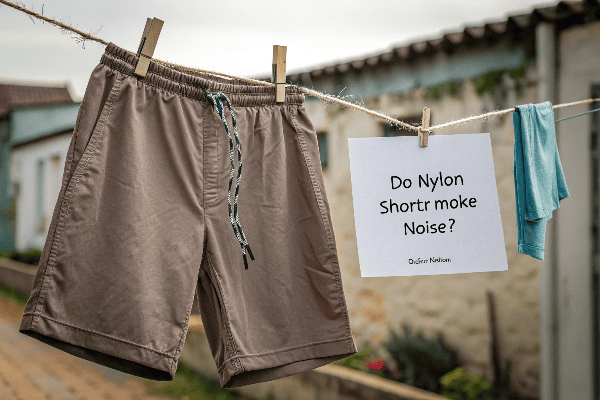
You’re walking through a quiet hallway—and your shorts are making that unmistakable swish-swish sound. Embarrassing? Maybe. But normal? Absolutely. Let’s talk about why nylon shorts make noise—and when it becomes a problem.
Yes, nylon shorts can make noise when the fabric rubs together—usually a swishing or rustling sound. This is more common with looser fits, stiffer weaves, and unlined styles.
As someone who works with different fabric types daily, I’ve tested dozens of shorts. Whether or not they make noise often depends on the quality and finish of the nylon—not just the material itself.
Table of Contents
- Why do nylon shorts make noise when you walk?
- Are all nylon shorts noisy?
- Can you reduce the sound nylon shorts make?
- When does nylon noise actually matter?
- Conclusion
Why do nylon shorts make noise when you walk?
It comes down to friction and texture.
Nylon has a smooth, synthetic surface that can rub audibly when the inner thighs, side seams, or pocket areas touch as you move. The sound is more noticeable in quiet environments.

What causes the swish?
| Cause | Effect |
|---|---|
| Stiff or thick nylon weave | Louder swishing sound |
| Unlined shorts | Direct nylon-to-nylon contact |
| Loose or baggy fit | More surface area rubbing together |
| Low-quality finish | More plastic-like, crinkly sound |
In contrast, soft-washed or premium nylon blends are quieter because they reduce friction and absorb some of the sound[^1].
Are all nylon shorts noisy?
Not always—some are nearly silent.
Higher-quality nylon or nylon-spandex blends tend to be softer and quieter. Shorts with inner lining or mesh also make less noise.
Learn more from GearLab's nylon vs. polyester comparison[^2].
Noise level comparison by construction:
| Type of Shorts | Noise Level |
|---|---|
| Cheap nylon wind shorts | 🔊🔊🔊 (loud) |
| Premium stretch nylon w/ lining | 🔇 (quiet) |
| Nylon-mesh running shorts | 🔊🔊 (moderate) |
| Nylon-cotton blend cargo shorts | 🔇🔇 (minimal) |
If sound is a concern, look for denier count below 50D and soft finishes[^3].
Can you reduce the sound nylon shorts make?
Yes—by changing how they fit or how you wash them.
Washing nylon shorts several times or using fabric softener can reduce the stiffness and friction. Choosing a more tailored fit also limits rubbing between legs.
The Spruce's guide to softening synthetic fabric offers useful methods[^4].
Tips to reduce noise:
- ✅ Wash the shorts a few times before wearing
- ✅ Use fabric softener (check garment label)
- ✅ Choose lined or double-layer shorts
- ✅ Avoid oversized or ultra-loose fits
- ✅ Rub the fabric together when shopping—test before you buy
Even high-performance nylon can be made quieter with a brushed or matte finish.
When does nylon noise actually matter?
It depends on the setting.
In everyday wear, most people won’t notice. But in quiet offices, libraries, or studios, swishy shorts might feel distracting. For athletic use or outdoor wear, it’s usually a non-issue.
If noise is a dealbreaker, consider “quiet” labeled fabrics or polyester-based softshell materials[^5].
Conclusion
Yes, nylon shorts can make noise—but not all do. The sound comes from friction between smooth synthetic fibers. To reduce swish, choose softer weaves, lined styles, or fitted cuts—and avoid low-grade, stiff nylon if silence matters.
[^1]: Coarse or unwashed nylon produces more noise than brushed, treated, or blended alternatives.
[^2]: Outdoor Gear Lab explains that nylon is noisier than polyester, especially in its raw woven form.
[^3]: Lower denier (e.g., 30D) nylon has less mass, producing less sound when rubbed.
[^4]: The Spruce outlines safe ways to soften synthetic fabrics like nylon.
[^5]: REI recommends softshell and stretch-woven pants as low-noise options for outdoor and casual wear.