Custom Clothing Manufacturer: How Do You Find the Right One for Your Brand?
You have a clear idea for your clothing brand.
The difficult part is turning that idea into a real garment with the fabric, fit, construction, logo, and quality you imagined—without ordering thousands of pieces before you know whether the product will sell.
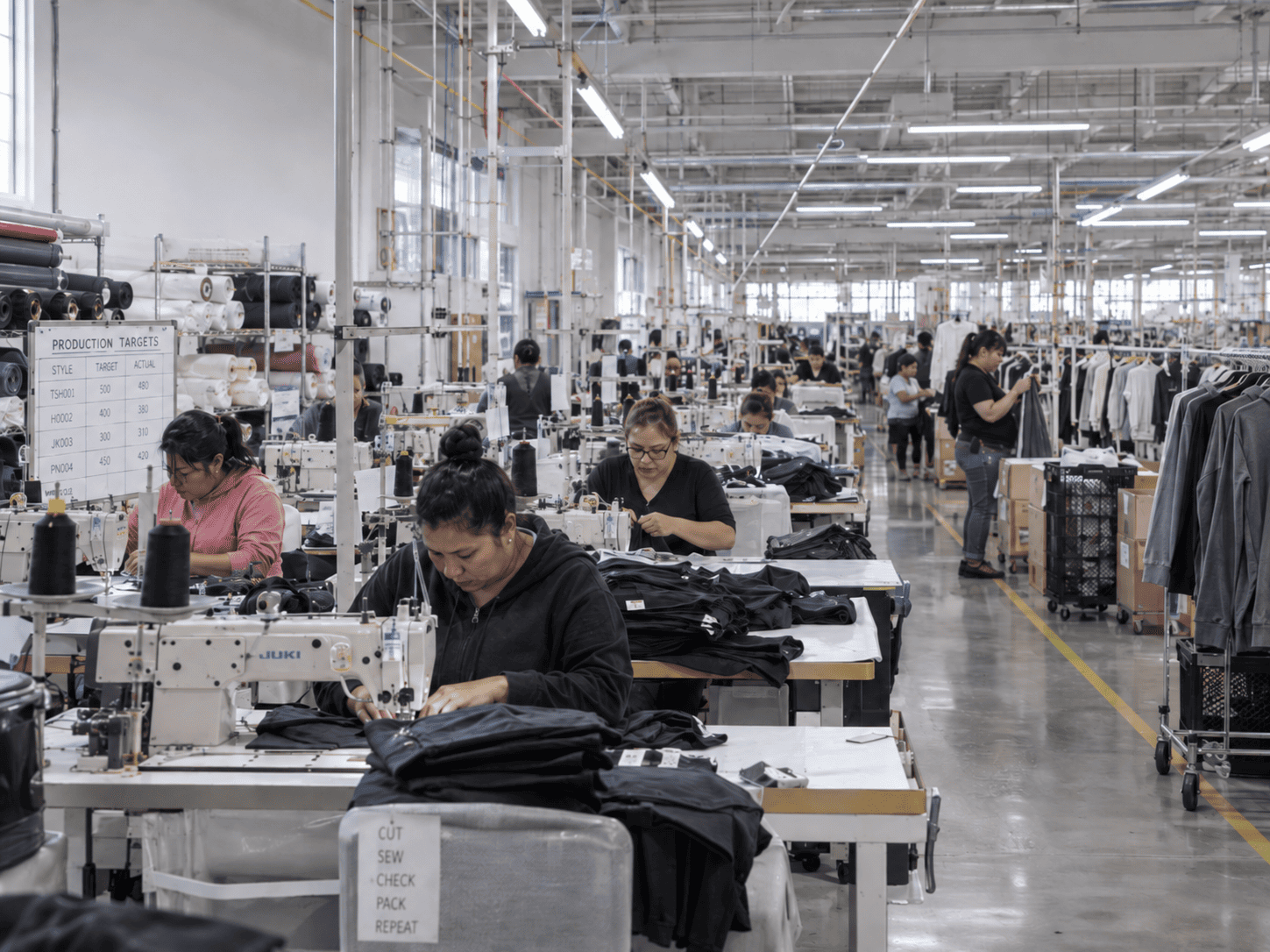
A custom clothing manufacturer produces garments according to the buyer's specifications rather than simply reselling finished stock. Depending on the factory, buyers may customize fabric, GSM, fit, measurements, colors, printing, embroidery, trims, labels, packaging, and construction details while the manufacturer handles sampling and bulk production.
I have worked in garment manufacturing for more than 20 years, and one thing I see repeatedly is that new brands often search for “a clothing factory” as if all factories provide the same service.
They do not.
Some factories mainly sew.
Some expect the buyer to provide fabric and patterns.
Some can source almost everything.
Some have strong sample development teams.
Others are excellent at repeating large-volume orders but are not structured for startup development.
So the first question should not be:
Who has the cheapest price?
It should be:
What kind of manufacturer does my product actually need?
Table of Contents
- What Does a Custom Clothing Manufacturer Actually Do?
- What Is the Difference Between CMT, Full-Package, OEM, and ODM?
- What Can You Have Custom-Made?
- How Do Fabric and GSM Affect Custom Clothing?
- What MOQ Can You Get from a Custom Clothing Manufacturer?
- Can Small Orders Still Use Custom Printing and Embroidery?
- How Much Does Custom Clothing Manufacturing Cost?
- Why Should You Make a Sample Before Bulk Production?
- What Should You Send a Manufacturer Before Asking for a Quote?
- How Do You Choose the Right Custom Clothing Manufacturer?
- What Compliance Documents Should You Check?
- How Should a Factory Handle Your Designs and Artwork?
- What Red Flags Should Clothing Brands Watch For?
- Can the Same Manufacturer Scale With Your Brand?
- Conclusion
- Footnotes & References
What Does a Custom Clothing Manufacturer Actually Do?
The word “manufacturer” can hide very different service levels.
One factory may expect the buyer to send finished fabric, patterns, labels, and trims.
Another factory may receive only a tech pack and handle the rest.
A custom clothing manufacturer may provide pattern making, fabric sourcing, sample development, cutting, printing, embroidery, sewing, washing, labeling, quality control, packaging, and bulk production. The exact service depends on the factory's production model and capabilities.
For a startup brand, this matters a lot.
If you only have:
- Reference pictures
- Logo files
- Basic measurements
- A fabric idea
you need more development support than a brand that already has:
- Final pattern
- Graded size chart
- Approved fabric
- Complete tech pack
- Finished artwork
- Trim specification
The more complete your product information is, the easier it becomes for a manufacturer to quote accurately and develop the sample.
What Is the Difference Between CMT, Full-Package, OEM, and ODM?
These terms are often mixed together, but they describe different parts of the manufacturing relationship.
CMT
CMT means Cut, Make, Trim.
In a typical CMT arrangement, the buyer may provide important materials and technical information, while the factory focuses mainly on converting those materials into finished garments.
The buyer may provide:
- Fabric
- Patterns
- Specifications
- Trims
The factory handles:
- Cutting
- Sewing
- Basic finishing
This works better for brands that already control their own supply chain.
Full-Package Production
In full-package production, the manufacturer takes more responsibility.
The buyer normally provides the design and requirements.
The factory may handle:
- Fabric sourcing
- Trims
- Pattern making
- Sampling
- Printing
- Embroidery
- Sewing
- Labels
- Packaging
- Production
This is the model many independent brands prefer because they do not need to coordinate six different suppliers themselves.
OEM
OEM is useful when the buyer already has its own product concept and specifications.
For example, the buyer sends:
- Tech pack
- Measurements
- Fabric requirement
- Artwork
- Construction details
and asks the factory to manufacture that design.
ODM
ODM starts from more of the manufacturer's existing development.
For example, I may already have an oversized hoodie pattern.
The buyer keeps:
- Main construction
- Base fit
- Pocket structure
but changes:
- Fabric
- Measurements
- Color
- Logo
- Labels
- Packaging
That can reduce development time.
A simple comparison looks like this:
| Model | Buyer Provides | Manufacturer Handles | Best For |
|---|---|---|---|
| CMT | Materials + technical information | Cutting and sewing | Brands controlling sourcing |
| Full-package | Design + requirements | Sourcing through finished product | Independent brands |
| OEM | Detailed original product specifications | Production to buyer design | Highly customized products |
| ODM | Product brief + customization requests | Existing base + modifications | Faster development |
The right model depends on how developed your product already is.
What Can You Have Custom-Made?
Founders sometimes think “custom clothing” means adding a logo.
That is only one layer.
A true custom manufacturer can potentially change the fabric, composition, GSM, fit, measurements, color, wash, print, embroidery, trims, labels, pockets, zippers, construction details, and packaging.
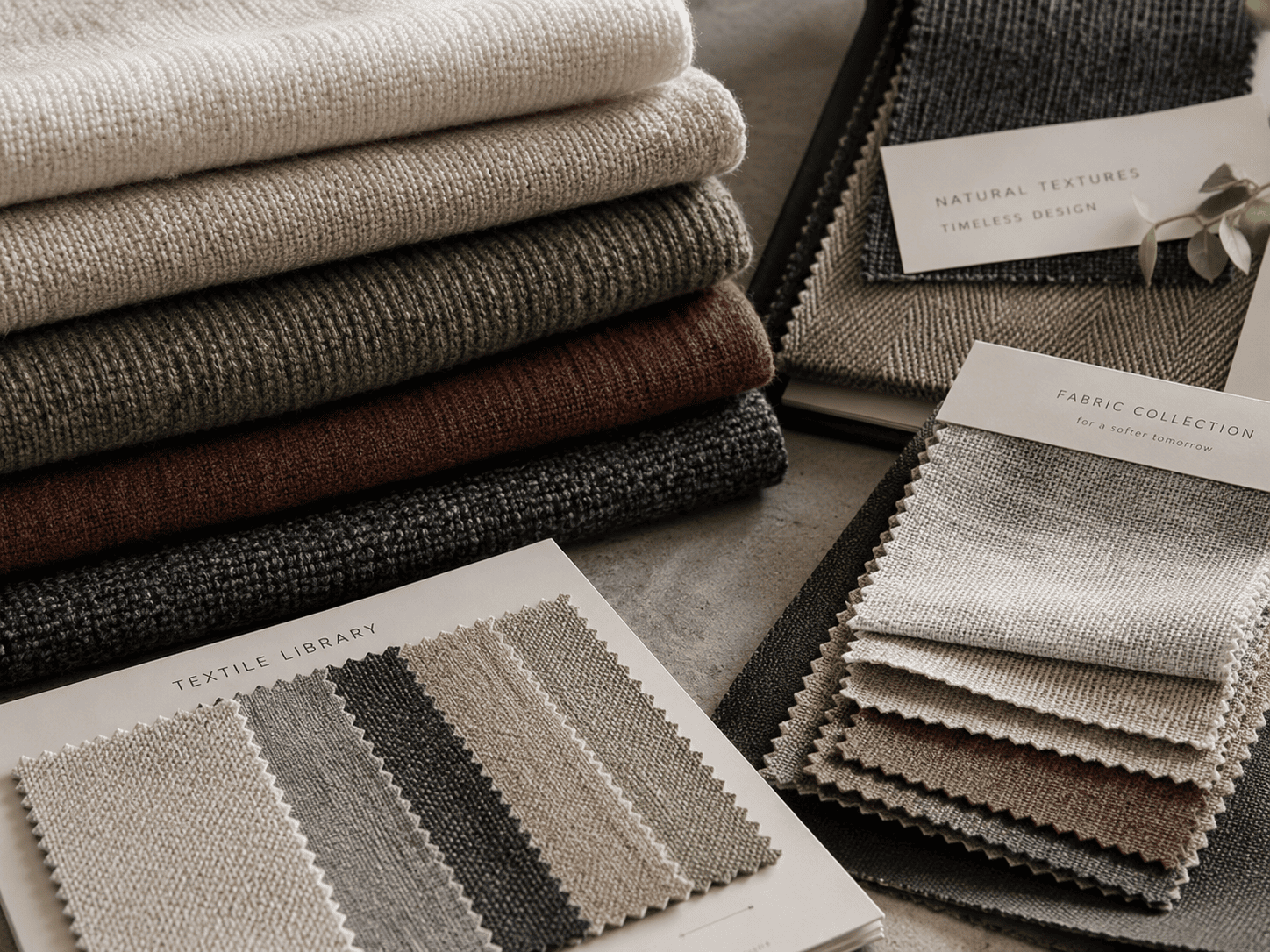
A useful way to think about customization is in layers.
| Layer | Examples | Why It Matters |
|---|---|---|
| Fabric | Cotton, blends, polyester, nylon | Feel and performance |
| GSM | 180, 320, 400, 500 GSM | Weight and structure |
| Fit | Regular, oversized, cropped, boxy | Brand silhouette |
| Color | Stock or custom dyed | Visual identity |
| Decoration | Print, embroidery, appliqué | Branding |
| Construction | Hood, pocket, seams, panels | Product design |
| Trims | Zippers, drawcords, elastic | Function and detail |
| Labels | Neck, size, care | Private label identity |
| Packaging | Polybag, zipper bag, box | Presentation |
Fit Comes From the Pattern
This is especially important.
A buyer may say:
I want an oversized hoodie.
But “oversized” is not a measurement.
I still need to know:
- Chest
- Body length
- Shoulder
- Sleeve
- Bottom width
A 500 GSM fabric does not automatically create an oversized fit.
The pattern does.
That is why fit needs to be developed deliberately.
How Do Fabric and GSM Affect Custom Clothing?
Fabric is one of the biggest cost and quality decisions in custom apparel.
Fabric affects hand feel, drape, weight, stretch, warmth, shrinkage, printing performance, washing behavior, and final garment cost. GSM describes fabric weight per square meter, but GSM alone does not determine fabric quality.
For knit garments, common options might include:
- Cotton jersey
- French terry
- Brushed fleece
- Cotton/polyester blends
- Rib
- Interlock
- Stretch jersey
A hoodie could use:
100% cotton
400 GSM French terry
while another uses:
80% cotton / 20% polyester
500 GSM brushed fleece
They may look similar in a technical drawing but feel completely different in real life.
Stock Fabric vs Custom Fabric
This is also one of the biggest MOQ differences.
If a supplier already has:
400 GSM black French terry
available, sampling can begin quickly.
If the buyer requests:
463 GSM custom-knitted cotton fabric in a custom green
the fabric mill may need to:
- Source yarn
- Knit the fabric
- Dye it
- Finish it
- Check GSM
- Check shrinkage
Now the fabric mill may introduce its own MOQ.
That is why I always separate:
garment MOQ
from:
fabric MOQ
Custom Colors Need a Clear Reference
For textile colors, I prefer standardized textile references rather than screenshots from a phone.
Pantone's Fashion, Home + Interiors system specifies TCX for soft surfaces such as textiles and apparel.[^1]
For example:
Pantone 18-1028 TCX
gives the fabric supplier a much clearer target than:
Make it brown like this Instagram photo.
What MOQ Can You Get from a Custom Clothing Manufacturer?
There is no single MOQ for custom clothing.
It depends on the product.
For flexible small-batch manufacturing, some custom knit garments may start around 50–100 pieces per style, while other products require higher quantities because of fabric, colors, size range, accessories, and construction.
A practical example might look like this:
| Product Type | Possible Starting MOQ |
|---|---|
| Pullover hoodie | 50–100 pcs |
| Sweatshirt | 50–100 pcs |
| Zip hoodie | 50–100 pcs |
| Tracksuit / matching set | Around 50 sets |
| Joggers | 50–100 pcs |
| T-shirt | Around 100 pcs |
| Shorts | Around 100 pcs |
| Activewear | Often higher depending on fabric |
| Kidswear | Usually higher depending on size range |
These are working ranges.
They are not universal industry rules.
Why Can a Hoodie Sometimes Have a Lower MOQ Than a T-Shirt?
This surprises buyers.
A hoodie is more complicated.
But it also has a higher unit value.
For some factories, producing 50 higher-value heavyweight hoodies can make more commercial sense than producing 50 basic low-price T-shirts.
The factory has to spread costs such as:
- Cutting setup
- Production preparation
- Printing setup
- QC
- Packing
across the order.
Color and Size Distribution Also Matter
Compare:
50 black hoodies, S–XL
with:
50 hoodies, five colors, seven sizes
The second order creates much more work even though the total quantity is identical.
Low MOQ works best when the first production run stays focused.
Can Small Orders Still Use Custom Printing and Embroidery?
Yes.
A low MOQ does not mean the garment has to look generic.
Common decoration options include:
- Screen printing
- DTG
- DTF
- Embroidery
- Puff print
- Appliqué
- Chenille
- Towel embroidery
- Rhinestones
- Silicone
- Reflective transfer
However, some processes have setup costs.
For example:
- Screen preparation
- Embroidery digitizing
- Appliqué template
- Rhinestone template
- Silicone mold
If the same setup cost is divided over 50 garments instead of 500, the cost per garment becomes higher.
That is why smaller orders often have higher unit prices.
Keep the First Product Focused
For a startup, I often prefer:
Small chest embroidery + large back screen print
instead of five different decoration techniques on one garment.
Complexity should support the design.
It should not exist only because the technique is available.
How Much Does Custom Clothing Manufacturing Cost?
There is no responsible way to give one universal custom clothing price.
Custom clothing cost depends on fabric, GSM, order quantity, construction, printing, embroidery, wash, trims, labels, packaging, and development work. Smaller production runs normally cost more per piece because setup expenses are spread across fewer garments.
For example, a custom hoodie price may change when the buyer adds:
- 500 GSM instead of 320 GSM
- 100% cotton instead of blend
- Large appliqué
- Custom garment wash
- Custom zipper
- Embroidery
- Custom packaging
This is why a factory should not give a final price from one product photograph.
Sample Cost
A sample is a one-off development garment.
It may require:
- Pattern development
- Fabric sourcing
- Cutting
- Sewing
- Printing setup
- Embroidery setup
- Labels
- QC
All of those costs are concentrated into one piece.
That is why sample cost and bulk unit price should not be compared directly.
Bulk Payment
For new customers, a common structure may be:
50% deposit before production
50% balance before shipment
Exact terms should be confirmed before the order.
For some projects, sample fees may also be credited against bulk when an agreed quantity is reached.
Those conditions should be written down before sampling begins.
Why Should You Make a Sample Before Bulk Production?
A physical sample is one of the most important risk-control steps in custom manufacturing.
A sample lets the buyer check fit, measurements, fabric, color, garment weight, construction, printing, embroidery, trims, labels, and overall appearance before those decisions are repeated across an entire production run.
A photograph cannot fully confirm:
- Fabric hand feel
- Actual weight
- Stretch
- Hood shape
- Rib tension
- Embroidery stiffness
- Fit
- Shrinkage after washing
Sampling also tests the manufacturer.
You see how the factory handles:
- Technical questions
- Corrections
- Feedback
- Deadlines
- Communication
The sample is not only testing the garment.
It is testing the production relationship.
What Should You Send a Manufacturer Before Asking for a Quote?
A better inquiry produces a better quotation.
Before asking for pricing, send the manufacturer the product type, quantity, fabric composition, GSM, colors, size range, sample size, measurements, logo artwork, decoration methods, labels, packaging, target market, and shipping destination.
A useful inquiry might look like this:
| Item | Requirement |
|---|---|
| Product | Oversized pullover hoodie |
| Quantity | 50 pcs |
| Fabric | 100% cotton French terry |
| GSM | 400–450 GSM |
| Color | Black |
| Sizes | S–XL |
| Sample size | L |
| Front logo | 8 cm embroidery |
| Back logo | 30 cm screen print |
| Neck label | Custom woven |
| Care label | Custom |
| Packaging | Individual polybag |
| Target market | United States |
Now the factory can check:
- Fabric availability
- MOQ
- Sample cost
- Bulk price
- Sample time
- Production lead time
Send Proper Artwork
For logos and production graphics, I prefer original artwork.
Useful formats include:
- AI
- EPS
- SVG
- Vector PDF
Adobe's current Illustrator documentation lists AI, PDF, EPS, and SVG among supported formats used across common artwork workflows.[^2]
A screenshot may work as a visual reference.
But it is not always a good production file.
How Do You Choose the Right Custom Clothing Manufacturer?
A low price is not enough.
The right custom manufacturer should already understand your product category, offer a realistic sample process, communicate clearly, explain MOQ honestly, control quality, and have a production system capable of reproducing the approved sample in bulk.
I would check these areas:
| Area | What to Ask |
|---|---|
| Specialty | What do you manufacture every week? |
| MOQ | Per style or per color? |
| Sample | Cost, timeline, revision policy? |
| Fabric | Stock and custom options? |
| Decoration | Which processes are available? |
| Pattern | In-house development? |
| QC | How are bulk measurements checked? |
| Compliance | What documents can you provide? |
| Communication | Who handles development? |
| Scaling | Can you support reorders? |
Product Specialty Comes First
If I need a heavyweight hoodie, I want a factory that regularly handles:
- Heavy knit fabric
- Oversized patterns
- Thick seams
- Rib
- Hood construction
- Streetwear decoration
If I need leggings, I want a factory experienced with:
- Stretch
- Recovery
- Compression
- Mesh
- Heat transfer
- Activewear sewing
Experience reduces development risk.
Ask for Real Production Evidence
Useful evidence includes:
- Factory videos
- Cutting room
- Sample room
- Sewing line
- QC inspection
- Printing
- Embroidery
- Finished products
A huge online catalog is not proof that every product was manufactured by the supplier showing it.
What Compliance Documents Should You Check?
Different audits and certifications answer different questions.
They should not all be grouped together as “certificates.”
SMETA
Sedex describes SMETA as a social-audit methodology covering areas including labor standards, health and safety, environmental performance, and business ethics.[^3]
It is not a product certification.
If a factory says it has completed a SMETA audit, buyers should check the relevant audit information and production site.
OEKO-TEX STANDARD 100
OEKO-TEX® STANDARD 100 serves a different purpose.
It is a certification system for textiles and textile components tested for harmful substances.[^4]
A factory social audit and a textile product certification do not prove the same thing.
Ask What the Document Actually Covers
Before relying on any logo, ask:
- What is the document?
- Which company does it cover?
- Which factory location?
- Is it valid now?
- Does it relate to the factory or material?
- Can I see a copy?
The goal is not to collect the largest number of logos.
The goal is to verify what matters for your order.
How Should a Factory Handle Your Designs and Artwork?
A custom manufacturer may receive:
- Brand logo
- Original artwork
- Tech pack
- Pattern information
- Private-label files
- Packaging designs
That information has value.
A professional manufacturer should use buyer artwork only for the authorized production project and should be cautious when asked to reproduce protected third-party branding without permission.
For important brand names and logos, companies may also consider formal trademark protection in relevant markets.
The World Intellectual Property Organization explains that trademark protection is generally obtained through registration at national or regional intellectual-property offices, although legal systems differ by jurisdiction.[^5]
From the manufacturing side, the practical rule is simple:
If a buyer sends its own original logo, that is one situation.
If a buyer sends another major brand's trademark and says:
Copy this exactly.
that requires more caution.
Professional IP discipline protects both the factory and legitimate brand owners.
What Red Flags Should Clothing Brands Watch For?
I become cautious when a supplier agrees to everything immediately.
“Any MOQ Is Fine”
Maybe.
But ask how.
If the product requires custom fabric, custom dyeing, and special hardware, there will usually be supplier minimums somewhere.
“We Make Everything”
Factories can have broad capability.
But every factory still has stronger and weaker categories.
Ask what it produces most often.
Final Quote From One Photo
If the supplier has not confirmed:
- Fabric
- GSM
- Quantity
- Printing
- Trims
- Labels
- Packaging
the price is based on assumptions.
No Sample Needed
For an original custom product, going directly to bulk creates unnecessary risk.
Certification Logos but No Documents
Ask to see the evidence.
Copies Other Brands Without Question
If a supplier casually copies protected branding for anyone, consider what that attitude means for your own designs.
Vague Communication
If you need three days to get an answer before paying a deposit, the situation may not improve after production starts.
Good communication does not mean replying “yes” quickly.
It means giving useful answers.
Can the Same Manufacturer Scale With Your Brand?
A startup may begin with:
50 hoodies.
If sales go well, the next order may be:
300 pieces.
Then:
1,000 pieces.
The challenge changes from:
Can this factory make my sample?
to:
Can this factory reproduce it consistently?
A scalable manufacturer needs to control:
- Fabric
- Dye lot
- Pattern
- Grading
- Measurements
- Printing
- Embroidery
- Trims
- QC
Keep Approved Production Records
Once a product works, keep one master reference.
That should include:
- Approved sample
- Final tech pack
- Size chart
- Pantone references
- Artwork
- Trim specification
- Label files
- Packaging files
This is especially important for repeat production.
If the first bulk order works well, do not rebuild the garment from scattered WhatsApp messages on the second order.
Use the approved information.
Use Customer Feedback Carefully
After the first drop, review:
- Which sizes sold fastest?
- Which colors worked?
- Were there fit complaints?
- Did the print survive washing?
- Did customers like the fabric?
- Were there returns?
Then improve what needs improvement.
Do not change successful details only because you want the second order to feel “new.”
Consistency is valuable.
Conclusion
Finding the right custom clothing manufacturer is not simply about finding a supplier that says:
Yes, we can make it.
The real question is whether the factory has the right production system for your product, your quantity, and your stage of business.
A good custom manufacturer should be able to help control:
- Fabric
- GSM
- Fit
- Measurements
- Construction
- Printing
- Embroidery
- Trims
- Labels
- Packaging
- Quality
For a startup, I would focus on five things first.
1. Product specialty
Choose a manufacturer that regularly makes the product you want.
2. A realistic MOQ
The quantity needs to work for both your cash flow and the factory's supply chain.
3. A proper sample
Never rely only on digital mockups for a completely custom product.
4. Clear specifications
The better your tech pack, measurements, artwork, and material requirements, the more accurate the manufacturer's quotation will be.
5. Repeatability
A successful factory relationship should not end after one sample or one small order.
The manufacturer should be able to reproduce the approved product when you reorder 300, 500, or 1,000 pieces.
I would not choose a custom clothing manufacturer only because it offers the lowest price.
I would choose one that can explain:
what is possible,
what is not,
what will affect MOQ,
what will affect cost,
and:
how the product can move from the first sample into stable bulk production.
That is the difference between finding someone who can sew a garment and finding a manufacturing partner that can help build a product your brand can continue selling.
Footnotes & References
[^1]: Pantone — Fashion, Home + Interiors (FHI). Official Pantone information explaining that TCX is intended for soft surfaces such as textiles and apparel.
https://www.pantone.com/na/en-us/fashion-home-interiors
[^2]: Adobe — Supported File Formats in Illustrator. Official Adobe documentation covering supported artwork formats including AI, PDF, EPS, and SVG.
https://helpx.adobe.com/illustrator/desktop/get-started/learn-the-basics/supported-file-formats.html
[^3]: Sedex — SMETA Audit. Official Sedex information describing SMETA as a social-audit methodology covering labour standards, health and safety, environmental performance, and business ethics.
https://www.sedex.com/solutions/smeta-audit/
[^4]: OEKO-TEX® — STANDARD 100. Official information about certification and testing of textile products and components for harmful substances.
https://www.oeko-tex.com/en/our-standards/oeko-tex-standard-100
[^5]: World Intellectual Property Organization (WIPO) — Trademark Protection. Official information on trademark protection and registration through national and regional intellectual-property systems.
https://www.wipo.int/en/web/trademarks/protection
[^6]: U.S. Federal Trade Commission — Apparel and Care Labeling. Official FTC guidance covering fiber content, country of origin, responsible business identification, and care-instruction requirements for covered apparel products.
https://www.ftc.gov/news-events/topics/tools-consumers/apparel-labeling
https://www.ftc.gov/legal-library/browse/rules/care-labeling-textile-wearing-apparel-certain-piece-goods