Clothing Trims Guide: How Do You Choose Zippers, Drawcords, Buttons, and Other Hardware?
Your hoodie fabric feels premium.
The fit is right.
The embroidery looks clean.
Then you touch the zipper.
It feels light and rough.
The drawcord is slightly warmer than the body fabric.
After several washes, the metal tip starts to discolor.
Suddenly, the whole garment feels cheaper.
Customers do not separate:
fabric quality
from:
trim quality.
They experience the complete garment.
Clothing trims are the functional, structural, decorative, and branding components added to the main garment fabric, including zippers, drawcords, elastic, buttons, snaps, eyelets, cord tips, buckles, toggles, labels, and patches. The right trim should suit the garment's function, fabric weight, appearance, wash method, target market, and production quantity.
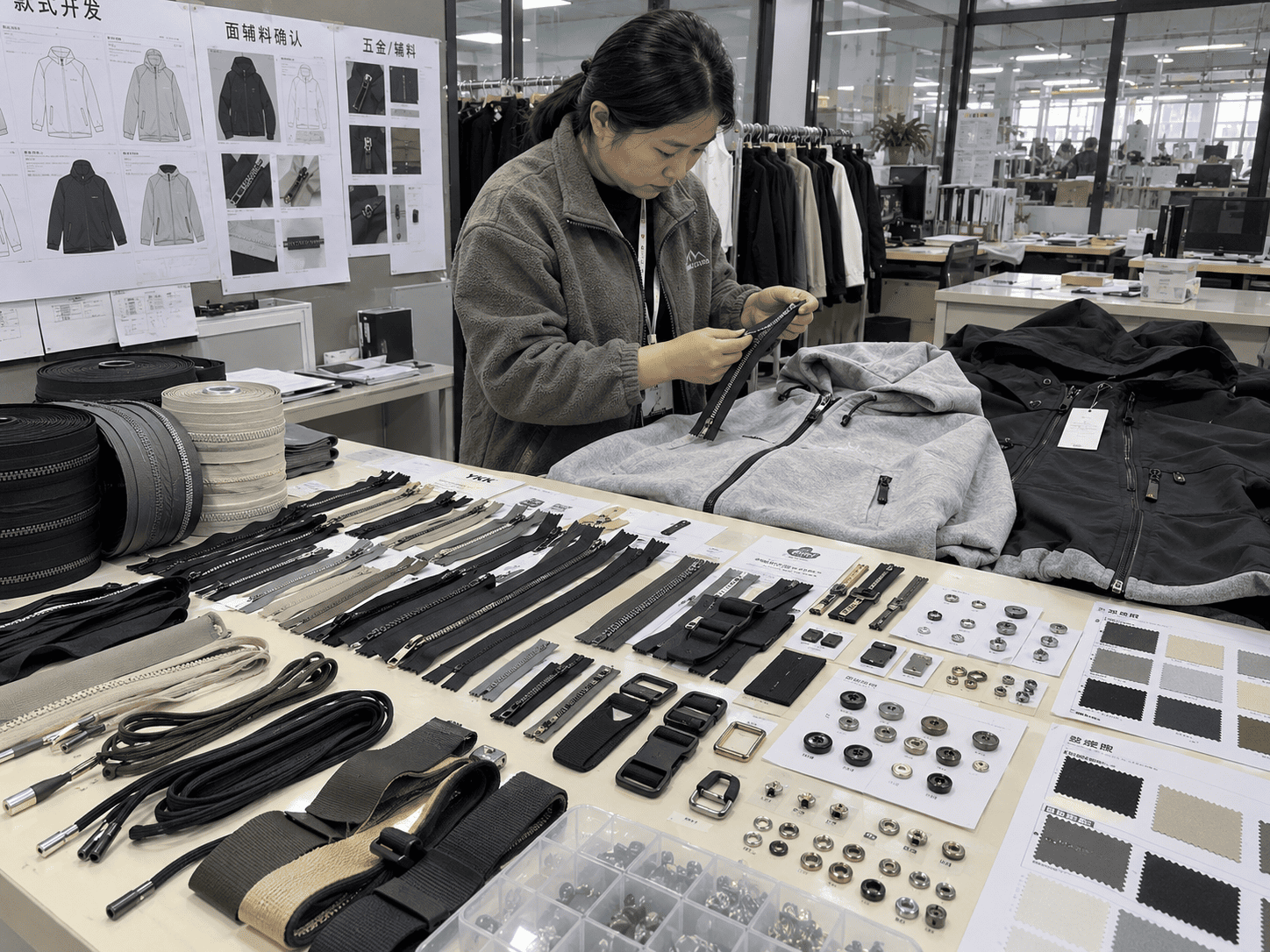
A trim may be physically small.
But it can affect:
- Function
- Durability
- Fit
- Safety
- Branding
- Cost
- MOQ
That is why trims should not be selected at the last minute.
They belong in the product-development process from the beginning.
Table of Contents
- What Counts as a Trim in Clothing Production?
- How Do You Choose the Right Zipper?
- Why Are Drawcords and Elastic Harder Than They Look?
- Which Buttons, Snaps, and Metal Hardware Should You Use?
- What Are the Minimums for Custom Trims?
- How Do You Make Sure Trims Survive Washing and Wear?
- Conclusion
What Counts as a Trim in Clothing Production?
The word “trim” covers much more than:
buttons and zippers.
Trims include closures, adjusters, reinforcement components, hardware, elastic, branding details, and other components that are added to the main fabric to make the garment function or look the way the designer intended.
Closures
Examples:
- Zippers
- Buttons
- Snaps
- Hooks
- Hook-and-loop systems
These help:
- Open
- Close
- Adjust
the garment.
Adjusters
Examples:
- Drawcords
- Elastic
- Toggles
- Cord stoppers
- Buckles
These affect:
- Fit
- Comfort
- Function
Metal and Plastic Hardware
Examples:
- Eyelets
- Rivets
- D-rings
- Cord tips
- Buckles
- Zipper pulls
These can serve both:
functional
and:
decorative
purposes.
Reinforcement Components
Examples:
- Tapes
- Binding
- Interfacing
- Reinforcement patches
These help stabilize:
- Openings
- Seams
- Stress points
Branding Components
Examples:
- Woven labels
- Rubber patches
- Metal logos
- Custom zipper pulls
- Jacquard elastic
These are where the garment starts to feel:
brand-specific.
Packaging Is Different
Hangtags, bags, stickers, and boxes are often discussed together with trims.
But technically, packaging is a separate sourcing category.
It can still have:
- MOQ
- Custom tooling
- Lead time
just like garment trims.
How Do You Choose the Right Zipper?
A zipper looks simple.
But there are many decisions inside one zipper.
The right zipper depends on application, chain type, size, tape, slider, opening type, fabric weight, garment structure, appearance, and end-use requirements.
Coil Zipper
Coil zippers use a continuous spiral element.
They are:
- Flexible
- Relatively light
- Easy to use on curved or softer garments
Common applications include:
- Hoodies
- Sweatshirts
- Light jackets
- Pockets
Reverse Coil
The coil is positioned so the cleaner side faces outward.
This creates a more minimal appearance.
It is common on:
- Technical jackets
- Activewear
- Clean streetwear
Water-Resistant / Coated Zipper
Some zipper tapes have laminated or coated surfaces designed to improve resistance to water penetration.
But be careful with terminology.
Water-resistant zipper does not automatically make the finished garment waterproof.
The complete product may still have:
- Needle holes
- Unsealed seams
- Openings
that allow water through.
Metal Zipper
Metal zippers can create:
- Heavier feel
- Heritage look
- Denim/workwear aesthetic
Common uses include:
- Jeans
- Jackets
- Workwear
Molded Plastic Zipper
Molded elements create a chunkier, more technical appearance.
They are common in:
- Outerwear
- Track jackets
- Sports products
Two-Way Zipper
A two-way zipper may open from both ends.
This can be useful for:
- Long coats
- Parkas
- Long zip hoodies
where the wearer needs more movement when sitting.
Zipper Size
Zippers come in different chain sizes.
A heavier garment may visually and structurally suit a larger zipper.
But do not use the rule:
heavy fabric = always use the biggest zipper.
The zipper should work with:
- Garment construction
- Front opening
- Style
- Fabric stability
Why Do Zippers Ripple?
This is one of the most common zipper questions.
A wavy zipper does not always mean:
the zipper is too heavy.
Rippling can come from several sources:
- Fabric stretch
- Zipper tape stability
- Differential feeding
- Sewing tension
- Handling during stitching
- Pressing
- Garment shrinkage
- Zipper shrinkage
- Poor stabilization
So the correct solution may involve:
- Adjusting feed
- Stabilizing the opening
- Changing seam construction
- Changing zipper type
- Controlling shrinkage
rather than simply buying a lighter zipper.
Branded Zippers and Custom Pulls
Brands often ask:
“Can I put my logo on a YKK zipper?”
The answer is:
sometimes, depending on the program.
YKK officially offers custom branding and full-order puller options for certain products.[^1]
Its official product-development information also notes that logo applications and custom fastening-product development are available for eligible items, with details such as:
- Logo size
- Position
- Lead time
- Pricing
confirmed through the relevant sales channel.[^2]
So it is not accurate to say:
“YKK does not accept small custom orders.”
A better statement is:
custom YKK options depend on the zipper program, production lot, market, tooling, quantity, and local supplier channel.
For smaller projects, an alternative may be:
- Standard zipper
- Custom puller from another suitable supplier
if that fits the design and budget.
Our Typical Custom Puller Projects
For some of our projects, a custom zipper-pull mold may cost approximately:
USD 130–180
depending on:
- Shape
- Size
- Material
- Finish
That is our sourcing reference.
It is not an industry-wide fixed price.
Why Are Drawcords and Elastic Harder Than They Look?
Drawcords seem simple until you try to match them to the garment.
Drawcords and elastic have their own material, construction, color, recovery, and supplier limitations. A good trim should be approved next to the actual garment fabric, not only from a supplier color card.
Drawcord Shape
Common options include:
- Round
- Flat
The choice is mainly:
visual and functional.
A thick flat cord may work well for:
- Heavy streetwear hoodies
while a smaller round cord may suit:
- Joggers
- Light jackets
Thickness
Drawcord thickness should work with:
- Eyelet size
- Hood weight
- Garment scale
A very thick cord with a small eyelet creates:
friction.
A thin cord on a heavyweight hoodie may look:
visually weak.
Drawcord Color
This is where color matching becomes difficult.
The body fabric may be:
cotton French terry.
The cord may be:
polyester.
Even if both are matched toward the same Pantone target, they may not appear identical.
This is normal substrate behavior.
So approve:
cord + body fabric together.
Stock Cord vs Custom Cord
Small runs often work best with:
- Stock colors
- Closest available color
- Supplier dye-to-match options where available
A completely custom cord may require:
a separate supplier MOQ.
But do not write:
“custom cord always requires 1,000 meters.”
Some suppliers may require:
- Hundreds of meters
- 1,000 meters
- More
depending on:
- Cord construction
- Yarn
- Color
- Branding
Confirm the actual supplier quote.
Cord Tips
Options may include:
- Metal
- Silicone
- Dipped
- Knotted
- Molded custom tips
For some of our small programs, custom tips can sometimes start around:
100 pieces
depending on the design and supplier.
Again, this is a sourcing reference.
It is not a universal trim-industry MOQ.
Elastic
Elastic affects more than fit.
It affects:
- Recovery
- Comfort
- Waist pressure
- Appearance
Possible options include:
- Plain elastic
- Brushed elastic
- Covered elastic
- Jacquard elastic
Jacquard Elastic
Custom jacquard elastic can include:
- Logo
- Text
- Repeating brand pattern
It usually has a separate supplier MOQ.
For one of our underwear sourcing programs, the supplier minimum may be around:
200 meters
which can cover roughly:
400 boxers
depending on garment consumption.
That number should be treated as:
program-specific
rather than an industry rule.
Which Buttons, Snaps, and Metal Hardware Should You Use?
Hardware needs to survive:
- Pulling
- Washing
- Friction
- Repeated opening
while still looking good.
Choose hardware according to garment function, substrate, attachment method, target finish, safety requirements, and end-use conditions. “Metal” alone does not tell you whether a trim is suitable.
Sew-Through Buttons
These are common on:
- Shirts
- Polos
- Cardigans
Important points include:
- Button size
- Hole spacing
- Sewing thread
- Attachment security
Shank Buttons
Common on:
- Denim
- Jackets
- Workwear
They create a different construction from:
standard sewn buttons.
Snaps
Snaps are common on:
- Jackets
- Pockets
- Workwear
- Some childrenswear
Check:
- Opening force
- Closing force
- Setting quality
- Fabric reinforcement
A snap can be strong.
But if it is installed on a weak fabric without reinforcement:
the fabric may fail before the snap does.
Rivets
Rivets are commonly used around:
- Denim pocket corners
- Workwear stress points
But decorative rivets should not simply be added everywhere.
They need:
- Correct position
- Suitable backing
- Secure setting
Eyelets
Metal eyelets can be used for:
- Hoodie drawcords
- Bags
- Utility products
The surrounding fabric may require:
- Reinforcement
- Interfacing
- Multiple layers
depending on the textile.
Embroidered Eyelets
These are useful when the brand wants:
- Softer appearance
- Tonal construction
- No metal hardware
They are especially common in:
premium hoodies.
Hardware Finish
Possible directions include:
- Matte black
- Gunmetal
- Silver
- Brass
- Antique brass
Matching finishes can make a product feel:
more intentional.
But they do not always need to be identical.
A designer may deliberately mix finishes.
The important point is:
make it deliberate.
What About Kidswear Hardware and Drawstrings?
This needs more care.
Children's garments are not simply:
small adult garments.
Hood and Neck Drawstrings
For the U.S. market, the U.S. Consumer Product Safety Commission[^3] states that hood and neck drawstrings on children's upper outerwear in sizes 2T through 12 present a substantial strangulation hazard.
For waist and bottom drawstrings in children's upper outerwear in sizes 2T through 16, the CPSC also specifies restrictions on:
- Exposed length
- Toggles
- Knots
- Attachments
and requires certain continuous drawcords to be bartacked at the midpoint.[^3]
So for childrenswear:
do not simply scale down an adult hoodie drawcord design.
Small Parts
Buttons, snaps, and decorative pieces also need to be reviewed according to:
- Product age group
- Destination market
- Applicable safety rules
The technical requirement depends on the actual product and market.
If your collection includes children:
confirm compliance requirements before finalizing the trims.
What Are the Minimums for Custom Trims?
This is where low-MOQ clothing projects often become complicated.
The garment may have:
50 pcs MOQ.
But a trim supplier may have a much larger minimum.
Trim MOQ is separate from garment MOQ. It depends on the trim supplier, construction, color, material, tooling, logo, finish, and manufacturing method.
Custom Trim Planning
| Trim | Possible small-order strategy |
|---|---|
| Zipper | Standard zipper + custom pull where practical |
| Drawcord | Stock / closest available color |
| Cord tip | Stock or custom depending on MOQ |
| Eyelet | Stock finish |
| Snap | Supplier standard option |
| Button | Stock mold or custom mold |
| Jacquard elastic | Meet supplier meter MOQ |
| Buckle | Standard hardware + custom branding where available |
Do Not Publish Universal MOQ Numbers
For example:
Custom pull — 100 pcs
may be possible with one supplier.
Another may require:
300 pcs.
The same applies to:
- Cord
- Elastic
- Metal logos
So when quoting a buyer, give:
the actual supplier MOQ.
Tooling Cost
Custom metal and molded pieces may require:
- Mold
- Die
- Tooling
For example, a custom puller can involve:
a one-time mold cost.
That tooling may sometimes be reused for:
future orders
if the design stays unchanged.
Leftover Trims
Suppose the trim MOQ is:
500 pcs.
Your first garment order uses:
100 pcs.
The remaining:
400 pcs
may be kept for a reorder if:
- Storage is agreed
- The trim remains usable
- The supplier/factory tracks the quantity
This can make the second production run easier.
But Inventory Must Be Recorded
Do not simply say:
“We have some left.”
Track:
- Trim code
- Color
- Finish
- Quantity
- Storage location
Otherwise leftover trim becomes difficult to manage.
How Do You Make Sure Trims Survive Washing and Wear?
A garment can fail because of one small component.
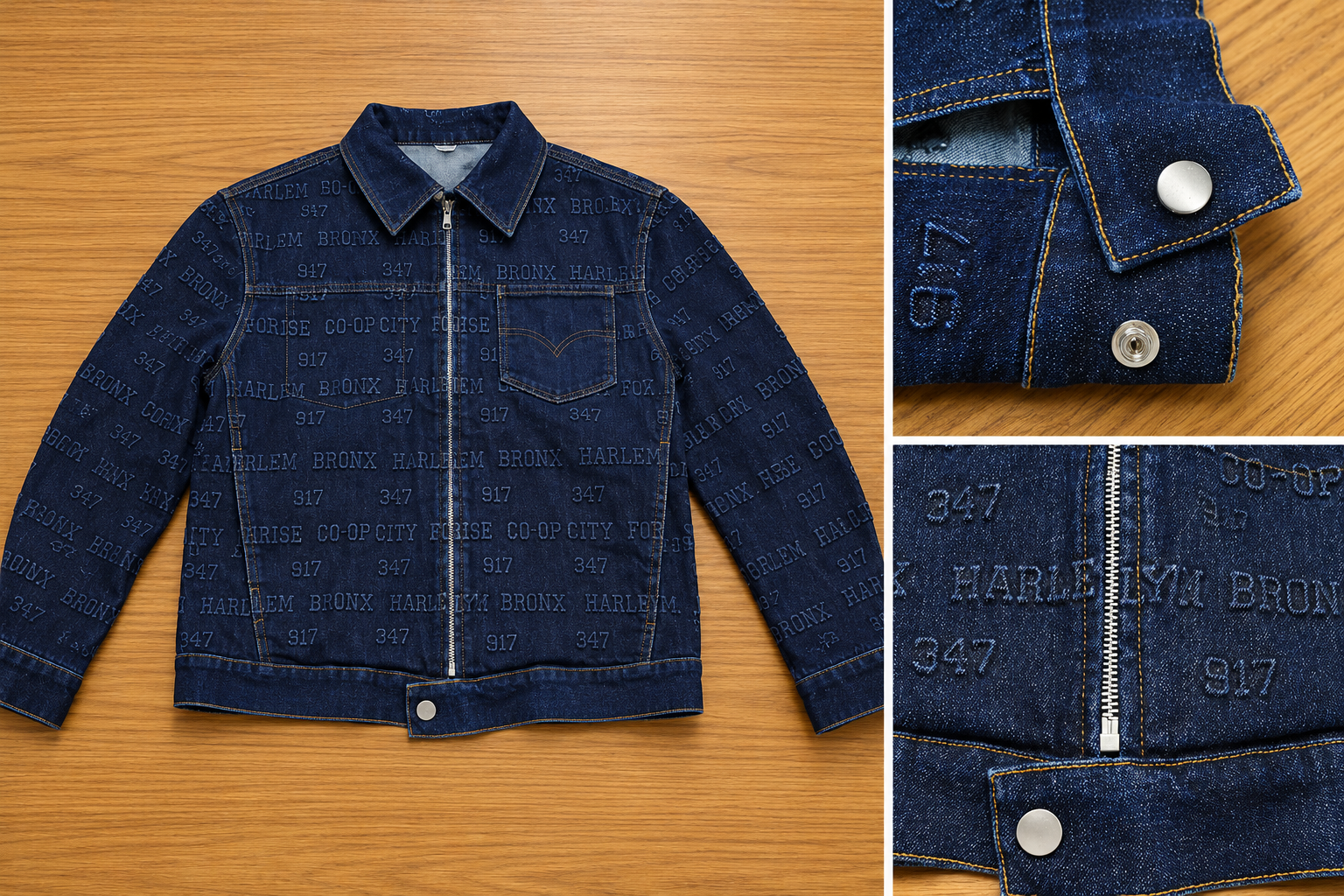
Trim testing should evaluate the finished garment under the intended care conditions, including zipper operation, hardware attachment, colorfastness, corrosion or surface change where relevant, elastic recovery, and interaction between trims and fabric.
Wash the Complete Sample
Do not test:
fabric
and:
hardware
only as separate pieces.
Wash:
the finished garment.
This reveals interactions between:
- Fabric
- Zipper
- Cord
- Hardware
- Decoration
ISO 6330:2021[^4] specifies standardized domestic washing and drying procedures used for textile testing.
That makes it useful when you need:
repeatable wash conditions.
Cord Colorfastness
A dark drawcord next to:
white fabric
can create a staining risk.
Where relevant, check the actual trim for:
- Color loss
- Staining
ISO 105-C06:2010[^5] provides methods for evaluating textile colorfastness to laundering.
ISO reviewed and confirmed this standard in 2026, so it remains current.[^5]
Zipper Operation
Before and after washing, check:
- Opening
- Closing
- Slider movement
- Bottom stop
- Top stop
- Alignment
A zipper should not become:
rough
or:
difficult to operate
after the intended care cycle.
Metal Surface
Metal hardware can experience:
- Tarnishing
- Coating wear
- Corrosion
- Color change
depending on:
- Base metal
- Plating
- Coating
- Laundry chemistry
- Exposure
So avoid simply writing:
“rust-proof metal.”
Ask the supplier:
what finish is being used?
and:
what testing supports the claim?
Snaps
Test:
- Setting
- Opening/closing
- Fabric damage
A snap may remain intact while the surrounding fabric begins to tear.
Eyelets
Check whether:
- Eyelet stays flat
- Edge remains smooth
- Fabric around it stays intact
For thin or stretchy fabrics:
reinforcement may be necessary.
Buttons
Check:
- Thread security
- Button attachment
- Shank stability
after washing.
Elastic
For elastic:
test:
- Recovery
- Waist comfort
- Growth
- Twisting inside casing
A waistband that rolls or twists can make the whole garment feel defective even if the fabric is perfect.
Should a Drawcord Be Bartacked?
Sometimes.
A center-back bartack can prevent a continuous drawcord from being pulled completely out of the channel.
That may be useful on:
- Hoodies
- Joggers
depending on design.
But do not turn it into a universal construction rule.
And for children's upper outerwear, drawstring requirements must follow the applicable safety rules for the destination market.[^3]
What About Care Labels?
Trim performance should be considered when setting the garment's care instructions.
For apparel sold in the United States, the FTC Care Labeling Rule[^6] requires covered manufacturers and importers to provide regular-care instructions and have a reasonable basis for those instructions.
That means the care label should account for:
- Fabric
- Hardware
- Elastic
- Zipper
- Decoration
together.
Do not choose:
Machine wash cold / tumble dry low
only because it is common.
The complete product should support the care instruction.
Common Trim Problems and What to Check
| Problem | Possible cause | What to check |
|---|---|---|
| Zipper waves | Feed, tension, shrinkage, stability | Opening construction + zipper tape |
| Slider feels rough | Zipper quality / damage / alignment | Operation before and after wash |
| Cord color differs | Different substrate | Approve cord beside body fabric |
| Cord bleeds | Dye fastness | Wash / colorfastness testing |
| Eyelet pulls out | Weak fabric / poor setting | Reinforcement + setting |
| Snap tears fabric | High force / weak substrate | Reinforcement + snap force |
| Metal discolors | Finish / laundry exposure | Material and coating |
| Elastic bags out | Recovery problem | Stretch/recovery check |
| Button falls off | Weak attachment | Sewing / lock-off |
| Cord disappears into hood | Unsecured continuous cord | Construction review |
Green Flags and Red Flags
| Green flag | Red flag |
|---|---|
| Chooses zipper for actual construction | Uses the same zipper on everything |
| Explains zipper rippling as multifactorial | Blames only zipper weight |
| Gives real YKK program options | Says YKK custom is impossible |
| Confirms trim MOQ from supplier | Uses one MOQ for every trim |
| Approves trim next to garment fabric | Approves trim from photo only |
| Tests complete garment | Tests parts only |
| Checks hardware after laundering | Assumes metal cannot change |
| Reinforces snaps / eyelets when needed | Installs hardware directly into weak fabric |
| Checks kidswear safety rules | Copies adult drawcord design into childrenswear |
| Bases care instructions on complete product | Ignores trims when writing care labels |
What MOQ, Cost, and Timing Should You Expect?
Trim development usually sits inside the garment-development timeline.
For our standard programs:
- Hoodie MOQ: around 50 pcs/style
- T-shirt / shorts: around 100 pcs/style
- Matching sets: around 50 sets
depending on:
- Fabric
- Decoration
- Color
- Trim requirements
Sample Timing
Standard samples normally take around:
5–14 days
when trims are available.
Custom:
- Zipper pull
- Buckle
- Elastic
- Hardware
can extend sampling because of:
- Mold
- Supplier development
- Approval
- Production lot
Bulk Timing
Standard bulk production is commonly around:
20–30 days
after:
- Final sample approval
- Deposit
- Materials ready
Custom trims can extend this if their supplier lead time is longer than the garment itself.
Payment
For new bulk orders, our standard structure is:
50% before production + 50% before shipment.
How Should You Specify Trims in a Tech Pack?
Do not write:
“silver zipper.”
Write enough detail for the factory to source the correct component.
Zipper
Include:
- Type
- Size
- Length
- Color
- Tape color
- Finish
- Open-end / closed-end
- One-way / two-way
- Puller reference
Drawcord
Include:
- Shape
- Width / diameter
- Color
- Material
- Length
- Tip type
Elastic
Include:
- Width
- Construction
- Color
- Logo if jacquard
- Stretch requirement where relevant
Buttons / Snaps
Include:
- Diameter
- Finish
- Color
- Attachment
- Logo / no logo
Eyelets
Include:
- Inside diameter
- Outside diameter
- Finish
- Reinforcement requirement
Custom Hardware
Include:
- Artwork
- Dimensions
- Finish
- 2D / 3D reference
- Logo direction
The more clearly the trim is defined:
the less likely the sample will contain a supplier default you did not expect.
Conclusion
Good trims do not need to shout.
They need to work.
A zipper should:
open smoothly.
A drawcord should:
sit correctly with the hood.
An elastic waistband should:
recover.
A snap should:
stay attached without damaging the fabric.
A metal tip should:
survive the intended care conditions.
And all of those parts should visually belong to:
the same garment.
Start with function.
Then choose:
- Type
- Size
- Material
- Color
- Finish
based on the actual product.
For custom trims:
confirm the supplier MOQ instead of assuming one universal number.
For YKK:
do not tell buyers that customization is impossible.
Custom pullers and branding options exist, but the available program, production lot, price, and lead time need to be confirmed for the actual project.
For childrenswear:
treat drawstrings and small hardware as:
safety decisions
not just styling details.
Then test the complete garment.
Because a trim does not live alone.
It lives next to:
- Fabric
- Seams
- Prints
- Wash chemicals
- Heat
- Customer use
A premium garment is not premium because it has:
expensive hardware.
It feels premium when every component has been chosen deliberately and still works after:
wearing, washing, opening, pulling, stretching, and repeating the process.
Footnotes & References
[^1]: YKK Japan — Full-Order PRIFA® and Pullers. YKK states that custom full-order pullers can be developed with a brand logo or original shape. Production lots apply, and customers are instructed to confirm details through the zipper supplier or purchase channel.
https://lyncs.ykkfastening.com/shop/c/cFOD01/
[^2]: YKK Japan — Logo Application and Product Development. YKK explains that logos can be applied to eligible fastening products and that custom product development is available, with specifications, lead time, and quotation confirmed through the relevant sales channel.
https://lyncs.ykkfastening.com/shop/pages/about_products_48.aspx
[^3]: U.S. Consumer Product Safety Commission — Drawstrings in Children's Upper Outerwear. CPSC states that hood and neck drawstrings in children's upper outerwear sizes 2T–12 present a substantial strangulation hazard. It also sets requirements for waist and bottom drawstrings in sizes 2T–16, including exposed-length limits and restrictions on toggles, knots, and other attachments.
https://www.cpsc.gov/Business--Manufacturing/Business-Education/Business-Guidance/Drawstrings-in-Childrens-Upper-Outerwear
[^4]: International Organization for Standardization — ISO 6330:2021, Textiles — Domestic Washing and Drying Procedures for Textile Testing. Specifies standardized domestic washing and drying procedures applicable to textile fabrics, garments, and other textile articles.
https://www.iso.org/standard/75934.html
[^5]: International Organization for Standardization — ISO 105-C06:2010, Textiles — Tests for Colour Fastness — Part C06: Colour Fastness to Domestic and Commercial Laundering. Specifies methods for evaluating resistance of textile color to laundering. ISO reviewed and confirmed this edition in 2026, so it remains current.
https://www.iso.org/standard/51276.html
[^6]: U.S. Federal Trade Commission — Care Labeling Rule, 16 CFR Part 423. Requires covered manufacturers and importers of textile wearing apparel to provide regular-care instructions and to possess a reasonable basis for those instructions before sale.
https://www.ftc.gov/legal-library/browse/rules/care-labeling-textile-wearing-apparel-certain-piece-goods