


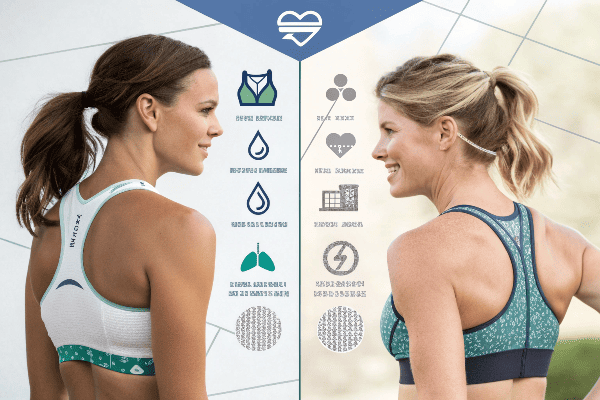
You’ve probably heard people say sports bras are “better for you”—but is that really true? When it comes to comfort, support, and long-term breast health, how do sports bras compare to regular bras?
Sports bras are generally healthier than regular bras for active use because they reduce breast movement, improve posture during exercise, and reduce strain on ligaments. However, for all-day wear, the healthiest option depends on fit, support level, and activity.
After working with activewear brands, I’ve seen how the wrong bra—sports or not—can lead to discomfort, shoulder strain, or even long-term shape distortion. It’s not about style; it’s about support.
Table of Contents
- Why do sports bras offer better support?
- Are sports bras better for posture and back health?
- Can wearing regular bras cause health problems?
- So, which type should you wear daily?
- Conclusion
Why do sports bras offer better support?
It’s all about compression and structure.
Sports bras are designed to limit movement during activity, reducing bounce and strain on Cooper’s ligaments, which support breast tissue. This helps protect breast shape and reduce pain during physical activity.
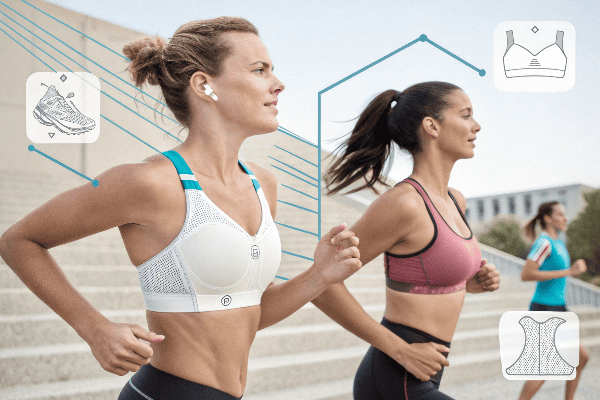
According to Cleveland Clinic, sports bras prevent long-term sagging and tissue strain during workouts.
Support differences
| Feature | Sports Bra | Regular Bra |
|---|---|---|
| Support Level | High (compression or encapsulation) | Moderate to Low |
| Movement Control | Limits bounce | Minimal |
| Straps | Wider, more stable | Thin, adjustable |
| Fabric | Breathable, sweat-wicking | Often lace or cotton blends |
Sports bras are a must for exercise, especially high-impact activities like running or jumping.
Are sports bras better for posture and back health?
Yes—when worn correctly and for the right tasks.
Because sports bras offer more structure, they can help support better posture during workouts and high-intensity movement, reducing back or shoulder strain, especially for larger busts.
Harvard Health emphasizes that improper breast support may contribute to back and shoulder strain, especially in active women with larger bust sizes[^1].
When posture support matters
- During workouts: Less bounce = better spine alignment
- For large busts: Distributes weight evenly
- Long wear: Some sports bras double as posture aids if designed with racerback or cross-back styles
But wearing a too-tight sports bra all day can also restrict natural movement and breathing—so balance is key.
Can wearing regular bras cause health problems?
Not usually—if they fit correctly.
Poorly fitting regular bras can lead to shoulder grooves, underwire pain, poor circulation, and bad posture. But well-fitted bras—sports or traditional—generally don’t cause harm.
As explained in Verywell Health, there’s no evidence that bras are inherently harmful—but poor fit is a common issue[^2].
Common issues with regular bras
| Problem | Cause |
|---|---|
| Shoulder grooves | Straps too tight |
| Ribcage pain | Band too tight or stiff |
| Breathing discomfort | Cup or band restriction |
| Back/neck tension | Lack of support, poor posture |
A proper bra fitting solves most of these issues, regardless of style.
So, which type should you wear daily?
It depends on your activity and comfort.
For workouts or high-movement days, a sports bra is the healthier choice. For daily wear, a regular bra or lightly supportive bralette that fits well is best for comfort and breast health.
According to Women's Health Magazine, switching styles based on your day’s activity is the healthiest long-term practice[^3].
Bra-wearing guidelines
- Switch it up: Alternate between styles for comfort and support
- Avoid compression all day: Sports bras can restrict movement if worn too long
- Prioritize fit: A well-fitted bra of any kind beats a stylish but painful one
- Listen to your body: If you feel strain or pressure, it’s time to reassess your bra drawer
Conclusion
Sports bras are healthier when it comes to exercise, posture, and movement control. But for all-day wear, the key to breast health isn’t the type of bra—it’s the fit, the fabric, and how it supports your body.
[^1]: Harvard Health notes that consistent lack of support during exercise can cause lasting ligament stretch in the breast tissue, leading to ptosis (sagging).
[^2]: A study cited by Verywell Health showed that up to 80% of women wear the wrong bra size, which can lead to chronic discomfort and tension.
[^3]: Sports bras should be chosen based on activity intensity, while everyday bras should be comfortable and flexible for long hours of wear.
[^4]: Compression-style sports bras can limit ribcage expansion during deep breathing if worn too tightly for extended periods.