
I used to believe cotton T-shirts were naturally eco-friendly—after all, cotton is a plant, right? But once I started producing at scale, I realized there’s a big gap between natural and sustainable. That gap is where many brands stumble.
Cotton T-shirts are not always eco-friendly. Conventional cotton uses large amounts of water, pesticides, and energy, which can harm the environment. Only organic or sustainably produced cotton T-shirts are truly eco-friendly.
One of my early production runs used conventional cotton. The fabric felt great, but learning about its water usage and chemical footprint made me rethink everything. We later switched to GOTS-certified cotton, and never looked back.
Table of Contents
- What’s wrong with conventional cotton?
- Are organic cotton T-shirts better?
- What makes a cotton T-shirt truly eco-friendly?
- Conclusion
What’s wrong with conventional cotton?
Cotton is a natural fiber, but how it’s grown matters more than what it’s made from.
Conventional cotton farming consumes huge amounts of water and relies heavily on synthetic chemicals, which damage soil, pollute water, and harm biodiversity.
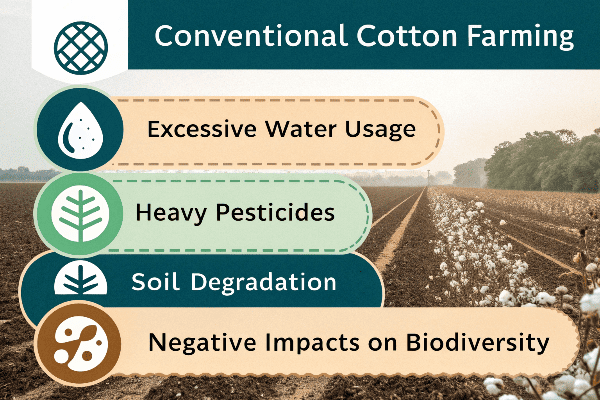
Environmental concerns with conventional cotton:
| Environmental Impact | Details |
|---|---|
| Water Use | 2,700 liters for a single T-shirt (roughly one person’s 3-year drinking supply)[^1] |
| Pesticides | Accounts for 16% of global insecticide use[^2] |
| Soil Degradation | Chemical use weakens long-term soil fertility |
| Runoff Pollution | Chemicals contaminate rivers and drinking water sources |
The WWF estimates that conventional cotton’s water footprint is among the highest in the fashion industry[^3]. I once visited a dyeing facility that worked with conventional cotton and saw wastewater discharge first-hand. That image still drives my sourcing decisions today.
Are organic cotton T-shirts better?
Short answer—yes, and not just for the environment.
Organic cotton T-shirts use less water, avoid harmful chemicals, and support healthier farming ecosystems. They’re also safer for workers and consumers.
Why brands are switching to organic cotton:
- Better for skin (hypoallergenic)
- Reduces water pollution
- Promotes biodiversity
- Often certified under GOTS or OEKO-TEX[^4]
Our organic T-shirt collection not only got positive reviews, but customers started asking for more eco options. That demand shaped our next product line.
What makes a cotton T-shirt truly eco-friendly?
It’s not just about the cotton—it’s about the full supply chain.
A truly eco-friendly cotton T-shirt uses organic or recycled cotton, low-impact dyes, ethical labor, minimal packaging, and supports circular fashion practices.
Checklist for eco-friendly cotton T-shirts:
| Factor | Eco-Friendly Practice |
|---|---|
| Fabric | Organic or recycled cotton |
| Dyeing | Low-water, plant-based, or GOTS-approved dyes |
| Manufacturing | Energy-efficient and ethically certified factories |
| Packaging | Recyclable, biodegradable, or reusable materials |
| End-of-life | Designed for recycling, composting, or long use |
When we added biodegradable polybags to our packaging, clients took notice—and some even mentioned it in their feedback. Leading brands like Patagonia also follow these steps to reduce their footprint[^5].
Conclusion
Not all cotton T-shirts are eco-friendly. It depends on how the cotton is grown, dyed, and manufactured. For a truly green product, organic or sustainable cotton is the way to go.
Before choosing your next T-shirt supplier or launching your brand, explore how sustainable T-shirt manufacturing can impact your bottom line—and the planet[^6].
[^1]: Treehugger. "How Much Water Does It Take to Make a Cotton T-Shirt?" https://www.treehugger.com/how-much-water-does-it-take-make-cotton-t-shirt-4863952
[^2]: Textile Exchange. "Organic Cotton Market Report." https://textileexchange.org/organic-cotton/
[^3]: WWF. "The Impact of a Cotton T-Shirt." https://www.worldwildlife.org/stories/the-impact-of-a-cotton-t-shirt
[^4]: OEKO-TEX®. "STANDARD 100 by OEKO-TEX®." https://www.oeko-tex.com/en/
[^5]: Patagonia. "Our Footprint." https://www.patagonia.com/our-footprint/
[^6]: Earth.org. "A Practical Guide to Sustainable Fashion." https://earth.org/guide-to-sustainable-fashion/