
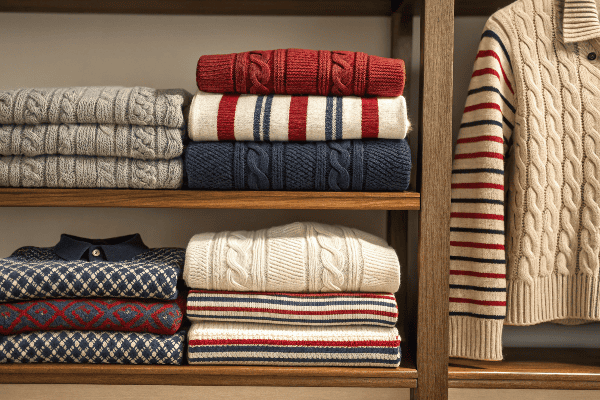
Many people think every knitted sweater is made by hand. They imagine someone sitting with needles for hours. This is not always true today.
Not all knit sweaters are handmade. Most sweaters today are made on knitting machines in factories. Handmade sweaters are rare, slower to produce, and more expensive.
I remember visiting a knitwear factory for the first time. I expected to see people with hand needles. Instead, I saw rows of machines working fast, with skilled workers watching every piece.
Table of Contents
- How are sweaters made in modern factories?
- What is a handmade sweater?
- Can you tell the difference between handmade and machine-made?
- Are handmade sweaters better?
- Why do brands mostly use machines?
- Conclusion
How are sweaters made in modern factories?
Modern factories use knitting machines. These machines create panels or full garments quickly and evenly.
Most sweaters in stores are made by flatbed knitting machines that follow a programmed pattern to create the fabric.
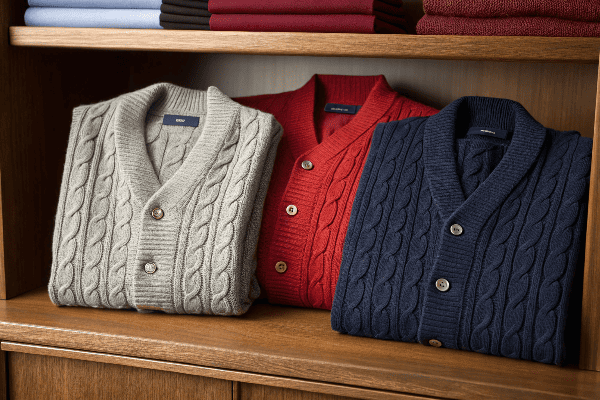
The machine knitting process
- Yarn setup: Cones of yarn are placed and tension is adjusted.
- Programming: Machines follow a digital pattern to create precise stitches.
- Knitting panels: Machines knit the front, back, and sleeves (or knit a whole piece seamlessly).
- Linking and finishing: Panels are linked with specialized machines, washed, and pressed.
For more about industrial knitwear processes, see Textile School – Flat knitting.
What is a handmade sweater?
A handmade sweater is made with hand needles or a hand-crank knitting tool. It takes many hours.
A handmade sweater is built stitch by stitch by a person using knitting needles, without the help of factory machines.
Hand knitting
- Time and care: It can take 20–60 hours to finish one sweater.
- Unique look: Small irregularities appear naturally, making each piece one of a kind.
- Value: These pieces are considered artisanal and more expensive.
Can you tell the difference between handmade and machine-made?
At first glance, both can look similar. But there are signs that help you tell them apart.
You can tell a handmade sweater by looking at the stitches, seams, and finishing. Machine-made sweaters are very uniform. Handmade pieces have tiny irregularities.
How to check
- Stitches: Machine stitches are perfectly even; handmade stitches may vary slightly.
- Seams: Handmade sweaters often have looser seams or no seams at all.
- Labels: Factory-made sweaters almost always have care and brand labels sewn in.
For an example of seam linking, see Weft knitting basics.
Are handmade sweaters better?
This depends on what you want. Handmade sweaters and machine-made sweaters each have their own strengths.
Handmade sweaters feel unique and personal, while machine-made sweaters are more affordable and consistent in size and quality.
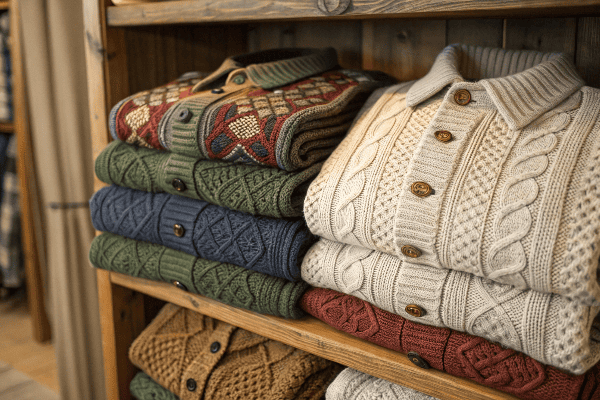
Pros and cons
| Type | Pros | Cons |
|---|---|---|
| Handmade | Unique, artisanal, personal touch | Expensive, time-consuming |
| Machine-made | Affordable, fast, consistent fit | Less unique, mass produced |
Why do brands mostly use machines?
Machines allow brands to make sweaters faster and at a larger scale. This is why most sweaters are not handmade.
Brands use machines because they can produce high volumes, keep costs lower, and maintain quality control.
Factories can produce thousands of sweaters in weeks, which is essential for seasonal fashion markets.
You can read more about modern manufacturing at Fibre2Fashion – Knitting technology.
Conclusion
Not all knit sweaters are handmade. Most sweaters today are machine-made, while handmade ones are rare and special.