
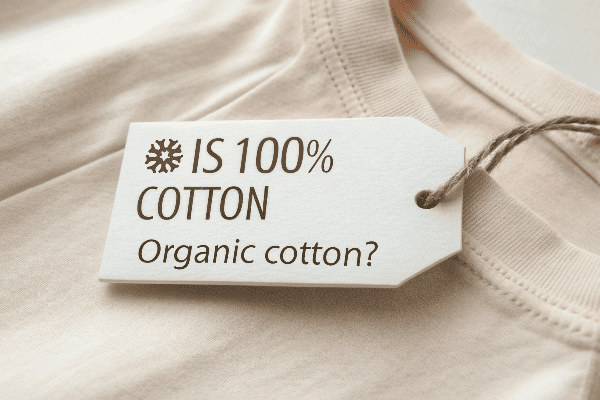
I used to think that 100% cotton and organic cotton were the same. After reading labels carefully, I learned they are different.
100% cotton does not always mean organic cotton. 100% cotton only tells you the fabric is made from cotton fibers, but those fibers can come from conventional farming with pesticides. Organic cotton comes from farms that grow cotton without chemicals for at least three years and follow certified organic standards.
I still remember when I bought a T-shirt labeled 100% cotton. Later I found out it was not organic. That moment made me start checking for the word “organic” on the tag.
Learn more about organic cotton farming practices
Read how GOTS certification works
Why organic cotton matters for sustainability
Table of Contents
- What does 100% cotton mean?
- What makes organic cotton different?
- Can a fabric be 100% cotton and not organic?
- How can I tell if cotton is organic?
- Is organic cotton better than regular 100% cotton?
- Conclusion
What does 100% cotton mean?
The label seems simple, but it is not enough.
100% cotton means the fabric is made only of cotton fibers, without polyester or other fibers. It does not say anything about how the cotton was grown.
Why this matters
- 100% cotton can be from regular farms that use chemicals.
- Organic cotton is a separate category.
I once assumed that 100% cotton was better for the planet. After learning more, I realized I was only half right.
What makes organic cotton different?
The farming process changes everything.
Organic cotton is grown without synthetic pesticides, chemical fertilizers, or genetically modified seeds. It is certified by standards like GOTS or USDA Organic.
Key points of organic cotton
- Farms must avoid chemicals for three years.
- Soil and water health are protected.
- Safer conditions for farmers.
I noticed that organic cotton feels softer on my skin. It may be because the fibers are treated less harshly.
Can a fabric be 100% cotton and not organic?
This is where most confusion comes from.
Yes, a fabric can be 100% cotton and not organic. The term “100% cotton” refers only to fiber content, not farming methods.
Common example
- A shirt labeled 100% cotton can be made from conventionally grown cotton.
- It can use chemical dyes and treatments.
- Unless it says “organic,” it is usually not organic.
I learned to look for both terms: “100% cotton” and “organic certified.”
How can I tell if cotton is organic?
It is not always obvious at first glance.
Look for labels like “organic cotton,” “certified organic,” or standards such as GOTS or OEKO-TEX. If these are missing, it is regular cotton.
For more information on textile labels, you can refer to OEKO-TEX’s official label guide.
Label meanings
| Label text | What it means |
|---|---|
| 100% Cotton | Fabric is pure cotton, farming not specified |
| 100% Organic Cotton | Fabric is pure and grown organically |
| Certified Organic Cotton | Checked by an independent certification body |
I now always check for “organic cotton” on clothing hang tags.
Is organic cotton better than regular 100% cotton?
Both have benefits, but one is more sustainable.
Organic cotton is better because it avoids pesticides, is safer for farmers, and is better for the environment. Regular 100% cotton does not offer these benefits.
Benefits of organic cotton
- Less water waste.
- Better soil quality.
- No harmful chemicals.
The difference may not be visible, but it is important for health and sustainability.
Conclusion
100% cotton is not the same as organic cotton. Organic cotton must be grown without chemicals and certified, while 100% cotton simply means the fabric is all cotton.