
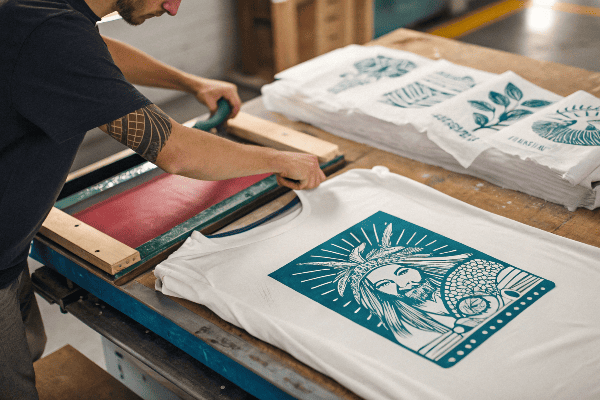
Screen printing might seem complicated at first, but once you understand the steps involved, it becomes clear why it’s one of the most popular methods for customizing T-shirts. Whether you’re a business owner or a DIY enthusiast, learning how to screen print a custom T-shirt can open up new possibilities for creating unique designs.
To screen print a custom T-shirt, you need to prepare the design, create a screen, apply the ink, and cure the print to ensure it lasts. The process involves using a mesh screen, a stencil, and special inks to transfer your design onto the fabric.
I still remember the first time I helped a friend set up a small screen printing operation. We spent the entire afternoon getting the first batch of shirts right, but the results were amazing, and it was worth every step.
Table of contents
- What are the basic steps to screen print a custom T-shirt?
- What equipment do you need for screen printing?
- What types of ink can you use for screen printing custom T-shirts?
- How do you ensure the best quality when screen printing?
- How do you clean up after screen printing?
- Conclusion
What are the basic steps to screen print a custom T-shirt?
Screen printing involves several steps that may seem technical, but once you break it down, it's quite simple. Here's an overview of the key steps.
The basic steps include: preparing the artwork, making the screen, setting up the printing station, applying the ink, and curing the print.
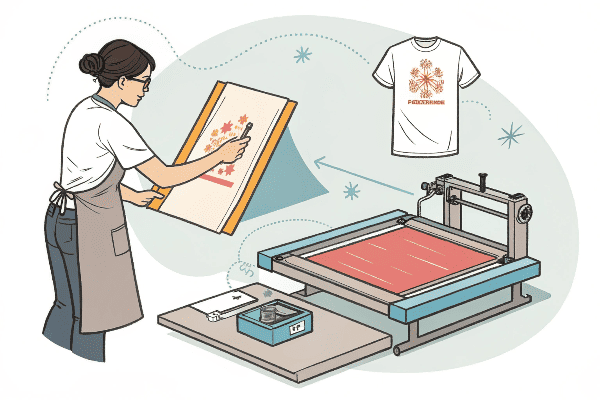
Step 1: Prepare your design
Your design should be clear, high contrast, and ready for printing. Most screen printing companies require artwork in vector format, such as Adobe Illustrator files. If you're doing it yourself, ensure your design is ready to be transferred onto a screen.
Step 2: Make the screen
A mesh screen is coated with a light-sensitive emulsion that hardens when exposed to light. The design is printed onto a transparency, and the screen is exposed to light, hardening the emulsion except for the areas where the design is. These areas will remain soft and washable.
Step 3: Set up the printing station
The screen is then placed on the T-shirt, and the printing station is set up. You’ll need to secure the screen to avoid any movement, which could cause smudging.
Step 4: Apply the ink
A special squeegee is used to spread ink across the screen. The ink passes through the open areas of the design and is transferred onto the fabric below.
Step 5: Cure the print
Once the ink is applied, the T-shirt is placed in a curing oven or dried with a heat press. This process makes the print permanent and ensures the design lasts through washing.
Importance of each step
Every step in this process impacts the final quality of the print. I’ve seen prints go wrong because the screen wasn’t properly prepared, or the curing wasn’t done at the right temperature. That's why each step needs to be carefully executed.
What equipment do you need for screen printing?
Screen printing requires specific equipment to get professional results. While the setup can be costly, the results are worth it for large orders or high-quality prints.
The essential equipment includes: screens, squeegees, inks, a printing press, and a heat source for curing.
Must-have equipment for beginners
- Screen: The mesh that holds your design.
- Squeegee: The tool used to apply ink to the screen.
- Ink: The colorant used for printing.
- Printing press: A machine to hold the screen in place and provide even pressure.
- Heat source: To cure the ink and make it permanent.
Why quality equipment matters
I once tried a cheaper squeegee and noticed inconsistent prints. Using high-quality equipment, especially a good press, can make the difference between a sloppy print and a sharp one.
What types of ink can you use for screen printing custom T-shirts?
The ink you use directly affects the look, feel, and longevity of your custom T-shirt.
Common types of screen printing inks include plastisol, water-based, and discharge inks. Each type has its own advantages and is suitable for different applications.
Types of screen printing inks
- Plastisol ink: The most popular, thick, and durable.
- Water-based ink: Softer, more breathable, and eco-friendly.
- Discharge ink: Removes the fabric’s color and replaces it with a new one, giving a vintage look.
Choosing the right ink
Each ink type reacts differently with fabrics. For instance, plastisol ink is great for dark fabrics, while water-based ink works well on lighter materials. I always match the ink type to the fabric for the best results.
How do you ensure the best quality when screen printing?
To ensure a high-quality print, you must focus on several key factors: screen tension, ink consistency, proper curing, and alignment during printing.
Maintaining consistent screen tension, using the right amount of ink, and ensuring proper curing are crucial for a flawless design that will last.
Tips for quality screen printing
- Screen tension: A well-tensioned screen gives you sharp lines.
- Ink consistency: Make sure the ink isn’t too thick or too runny.
- Curing: Cure at the right temperature to prevent fading or cracking.
Why proper curing is crucial
Curing is often overlooked, but it’s the final step that ensures longevity. If the ink is not properly cured, the print may fade or crack after just a few washes.
How do you clean up after screen printing?
Once you’ve finished printing, it’s essential to clean up your screens, squeegees, and other tools. This prevents leftover ink from drying and clogging the mesh.
Cleaning tools immediately after use is important for maintaining the equipment and ensuring future prints come out clean.
Cleaning tips
- Use a screen cleaning solution to remove any ink from the screen.
- Wash squeegees thoroughly to avoid ink buildup.
- Clean any spills right away to prevent ink stains.
Maintaining your tools
I always make it a point to clean tools immediately after printing. Keeping equipment in good condition ensures it works efficiently for future prints.
Conclusion
Screen printing a custom T-shirt is an art form that combines creativity and technique. By following the right steps, using quality equipment, and paying attention to every detail, you can create stunning, durable designs that last for years.