
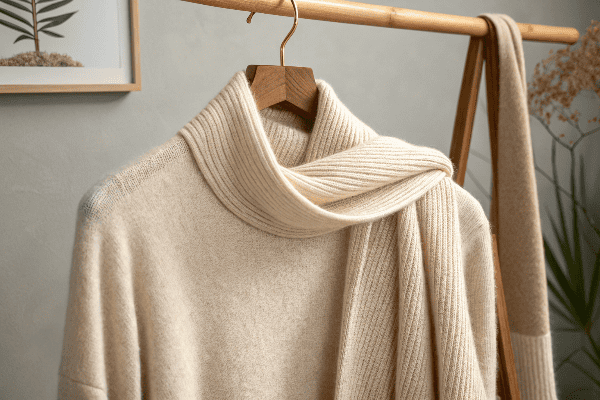
Many people like the soft touch of cashmere. But the high price surprises them. They often ask why a sweater can cost many times more than wool.
Cashmere is expensive because the fiber is rare, collected by hand, and needs skilled work. It takes fibers from many goats to make one sweater, and every step requires time and care.
I still remember when I visited Inner Mongolia. I saw herders gently comb goats in the cold spring. Each handful of fine fiber was treated like gold.
Table of Contents
- Where does cashmere come from?
- Why is collecting cashmere slow?
- How does cashmere production add cost?
- Why is cashmere quality different between brands?
- Is cashmere worth the price?
- Conclusion
Where does cashmere come from?
Cashmere comes from goats that live in cold places. This is why the fiber is so fine and warm.
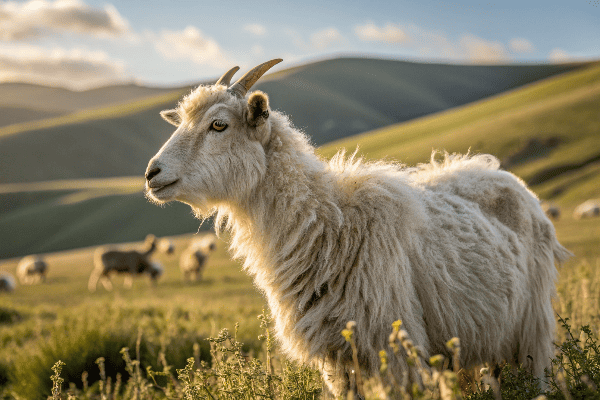
Cashmere comes from the soft undercoat of cashmere goats that live in regions like Mongolia, China, Nepal, and parts of Iran.
Why the source matters
- The goat and its coat: These goats grow two layers of hair. The fine inner coat protects them from freezing weather. That is the part used to make cashmere.
- Limited quantity: A single goat gives only 150–200 grams of usable fiber each year. That means several goats are needed for one sweater.
- Regions known for quality:
- Inner Mongolia: Long, fine fibers
- Nepal: Soft, warm texture
- Iran: Stronger fibers
For more details on origins, see Britannica on cashmere goats.
Why is collecting cashmere slow?
Cashmere is not shaved like sheep’s wool. It is taken from the goat in a careful way.
Cashmere is collected by hand-combing the goats during the spring when they shed naturally. This process is slow and must be done with care.
The steps
- Combing: Herders comb goats by hand. This avoids damage and keeps only the fine fibers.
- Sorting: Workers separate coarse outer hair from soft undercoat.
- Cleaning: The fibers are washed gently to remove dust and oil.
This careful work is why cashmere is called a luxury fiber. More about this process can be found at The Cashmere Foundation.
How does cashmere production add cost?
After collecting the fiber, there are many steps before it becomes a sweater.
Cashmere production costs a lot because of hand sorting, spinning, knitting, and finishing done by skilled workers and specialized machines.
| Step | Impact on Price |
|---|---|
| Sorting | Time and skill |
| Spinning | Precision and machines |
| Knitting | Skilled labor |
| Finishing | Quality control |
Luxury manufacturers like Loro Piana invest in these stages to maintain quality.
Why is cashmere quality different between brands?
Not all cashmere is the same. Some sweaters last years, others pill after a few uses.
Cashmere quality depends on fiber length and thickness, spinning quality, knitting tension, and how much time brands spend on finishing.
What affects the feel
- Fiber length: Longer fibers make smoother and stronger yarn.
- Fiber thickness: Thin fibers feel softer. High-end cashmere has very thin fibers.
- Careful knitting: Slower knitting produces more even fabrics.
These factors separate premium brands from mass-market products.
For an industry comparison, see Vogue’s guide to cashmere quality.
Is cashmere worth the price?
People who touch real cashmere often understand why it costs so much. It has a soft, light, and warm feel that other fibers cannot match.
Cashmere is worth the price if you want a soft, light, and long-lasting knit. Good care makes a quality cashmere sweater last for many years.
How to make it last
- Storage: Keep cashmere clean and folded. Avoid hanging it.
- Washing: Wash by hand with cool water and mild soap. Dry flat.
- Long-term value: A good cashmere sweater can last more than ten years.
Conclusion
Cashmere is expensive because it is rare, slow to collect, and made with skill. Every step adds value and creates a piece that feels unique.