
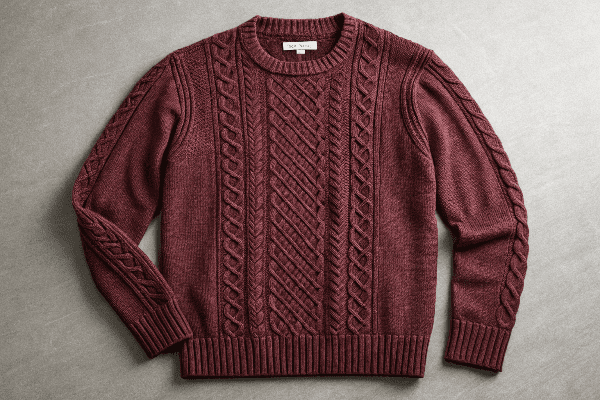
I still remember my first winter buying trip in Europe. I wore a simple cotton knit and froze on the street. Then I stepped into a Scottish wool shop and tried a heavy sweater. That single piece changed my idea of what “warm” knitwear really is.
The warmest knitwear is made from thick natural fibers like wool, merino wool, alpaca, and cashmere. These fibers trap heat, insulate even when damp, and work best when knitted densely. Chunky cable-knit sweaters, merino base layers, and cashmere pullovers are top choices for warmth.
Over the years I’ve sourced winter knits for clients in Europe, North America, and the Middle East. Every region has its favorite fiber—but the science is always the same.
Table of Contents
- Why is wool the warmest fiber for knitwear?
- Is merino wool warmer than normal wool?
- Are alpaca sweaters warmer than wool?
- Is cashmere the warmest knitwear fiber?
- Are synthetic knits like acrylic warm?
- Does knit structure affect warmth?
- What are the warmest types of knitwear?
- Conclusion
Why is wool the warmest fiber for knitwear?
Wool has been used for centuries for a reason.
Wool fibers have a natural crimp that creates tiny air pockets, which trap heat. Wool stays warm even when damp and has better insulation than cotton or synthetics.
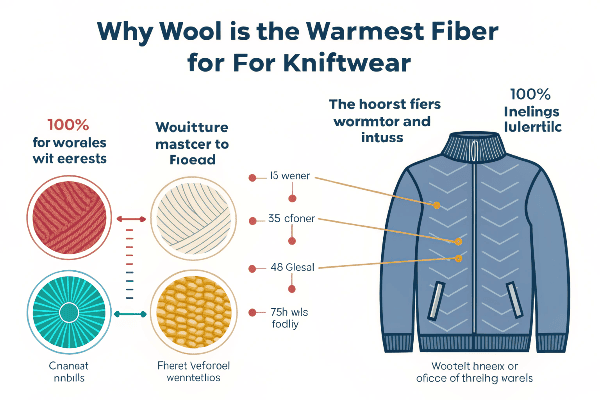
When I compare fabrics, wool wins in every cold-weather test:
- Holds heat even when wet
- Breathable, so you don’t overheat
- Naturally stretchy and durable
For deep winter sweaters and cardigans, I often choose 100% wool or 70% wool blends.
If you are curious about how wool fibers work, there are detailed studies showing why they outperform cotton.
Is merino wool warmer than normal wool?
Yes—and much softer.
Merino wool is warmer and finer than regular wool. It’s softer on the skin, so it’s used in base layers, turtlenecks, and slim-fit sweaters for layering.
I once worked with an outdoor brand that only used merino. They loved how it handled cold mornings and wicking at the same time.
- Finer fibers: Less itchy, smooth to the touch
- Temperature regulation: Keeps you warm in winter, cool in spring
- Odor resistance: Great for travel and active use
Merino is one of the best choices for anyone sensitive to coarse wool.
You can find more on merino wool benefits from The Woolmark Company.
Are alpaca sweaters warmer than wool?
Many people are surprised by this.
Alpaca fiber is lighter, softer, and warmer than regular sheep wool. It has a hollow fiber structure that holds heat and provides excellent insulation.
I have sourced alpaca knits from Peru. They are expensive but feel luxurious and very warm.
Want to know why Peru is famous for alpaca? Check Peruvian alpaca guide for details.
| Feature | Alpaca vs Wool |
|---|---|
| Warmth | Higher |
| Weight | Lighter |
| Softness | Very soft |
| Moisture resistance | Very good |
For customers who want something special, alpaca is an excellent upgrade.
Is cashmere the warmest knitwear fiber?
Cashmere is warm, but with a different feel.
Cashmere is one of the warmest natural fibers for its weight. It feels soft and luxurious but is not as rugged as heavy wool.
Cashmere sweaters work perfectly for layering under coats. They are popular for city winters where elegance matters as much as warmth.
- Insulating: 8 times warmer than ordinary wool by weight
- Soft: Ultra-fine fibers create a smooth surface
- Lightweight: Doesn’t feel bulky
I usually recommend cashmere for people who want warmth without heavy thickness.
Read more about cashmere production and why it is so valuable.
Are synthetic knits like acrylic warm?
Yes, but with limitations.
Acrylic knits can be warm if knitted densely, but they do not regulate temperature like wool. They can make you sweat because they trap heat without breathability.
I often use acrylic in blends to lower cost. On its own, it is less effective in extreme cold.
- Budget sweaters: Acrylic is cost-efficient
- Allergic to wool: Acrylic offers a substitute
- Casual fashion: It’s lightweight but less durable
For real warmth, natural fibers still win.
Does knit structure affect warmth?
Yes—just as much as the yarn.
Chunky knits, cable knits, and tightly knitted patterns hold more heat than loose open stitches. The thicker the structure, the warmer the garment.
I tell my clients this rule: same fiber, heavier knit = more warmth.
- Dense flat-knit: Traps heat, good for base layers
- Cable-knit: Thick and warm, good for sweaters
- Loose open-knit: Airy, less warm
Fiber and structure work together.
What are the warmest types of knitwear?
From my experience:
The warmest knitwear styles are:
- Heavy wool or alpaca cable-knit sweaters
- Merino wool base layers (layered under jackets)
- Cashmere pullovers or cardigans for lightweight warmth
- Double-knit or lined sweaters for extreme cold
I’ve helped brands combine these fibers for better performance: merino-cashmere blends, alpaca-wool blends, and cashmere-nylon blends.
- Alpaca (luxury warmth)
- Merino wool (performance warmth)
- Cashmere (lightweight warmth)
- Heavy regular wool (classic warmth)
- Wool blends with acrylic (affordable warmth)
Conclusion
The warmest knitwear comes from natural fibers like wool, merino, alpaca, and cashmere. Combine the right yarn with a dense knit structure and you get warmth that lasts all winter.