
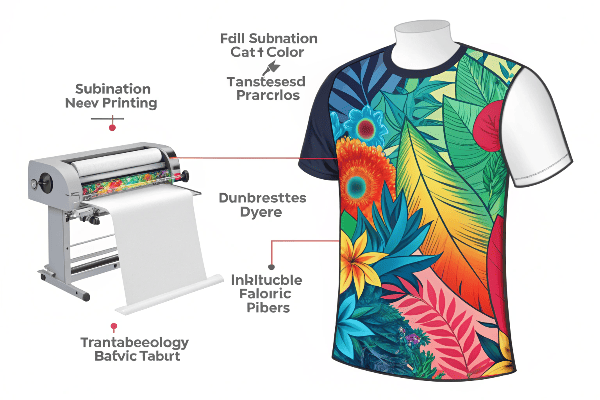
When I first started working with custom clothing, I was introduced to sublimation printing, and it immediately caught my attention. Many customers ask me: “What is sublimation in clothing?” After years of making sublimated shirts, I learned that it’s one of the best methods for creating vibrant, long-lasting prints.
Sublimation is a process where special ink is transferred onto fabric through heat. The ink turns into gas and permeates the fabric fibers, making the print part of the material itself. This results in a vibrant, durable design that won’t crack, fade, or peel.
I remember the first time I saw a sublimated shirt. The colors were so vivid, and the print felt soft and breathable. Now, sublimation is one of my favorite methods for custom clothing.
Table of Contents
- How does sublimation work in clothing?
- What fabrics are best for sublimation?
- Why is sublimation considered a high-quality printing method?
- How does sublimation compare to screen printing?
- What are the advantages of sublimation for clothing?
- Is sublimation eco-friendly?
- What is the downside of sublimation?
- Conclusion
How does sublimation work in clothing?
Sublimation is a heat-driven process.
In sublimation printing, special inks are printed on transfer paper and then applied to fabric using heat. The heat turns the ink into gas, which permeates the fabric fibers and creates a permanent bond.
- Design: The artwork is created and printed onto transfer paper.
- Heat application: The transfer paper is pressed onto the fabric with high heat and pressure.
- Ink permeation: The ink turns into gas and bonds with the fabric fibers.
- Curing: The fabric is cooled, and the print becomes permanent.
What’s amazing is how the ink becomes part of the fabric itself, resulting in a smooth and durable design.
What fabrics are best for sublimation?
Sublimation works best on polyester and polyester blends.
Polyester fibers are perfect for sublimation because the ink bonds with them directly. For the best results, use 100% polyester, although some polyester blends work well too.
- 100% polyester: Ideal for vibrant prints and durability
- Polyester blends: Works well but may not produce as vibrant results as pure polyester
- Polyester-coated fabrics: Used for specialty items like banners or hard surfaces
I once tried sublimation on cotton fabric, but the colors didn’t come out as bright. Polyester is definitely the way to go for sublimation.
Why is sublimation considered a high-quality printing method?
Sublimation is known for producing vibrant, durable prints.
Unlike other methods where the ink sits on top of the fabric, sublimation ink becomes part of the fibers, ensuring that the design stays intact and doesn’t fade, peel, or crack over time.
- Vibrant colors: Full-color designs are bright and bold.
- No texture: The design doesn’t feel heavy or raised on the fabric.
- Durability: Sublimation prints don’t fade, peel, or crack after washing.
I’ve seen sublimated shirts last for years without losing their vivid color, unlike screen-printed shirts, which tend to fade over time.
How does sublimation compare to screen printing?
Sublimation is more suited for full-color, all-over designs.
While screen printing is great for solid colors and simple designs, sublimation is perfect for intricate, multi-color prints that cover large areas of the garment.
- Sublimation: Ideal for detailed, full-color designs; works best on polyester.
- Screen printing: Great for simple, bold designs with a limited number of colors; works on various fabrics.
For example, I always suggest sublimation for customers who want complex designs or even full-shirt prints because it ensures the design will be vibrant and long-lasting.
What are the advantages of sublimation for clothing?
Sublimation offers several key advantages over other methods.
Sublimation is perfect for creating vibrant, detailed designs that won’t fade over time. It’s also lightweight and soft to the touch, unlike some other printing methods that can make the fabric feel stiff or heavy.
- Unmatched detail: Perfect for intricate designs with gradients or full-color artwork.
- Comfortable feel: The print doesn’t add weight or texture to the fabric.
- Long-lasting: Prints stay intact after multiple washes.
I love how sublimated designs stay crisp and colorful, even after years of use.
Is sublimation eco-friendly?
Yes, sublimation is a more eco-friendly option compared to some other methods.
The sublimation process uses less water and produces fewer chemicals than traditional methods like screen printing. Additionally, it doesn’t require any additional inks or chemicals that could harm the environment.
- Less water usage: No need for water-based inks
- Fewer chemicals: No solvents or harmful materials
- Sustainability: Many sublimation inks are water-based and non-toxic
For eco-conscious brands, sublimation offers a greener solution for producing custom clothing.
What is the downside of sublimation?
The main downside of sublimation is its fabric limitation.
Sublimation only works well on polyester or polyester-coated fabrics. It does not work on cotton or dark fabrics because the ink doesn’t bond effectively with natural fibers.
- Fabric restriction: Only works on light-colored, synthetic fabrics like polyester.
- Not suitable for cotton: The design will not hold well on cotton fabrics.
I often explain to my clients that while sublimation is excellent for polyester, it’s not the right choice if they want to print on cotton T-shirts.
Conclusion
Sublimation is a high-quality, durable printing method perfect for creating vibrant, long-lasting designs on polyester fabrics. It allows for full-color, intricate prints that don’t crack, peel, or fade over time. While it has some fabric limitations, sublimation is ideal for sportswear, fashion apparel, and custom designs that require sharp, colorful prints.