

When I first started my factory and began offering custom printing on shirts, many new clients were shocked at the prices. They often asked me: “Why is shirt printing so expensive?” I used to think the same thing before I learned how much work and cost goes into making a print look professional.
Shirt printing can feel expensive because the process involves quality fabrics, professional printing machines, skilled labor, inks, preparation costs, and setup time. Small orders make the cost per piece even higher.
I remember my very first small order. The client only wanted 20 pieces with a complex print. The production cost felt high, but after I saw the time it took to prepare the design and run the prints, I understood why.
Table of Contents
- Why does shirt printing cost more than plain shirts?
- Why is printing expensive for small orders?
- How do printing methods affect the price?
- Why does the design itself affect the cost?
- Are inks and materials expensive?
- How much does labor add to the price?
- Why do high-quality prints last longer?
- Conclusion
Why does shirt printing cost more than plain shirts?
Printing adds several extra steps to the production process.
A printed shirt requires not just making the shirt but also setting up the artwork, preparing screens or machines, applying ink, and finishing. These extra processes increase the cost compared to blank shirts.
- Preparing the design files
- Printing setup (screens or digital machine)
- Ink application and curing (drying)
- Quality control to check alignment and colors
I once timed a batch of 50 shirts. The printing process alone took more time than sewing all of the blank shirts.
For more details on production flow, see Fibre2Fashion – Garment Printing Overview.
Why is printing expensive for small orders?
This is one of the biggest surprises for people ordering shirts for the first time.
Small orders are expensive because the setup cost (design preparation, screens, machine time) is spread over fewer shirts. Large orders reduce the cost per piece.
- 20 shirts with screen printing: $12–$15 each
- 200 shirts: $6–$8 each
- 1000 shirts: $4–$6 each
I always tell small brands that even doubling the order can make a huge difference in the cost per shirt.
How do printing methods affect the price?
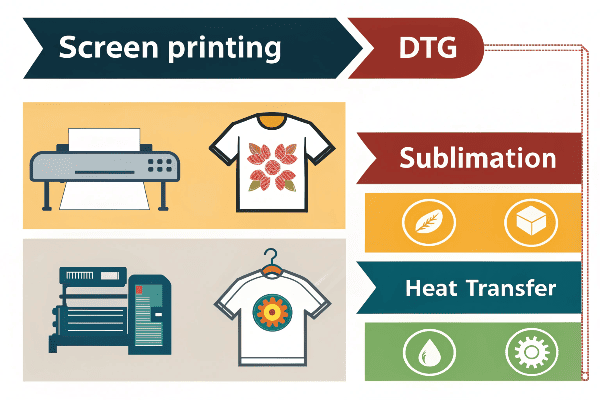
Not all printing methods cost the same.
Screen printing, DTG (Direct-to-Garment), sublimation, and heat transfer all have different costs. Screen printing is best for bulk orders, while DTG is costlier for small runs.
| Method | When It’s Used | Cost Impact |
|---|---|---|
| Screen printing | Large orders, simple colors | Cheaper for bulk |
| DTG digital print | Small runs, complex colors | Expensive per piece |
| Heat transfer/vinyl | Logos, small batches | Medium cost |
| Sublimation | Polyester shirts | Moderate |
I once printed 10 shirts with DTG because of a full-color design. The cost per shirt was double compared to bulk screen printing.
For a full breakdown, check Printful – T-Shirt Printing Methods.
Why does the design itself affect the cost?
The complexity of the artwork changes everything.
More colors, large prints, double placements (front and back), and special effects like metallic or puff inks all increase the price of printing.
- Single-color small logo: Cheapest
- Full-color print on front: More expensive
- Front + back print: Almost double cost
- Special effects: Extra fees
I worked on a design with glow-in-the-dark ink once. It looked amazing, but the special ink and extra curing steps made the cost high.
Are inks and materials expensive?
Yes, high-quality printing materials cost a lot.
Good printing inks and pretreatment chemicals are expensive, especially eco-friendly or certified ones. Low-quality ink can crack or fade, so professional factories use better materials.
- Plastisol and water-based inks
- Pretreatment for DTG
- Heat-transfer paper or vinyl
- Drying equipment and electricity
I never compromise on ink quality. I prefer my clients pay a little more but receive shirts that last for years.
How much does labor add to the price?
Printing is labor-intensive.
Skilled workers are needed to align designs, manage machines, and inspect the quality of every single shirt. This human work is one of the largest cost factors.
- Positioning the shirt correctly
- Ensuring each color layer aligns
- Checking drying and finish
- Folding and packing printed pieces
Even with modern machines, there’s still a lot of manual work to make a print look perfect.
Why do high-quality prints last longer?
The price reflects the quality and durability.
High-quality printing methods last for many washes without peeling or fading. Cheaper prints may look fine at first but wear out quickly.
- Proper curing temperature
- Correct ink thickness
- Quality blanks (fabric matters)
I often explain to customers that a $12 printed shirt that lasts 3 years is cheaper in the long run than a $5 one that fades in two washes.
See Threadsy – How to make prints last.
Conclusion
Shirt printing is expensive because it involves design preparation, machine setup, skilled labor, quality materials, and often small order sizes. Bulk orders and simple designs help reduce the cost, but a good print is always a detailed process that goes far beyond a plain shirt.